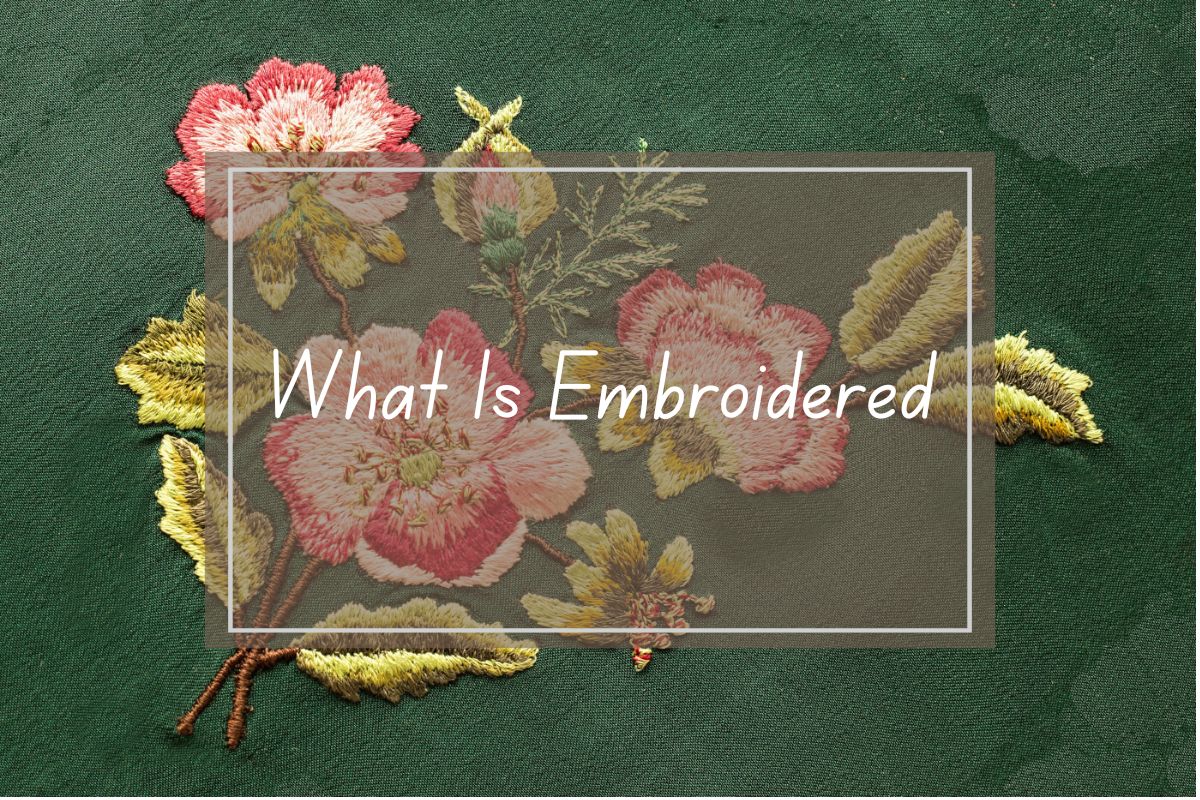
Embroidery is a beautiful art form that lets you decorate fabric using needle and thread. When something is embroidered, it has been adorned with decorative stitches that can create patterns, pictures, or designs directly on the material. Embroidery transforms plain fabrics into personalized works of art through the careful placement of colorful threads.
You might have seen embroidered items all around you – from the delicate flowers on a pillowcase to the logo on your favorite cap. This craft has been practiced for centuries across different cultures, each adding their unique touch to the art. The wonderful thing about embroidery is that it can range from simple stitches that beginners can master to complex designs that take years to perfect.
Whether you’re interested in learning this craft or just appreciate the beauty of handmade items, understanding embroidery opens up a world of creativity. You can use embroidery to add personal touches to gifts, update your wardrobe, or even create artwork to display in your home. The possibilities are truly endless when you pick up that needle and thread!
If you’re ready to start stitching, you can learn how to embroider by hand with beginner-friendly steps.
The Essence of Embroidery
Embroidery transforms plain fabric into beautiful art through colorful threads and careful stitching techniques. This craft combines creativity with tradition, allowing you to express yourself through needle and thread.
History and Cultural Significance
Embroidery has ancient roots dating back thousands of years. Evidence of embroidered clothing has been found in cultures across the globe, from China to Egypt and beyond.
In many societies, embroidery served as more than decoration. It told stories, marked important life events, and displayed social status. Royal garments often featured intricate embroidery using gold thread and precious stones.
Different regions developed unique styles. Japanese sashiko used simple running stitches for both decoration and reinforcement. Mexican embroidery bursts with colorful flora and fauna patterns. Eastern European cultures used cross-stitch to create geometric designs on household items.
Today, embroidery connects you to this rich heritage while allowing for modern expression. Many families pass down embroidered heirlooms that carry both artistic and sentimental value.
Different Styles and Techniques
Hand embroidery offers countless ways to create texture and dimension on fabric. Basic stitches like running stitch, backstitch, and French knots form the foundation for more complex work.
Popular styles include:
- Crewel: Uses wool thread for textured designs
- Cross-stitch: Creates pixel-like patterns with X-shaped stitches
- Blackwork: Features geometric patterns in black thread
- Ribbon embroidery: Adds dimension with silk ribbons instead of thread
You can embellish your embroidery with beads, sequins, and small mirrors for extra sparkle and texture. These additions transform simple stitchwork into elaborate designs.
Machine embroidery has evolved tremendously, allowing for precise, complex patterns. However, many crafters still prefer the meditative quality and personal touch of hand embroidery. Both approaches let you create beautiful patterns that showcase your creativity.

Embroidery Materials
Embroidery requires a few key materials to get started. The right supplies will make your project easier and help you achieve beautiful results.
Choosing the Right Thread
Embroidery thread comes in many types, with embroidery floss being the most popular choice. This six-strand cotton thread can be separated to achieve different thicknesses in your work. You can use all six strands for bold lines or just one or two for delicate details.
Thread weight matters too – the higher the number, the thinner the thread. For example, a 40-weight thread is thicker than a 60-weight thread.
Specialty threads add unique effects to your projects. Metallic threads create shimmer, while silk threads offer a luxurious sheen. Wool threads work well for textured designs like crewelwork.
Colors are important! Consider buying thread in color families that complement each other. Many companies sell pre-packaged sets of coordinating colors to help you get started.
Varieties of Fabric
The fabric you choose affects how your embroidery looks and feels. Even-weave fabrics like linen, Aida cloth, and evenweave cotton are popular because their consistent grid makes stitches uniform.
Aida cloth is perfect for beginners since its visible holes make counting stitches easier. It comes in different “counts” – the number of stitches per inch. A 14-count Aida means you’ll have 14 stitches per inch.
You can also embroider on non-evenweave fabrics like cotton, denim, or even silk. These fabrics require stabilizer backing to prevent puckering when you stitch.
Always pre-wash your fabric before starting a project to prevent shrinking later. Iron it smooth for the best stitching experience.
Needles and Accessories
Embroidery needles have larger eyes than regular sewing needles to accommodate thicker threads. They come in sizes 1-12, with higher numbers indicating smaller needles.
Essential accessories include:
- Embroidery hoops to keep fabric taut
- Small, sharp scissors for snipping threads
- Thimbles to protect your fingers
- Needle threaders for easier threading
- Pin cushions to safely store needles
A good embroidery hoop is crucial. Wooden hoops are traditional, while plastic ones often have tighter grips. For long-term display, consider using wooden hoops as frames.
Storage solutions help keep your supplies organized. Thread bobbins prevent tangling, and project bags protect work-in-progress pieces. Consider a needle book to safely store different needle types.
Introduction to Embroidery Machines
Embroidery machines have revolutionized the craft of decorative stitching, allowing you to create beautiful designs with precision and efficiency. These specialized devices automate the embroidery process, saving you time while producing professional results.
Embroidery vs. Sewing Machines
Embroidery machines differ from regular sewing machines in several important ways. While sewing machines primarily join fabrics together with straight or zigzag stitches, embroidery machines create decorative patterns and designs on fabric.
The key difference is that embroidery machines follow pre-programmed designs. They move the fabric automatically in different directions under the needle. This allows for complex patterns that would be difficult to create by hand.
Many modern machines are actually combination units that can both sew and embroider. When in embroidery mode, you’ll need to attach a special embroidery hoop to hold your fabric tight.
You can often tell machine embroidery from hand embroidery by looking at the back of the work. Machine embroidery typically has systematic thread paths across the back.
Types of Embroidery Machines
Home embroidery machines are perfect for beginners and hobbyists. These compact machines usually have smaller embroidery areas and fewer advanced features. Prices range from affordable entry-level models to more sophisticated options with larger work areas.
Commercial embroidery machines are designed for business use. They’re faster, more durable, and can handle larger projects. Many commercial machines can be networked together to work simultaneously on different projects.
Multi-needle machines have multiple threads loaded at once, so you don’t need to stop and change colors. Single-needle machines are more common for home use and require manual color changes.
Free-arm embroidery machines make it easier to work on tubular items like sleeves and pant legs. This feature is especially helpful when embroidering ready-made garments like t-shirts.
Embroidery Techniques
Embroidery uses many different methods to create beautiful designs on fabric. These techniques have evolved over centuries and now include both hand and machine approaches.
Traditional Hand Embroidery
Hand embroidery is where most people begin their embroidery journey. You can start with simple stitches like the running stitch, which is just a series of small, even stitches that create a dashed line.
The backstitch creates a solid line and is perfect for outlines. It’s stronger than a running stitch because each stitch overlaps with the previous one.
Cross stitch is a counted thread embroidery technique where you create X-shaped stitches on even-weave fabric. You’ll often see this in samplers and decorative pieces.
French knots add texture and dimension to your work. You wrap thread around your needle and pull it through to create a small, raised knot. They’re great for flower centers or adding details!
Crewel embroidery uses wool thread and special stitches like the stem stitch to create flowing, vine-like lines.
Machine Embroidery Methods
Machine embroidery has revolutionized the craft by making it faster and more precise. You can use computerized machines that follow digital patterns to create complex designs in minutes.
Free-motion embroidery lets you move fabric freely under the needle. This gives you artistic control similar to drawing with your sewing machine.
Commercial embroidery machines can stitch multiple items at once using multiple needles and threads. These are what businesses use for logos on shirts and hats.
Digitizing is an important part of machine embroidery. This process converts artwork into stitch files that your machine can read. Good digitizing makes the difference between professional-looking results and amateur work.
Machine embroidery uses special stabilizers to support your fabric during stitching. Without them, your fabric might pucker or stretch.

Designing Embroidery Patterns
Creating your own embroidery patterns allows you to make unique pieces that match your vision perfectly. You can transform simple ideas into beautiful stitched designs using several methods.
From Concept to Pattern
Drawing directly onto lightweight trace paper is one of the easiest ways to start designing. You can pin this paper to your fabric and stitch right through it. This method works well for beginners who want to try simple designs.
Iron-on transfers offer another practical option. You can draw your design on special transfer paper, then iron it onto your fabric. The design transfers clearly, giving you lines to follow as you stitch.
Many crafters also use existing images for inspiration. You can take a sketch, photo, or doodle and transform it into a clean line drawing. Resize this drawing as needed, print it out, and use it as your pattern.
Your design possibilities are endless! Try starting with simple shapes and gradually work up to more complex patterns as your skills improve.
Digital Embroidery Software
Embroidery software has revolutionized pattern creation. These programs let you convert images into stitch patterns with just a few clicks. Many have auto-digitizing functions that transform regular pictures into embroidery designs automatically.
For more control, you can manually digitize your designs. This means creating each stitch path yourself within the software. While this takes more time, it gives you precise control over how your final piece will look.
Digital tools allow you to experiment with different stitch types, colors, and layouts before you start sewing. You can preview your work and make adjustments until it’s perfect.
Software ranges from beginner-friendly to professional-grade programs. Many offer templates and pre-made elements you can combine for custom designs. This makes creating your own embroidery patterns accessible even if you’re not an artist.
Personalizing with Embroidery
Embroidery transforms ordinary items into personal treasures. You can add names, initials, or custom designs to make your belongings uniquely yours.
Monograms and Name Embroidery
Adding your name or initials to items creates a special touch that marks them as yours. Monograms, which typically feature your initials in a decorative arrangement, have been popular for centuries among royalty and are now accessible to everyone.
You can personalize towels, handkerchiefs, and pillowcases with simple monograms for your home. For gifts, consider embroidering a baby’s name on a blanket or a graduate’s initials on a portfolio.
Wedding items often feature the couple’s new shared initials or wedding date. This timeless personalization makes meaningful keepsakes.
The placement matters too – subtle corner monograms offer elegance, while bold centered designs make a statement.
Custom Logos and Branding
Embroidery serves as a powerful branding tool for businesses. Your company logo stitched onto shirts, caps, or bags creates walking advertisements that look professional and last longer than printed versions.
Custom embroidered uniforms help build team identity and create a polished look for your business. Customers often perceive embroidered logos as higher quality than other decoration methods.
Sports teams benefit from embroidered branding on equipment bags and team apparel. The raised texture of embroidery adds dimension that flat printing cannot match.
For small businesses, embroidered items make excellent promotional gifts that recipients actually use. Unlike paper flyers, embroidered products provide lasting brand exposure.
Embroidering on Clothing and Accessories
Adding embroidery to your clothes and accessories is a fun way to make everyday items more personal. This creative technique can transform plain items into unique pieces that show off your style.
Selecting Suitable Clothing Items
The best clothing for embroidery is made from non-stretchy, woven fabrics like cotton. Button-up shirts, jeans, and denim jackets work really well because they’re sturdy enough to hold your stitches.
Before you start, wash your clothing item to prevent shrinking after you’ve embroidered it. This helps your design stay looking great.
Think about where you want to place your design. Common spots include:
- Collar corners
- Pocket areas
- Sleeve cuffs
- Back of jackets
For beginners, try simple patterns with basic stitches like the back stitch or satin stitch. You don’t need fancy equipment—just a hoop, needle, thread, and your imagination!
Special Considerations for Accessories
Accessories like hats, bags, and shoes can be trickier to embroider but offer exciting possibilities. For bags, canvas totes are ideal starter projects because they lie flat and have a tight weave.
When embroidering hats, you’ll need to be careful about working around the curved surface. Remove any lining if possible, and use a smaller hoop or no hoop at all.
For shoes, focus on areas with less wear like the sides or heels. Choose designs that match the shape of the area you’re working on.
Remember these tips for accessory embroidery:
- Use a thimble to push needles through thicker materials
- Select stronger needles for leather or canvas items
- Choose water-soluble stabilizers for delicate fabrics
Your embroidered accessories make wonderful gifts and can add a personal touch to your everyday style!
Care and Maintenance of Embroidered Items
Keeping your embroidered items looking beautiful is easier than you might think! With just a little care, your special pieces can last for years to come.
For most embroidered clothing and needlework, hand washing is your safest option. Use lukewarm water and a mild detergent that’s pH-neutral. Avoid harsh chemicals and bleach as these can damage the delicate threads.
Short on time? You can machine wash embroidered items too! Just place them in a mesh laundry bag first, select the gentle cycle, use cold water, and add a mild detergent. Skip the fabric softeners as they can break down the embroidery threads.
Important washing tips:
- Turn embroidered clothing inside-out before washing
- Avoid wringing or twisting embroidered items
- Never use bleach on embroidered pieces
- Remember that care labels usually refer to the garment, not the embroidery itself
After washing, lay your embroidered items flat to air dry. This prevents stretching and helps maintain the shape of both the fabric and the embroidery.
For storage, fold your embroidered items rather than hanging them. This prevents stretching that can distort your beautiful needlework. If you must iron embroidered clothing, do so from the wrong side with a pressing cloth between the iron and fabric.
Innovations in Embroidery
Embroidery has come a long way from simple hand stitching to complex computerized designs. Technology and creativity continue to reshape this ancient craft in exciting ways.
Advancements in Embroidery Technology
Modern embroidery machines have revolutionized the craft with features that were unimaginable just a few decades ago. You can now create intricate designs with automatic thread-color changes and built-in thread trimming, saving you significant time and effort.
Multi-needle machines allow you to work with multiple colors without constantly rethreading. Some advanced models can embroider up to 15 colors in a single project!
The software has improved dramatically too. You can digitize images, adjust stitch types, and preview your work before a single thread is placed. This reduces waste and helps you achieve more precise results.
High-speed commercial machines now complete complex patterns in minutes rather than hours. This efficiency has made custom embroidery more affordable and accessible to everyone.
Exploring New Embroidery Applications
Embroidery has expanded far beyond traditional fabrics and clothing. You can now find embroidered elements on everything from home décor to tech accessories.
3D embroidery creates raised designs that add texture and dimension to your projects. This technique uses special underlay stitches and foam backing to create stunning effects that stand out—literally!
Eco-friendly options have emerged with threads made from recycled materials and plant-based fibers. You can create beautiful designs while reducing your environmental impact.
Smart textiles incorporate embroidery with conductive thread to create interactive fabrics. These can be used in medical monitoring, athletic performance tracking, and even fashion that responds to your environment.
Mixed-media embroidery combines traditional stitching with beads, sequins, and other materials for unique artistic expressions. Your creativity is the only limit!