
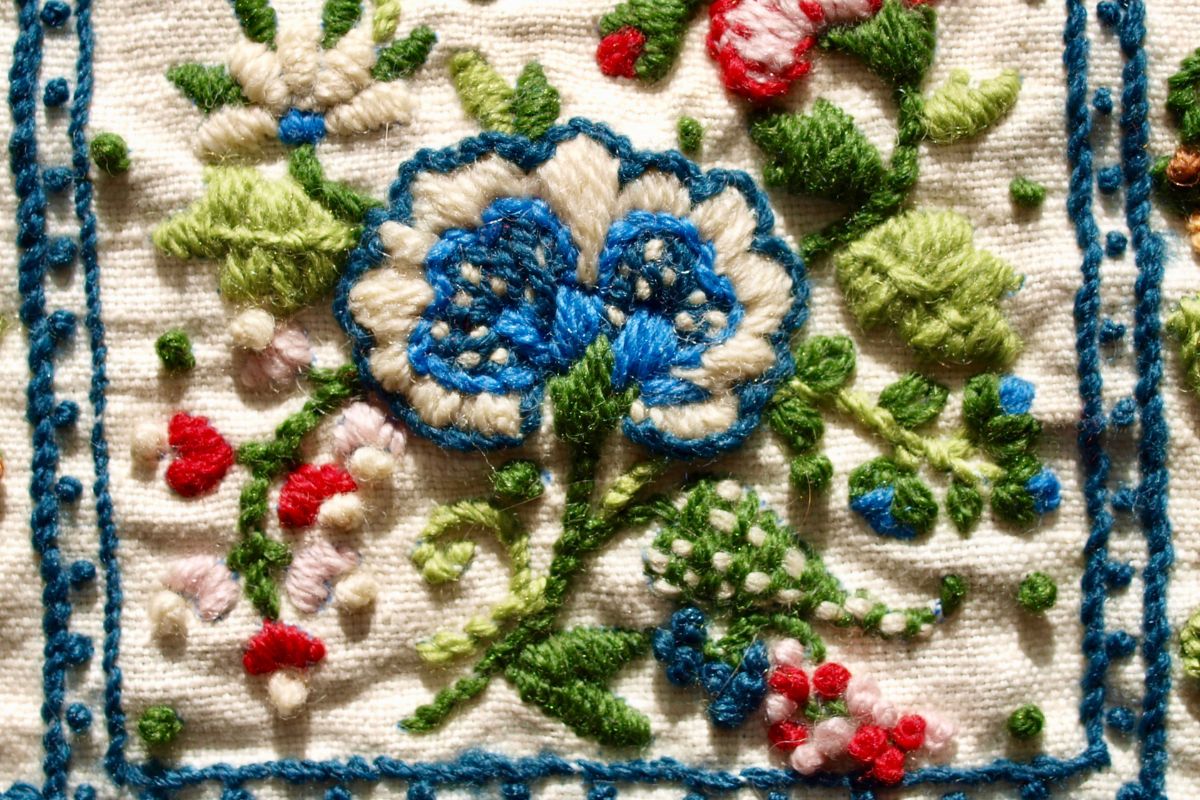
Crewel embroidery kits are collections of materials and tools used for creating decorative designs using wool yarn on fabric. These kits typically include wool yarn, needles, fabric, and patterns, allowing crafters to explore this traditional art form with a modern twist.
Key Takeaways:
- Crewel embroidery uses wool yarn instead of cotton floss
- Kits include yarn, needles, fabric, and patterns
- Popular stitches: couching, stem, and long-and-short
- Designs often feature botanical and folk art elements
- Crewel has a rich history dating back to medieval times
What is Crewel Embroidery?
Definition and Key Characteristics
Crewel embroidery is a unique form of needlework that stands out from other embroidery styles. 🧵 But what makes it so special? Let’s break it down:
- Wool Yarn: The defining feature of crewel embroidery is the use of wool yarn instead of cotton floss or other threads.
- Texture: Crewel work has a fluffier, fuzzier texture due to the nature of wool fibers.
- Non-divisible Thread: Unlike cotton floss, wool yarn used in crewel can’t be separated into strands.
- Similar Stitches: Many of the same stitches used in surface embroidery are also used in crewel work.
Historical Context
Crewel embroidery has a rich and fascinating history. Did you know it dates back to medieval times? 🏰
- Origins: The art form can be traced back to at least 1077, with the famous Bayeux Tapestry.
- Elizabethan and Stuart Period: Crewel work flourished during this time in British design.
- Traditional Designs: Floral motifs in blues, greens, and reds were popular during these periods.
Comparison to Regular Embroidery
You might be wondering, “How is crewel different from regular embroidery?” Here’s a simple breakdown:
| Crewel Embroidery | Regular Embroidery |
|---|---|
| Uses wool yarn | Uses cotton floss |
| Fluffier texture | Smoother texture |
| Non-divisible thread | Divisible thread |
| Larger needle eye | Smaller needle eye |
| Often on linen fabric | Various fabric options |
Crewel Embroidery Kits: Essential Components and Materials
Wool Yarn: The Defining Element
Wool yarn is the star of the show in crewel embroidery. Let’s look at some popular brands and what makes them special:
Popular Brands
- Stuart Morris: Hand-dyed yarns with beautiful color variations.
- Appleton’s: Offers a wide range of colors and a slightly thinner texture.
- Array: More compact strands, great for finer details.
- DMC: Thicker yarn, originally for tapestry but works well in crewel too.
Yarn Characteristics and Selection
When choosing yarn for your crewel project, consider:

- Thickness: Thicker yarns create more texture, while thinner ones allow for more detail.
- Color: Pick colors that complement your design and fabric.
- Texture: Some yarns are fluffier, others more compact.
Needles for Crewel Work
Crewel embroidery requires special needles. 🪡 Here’s what you need to know:
- Chenille or Crewel Needles: These have larger eyes to accommodate thicker wool yarn.
- Variety Pack: It’s helpful to have different sizes on hand for various yarn thicknesses.
Fabric Selection
Choosing the right fabric is crucial for your crewel project. Let’s explore your options:
Traditional and Modern Options
- Traditional: Linen, especially linen twill, is a classic choice.
- Modern: Kona cotton and other evenly woven fabrics work well too.
Fabric Selection Criteria
When picking fabric, keep these points in mind:
- Firmness: Choose a firmly woven fabric.
- Thread Separation: Threads should separate easily as the needle passes through.
- Weight: Heavier fabrics like linen twill provide good stability.
Additional Kit Components
A typical crewel embroidery kit includes:

- Pre-printed fabric (often linen twill)
- Wool yarn
- Needles
- Pattern or design
- Instructions
- Sometimes extras like beads or additional needles
Crewel Embroidery Techniques and Stitches
Basic Stitches
Let’s start with some fundamental stitches you’ll often use in crewel work:
Couching Stitch
This stitch is great for creating outlines or filling large areas. Here’s how to do it:
- Lay a piece of yarn across your fabric.
- Use small stitches to tack it down at regular intervals.
Basket Weave Stitch
Perfect for adding texture to your design. It looks like a woven basket:
- Create a grid of long stitches.
- Weave shorter stitches over and under the grid.
Stem Stitch
Ideal for creating smooth lines and curves:
- Bring the needle up at point A.
- Insert it a short distance away at point B.
- Bring it back up halfway between A and B.
- Repeat, keeping the working thread below the needle.
Back Stitch
Great for outlining and creating solid lines:
- Bring the needle up at point A.
- Go back and insert it at point B.
- Bring it up again a stitch length ahead of A.
- Repeat, always working backwards.
Decorative Stitches
Now, let’s explore some stitches that add flair to your work:
Lazy Daisy Stitch
Perfect for creating flower petals or leaves:
- Bring the needle up at the base of the petal.
- Create a loop and insert the needle back at the starting point.
- Bring the needle up again to tack down the loop.
Satin Stitch
Use this to create smooth, filled areas:
- Bring the needle up on one side of the area to be filled.
- Take it down on the opposite side.
- Continue, keeping stitches close together and parallel.
Shading Techniques
Long and Short Stitch Soft Shading
This technique creates a beautiful, painterly effect:
- Start with long stitches in one color.
- Fill in with shorter stitches of a different shade, overlapping slightly.
- Continue alternating colors and lengths for a blended look.
Working with Wool Yarn
Threading Techniques
Threading wool yarn can be tricky. Try this method:
- Fold the yarn over the needle.
- Pinch the folded end.
- Slide the needle down to catch the pinched part.
Maintaining Yarn Texture
To keep that lovely woolly texture:
- Don’t pull stitches too tight.
- Gently fluff the yarn after each stitch.
Design Elements in Crewel Embroidery
Traditional Motifs and Patterns
Crewel embroidery has a rich history of beautiful designs. Let’s explore some classic elements:
Botanical Designs
🌸 Flowers, leaves, and vines are staples in crewel work:
- Jacobean-style florals with large, stylized blooms
- Delicate wildflowers and grasses
- Twining vines and tendrils
Folk Art Elements
Crewel often incorporates charming folk art motifs:
- Whimsical animals like birds and rabbits
- Stylized trees and landscapes
- Geometric patterns inspired by traditional crafts
Color Selection and Palette Options
Choosing colors is one of the most fun parts of crewel embroidery! Here are some tips:
- Start with 3-5 main colors that complement each other.
- Include lighter and darker shades of each color for depth.
- Consider the mood you want to create – soft pastels for a gentle feel, or bold jewel tones for drama.
Modern Design Applications
Crewel isn’t just for traditional designs anymore! Modern artists are using crewel techniques to create:
- Abstract patterns and shapes
- Pop culture-inspired designs
- Minimalist and geometric compositions
Tips for Beginners
Getting Started with Crewel Embroidery
Ready to try crewel embroidery? Here are some tips to help you begin:
- Start with a simple kit to learn the basics.
- Practice basic stitches before tackling a full design.
- Don’t be afraid to experiment with colors and textures.
Common Challenges and Solutions
| Challenge | Solution |
|---|---|
| Tangled yarn | Use shorter lengths and a yarn threader |
| Uneven stitches | Practice maintaining consistent tension |
| Fabric puckering | Use an embroidery hoop to keep fabric taut |
Maintaining Proper Tension and Texture
The key to beautiful crewel work is in the details:
- Keep your stitches loose enough to show the wool’s texture.
- Adjust your tension based on the thickness of your yarn.
- Gently fluff your stitches with a needle to enhance the woolly look.
Resources for Crewel Embroidery Enthusiasts
Books and Guides
Vintage Resources
Old books can be treasure troves of crewel wisdom:
- Look for thrift store finds on traditional crewel designs.
- Vintage pattern books often have unique, retro-inspired motifs.
Contemporary Publications
Modern books offer fresh takes on crewel:
- “Royal School of Needlework Book of Embroidery” includes a crewel section.
- Look for books that combine traditional techniques with modern designs.
Online Tutorials and Blog Posts
The internet is full of helpful crewel resources:
- YouTube videos demonstrating various stitches
- Craft blogs with step-by-step project tutorials
- Online courses for more in-depth learning
Crewel Embroidery Communities and Forums
Connect with fellow crewel enthusiasts:
- Join Facebook groups dedicated to crewel embroidery
- Participate in embroidery forums to share tips and get advice
- Follow crewel artists on Instagram for inspiration
Modern Revival and Applications of Crewel Embroidery
Interior Design Applications
Crewel is making a comeback in home decor:
- Embroidered throw pillows and cushions
- Wall hangings and tapestries
- Upholstery accents on chairs and ottomans
Fashion and Accessories
Designers are incorporating crewel into wearable art:
- Embroidered jackets and jeans
- Handbags with crewel embellishments
- Scarves and shawls with crewel designs
Contemporary Artists and Designers
Modern creators are pushing the boundaries of crewel:
- Mixing traditional techniques with unconventional materials
- Creating large-scale crewel installations
- Incorporating crewel into mixed media artwork
Crewel embroidery kits offer a gateway to a rich and rewarding craft. With wool yarn as your paintbrush and fabric as your canvas, you can create stunning textured designs that blend tradition with modern style. Whether you’re a beginner or an experienced stitcher, crewel embroidery provides endless opportunities for creativity and expression.