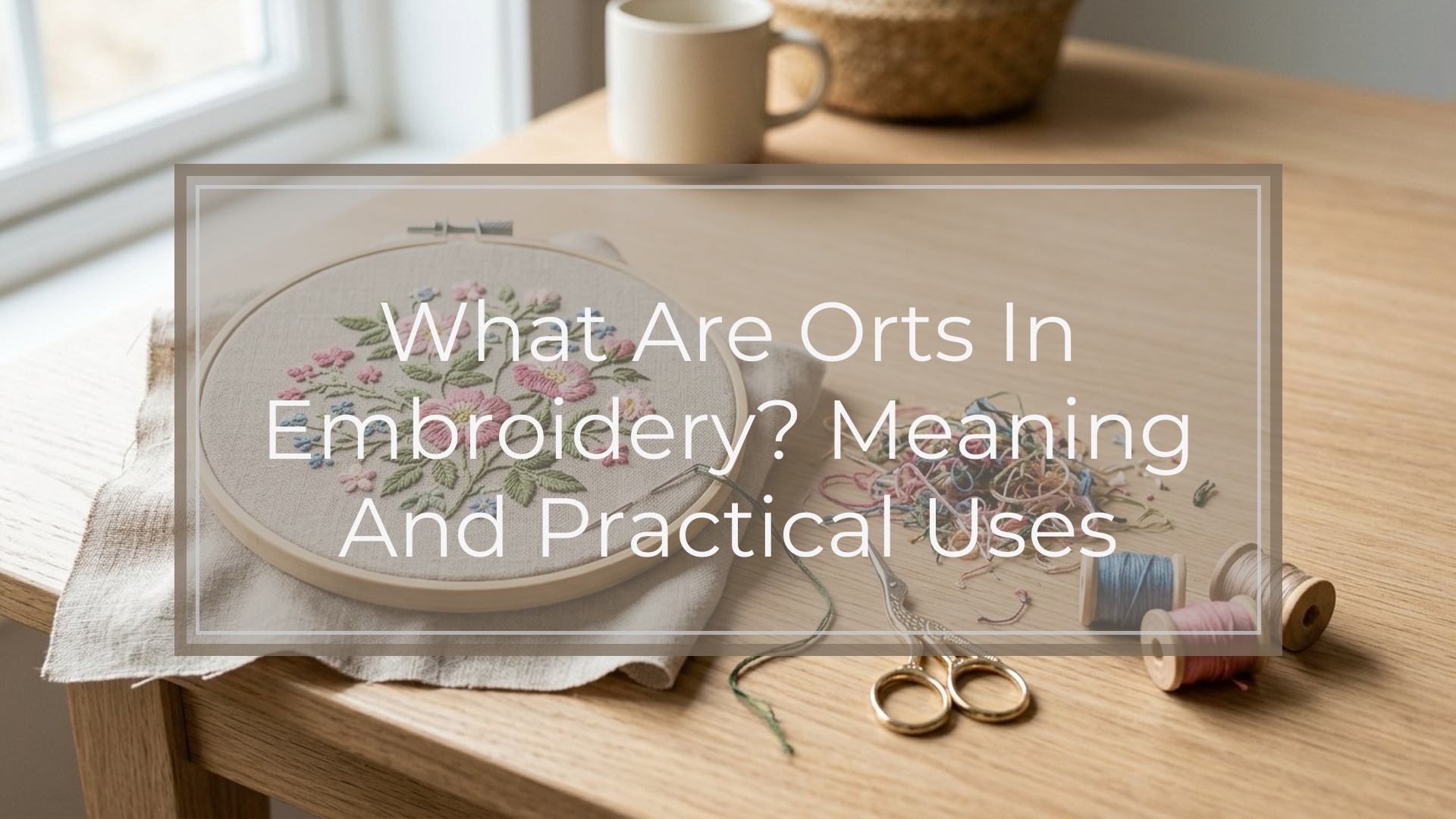
In embroidery and cross stitch, orts are the short leftover pieces of thread or floss that are too small or inconvenient to keep stitching with. They are usually the ends trimmed off after finishing a section, changing colors, or rethreading a needle. The simplest way to think about an ort is this: if it is a usable strand, it stays with your supplies; if it is a too-short leftover end, it becomes an ort.
Quick Answer
Orts are leftover thread ends from stitching. In embroidery and cross stitch, the word usually refers to short bits of floss that are no longer practical for regular use.
For example, if you cut a length of embroidery floss, stitch most of it, and end up with a 2-inch piece that is awkward to thread or too short to secure neatly, that piece is an ort. The same goes for trimmed tails after ending a thread on the back of your fabric.
The main takeaway is simple: orts are not a special type of thread, technique, or tool. They are just the small remains of thread left over from needlework.
How to Think About This Topic
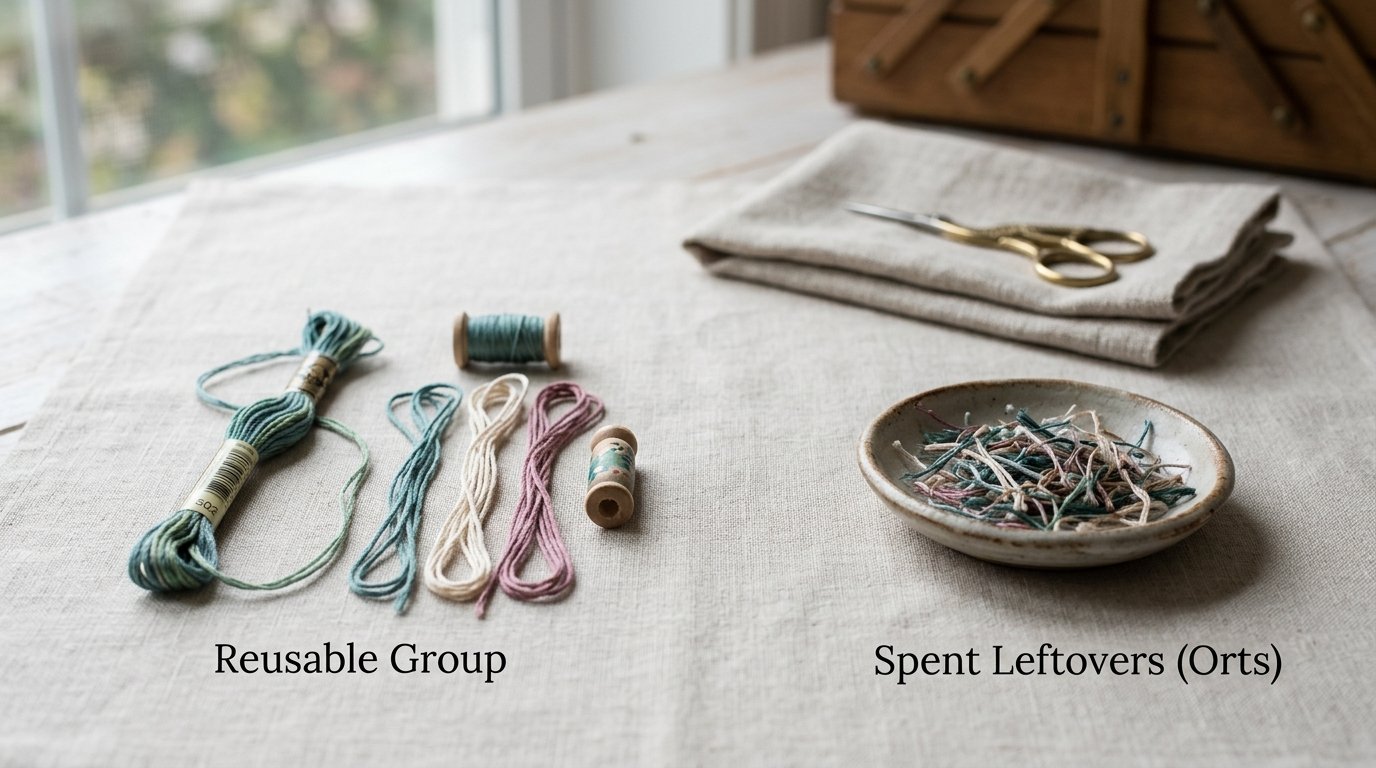
A practical mental model is to sort thread leftovers into two groups: still usable and basically spent. Orts belong in the second group.
That distinction matters because stitchers often save thread in many forms. A full skein is clearly usable. A cut length that still has enough left for several stitches is also usable. But once the piece becomes short, frayed, tangled, or annoying to handle, most stitchers would call it an ort.
This is why the exact length is not fixed. There is no universal rule that says a strand becomes an ort at 3 inches or 5 inches. It depends on the fabric, stitch type, number of strands, and your own tolerance for working with short lengths. In cross stitch, a small piece may still work for a few final Xs. In surface embroidery, that same piece might be too short to start and end cleanly.
It also helps to separate orts from similar terms:
- Thread tails are the ends of thread left on the fabric when starting or ending a thread.
- Leftover floss can mean any extra cut thread, including pieces still worth saving.
- Orts usually means the scraps you are done using.
For readers searching “what are orts,” that is the key point: the term is mostly about usefulness, not an exact measurement. When stitchers talk about collecting orts, tossing orts, or putting orts in a jar, they mean those tiny leftover ends that naturally build up during a project.
Practical Guidance
Once you know what counts as an ort, the next question is what to do with them while you stitch.
Many embroiderers and cross stitchers keep a small container nearby for thread scraps. This can be a bowl, tin, pouch, or the well-known ort jar. The benefit is mostly practical: it keeps little thread ends from sticking to fabric, blowing onto the floor, or getting mixed back into usable floss.
A few situations make the decision easy:
- Keep it if the thread is long enough for several more stitches and is not badly tangled.
- Treat it as an ort if it is too short to anchor comfortably or is already fuzzy from repeated threading.
- Set it aside briefly if you are working with confetti stitches or tiny color changes and know you can use the piece again in the next minute or two.
Examples help. A 10-inch leftover strand of six-strand cotton is usually still useful. A 4-inch piece might still be worth keeping if you only need a couple of cross stitches nearby. A 2-inch fuzzy end cut from the back after securing the thread is almost always an ort.
You can also decide based on stitching efficiency. Saving every tiny scrap may feel thrifty, but it can slow your project if you spend more time sorting and rethreading than stitching. Most crafters find it easier to save clearly usable lengths and let true orts go.
If you want to reuse orts, keep expectations realistic. Very short pieces are not ideal for standard stitching, but they can be useful for:
- color testing on scrap fabric
- practicing a stitch
- stuffing small ornaments or pincushions in tiny amounts
- craft collage or mixed-media projects
That said, many orts are simply waste from normal stitching, and that is fine. The term does not imply that you are supposed to save every piece. It is just the needlework name for those little leftovers.
FAQ
Are Orts the Same as Thread Tails?
Not exactly. Thread tails are the ends left when you start or finish a thread on the fabric. Those tails often become orts once they are trimmed off and no longer usable. So the terms overlap, but they are not always identical.
How Short Does Thread Have to Be Before It Becomes an Ort?
There is no fixed length. A thread becomes an ort when it is too short, awkward, or worn to use comfortably. For some stitchers that may be 2 inches; for others, a slightly longer piece still feels worth using.
Can You Reuse Orts in Embroidery or Cross Stitch?
Sometimes, but only if the piece is still practical. A short clean length may work for a few stitches, testing colors, or practice. Very tiny or frayed scraps usually are not worth reusing for regular embroidery or cross stitch.
What Is an Ort Jar?
An ort jar is a small container where stitchers collect leftover thread ends while they work. It keeps scraps tidy and off the floor or fabric. Some people use one for convenience, while others enjoy seeing the colorful thread bits accumulate over time.