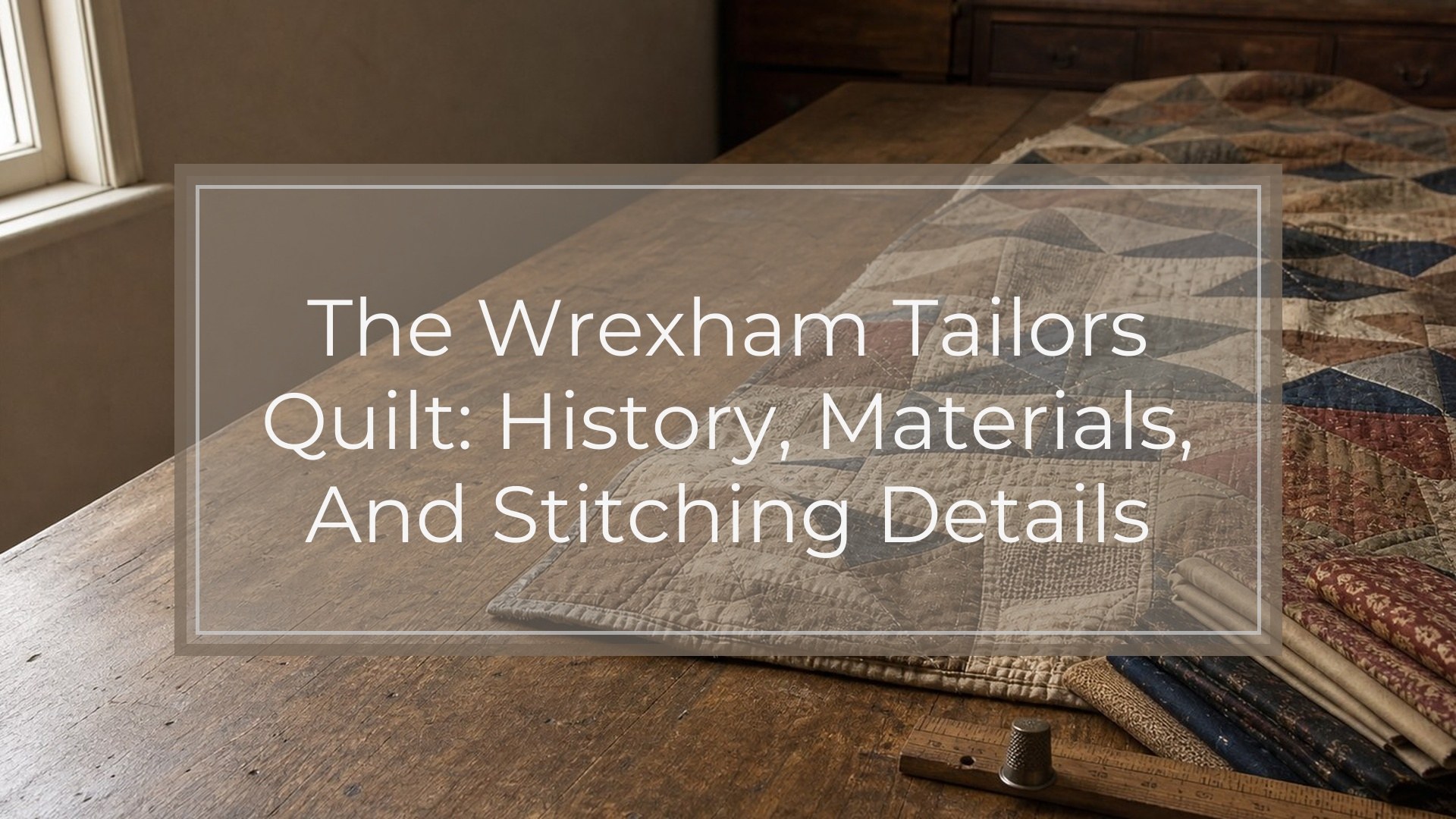
The Wrexham Tailors Quilt is a historic textile associated with Wrexham and with the skilled world of tailoring. Its name points to a quilt made from, or strongly connected to, tailor’s cloth: the offcuts, suitings, linings, and carefully handled fragments that came from professional garment work. For stitchers today, its value is not only historical. It also shows how practical sewing, economy of materials, and design judgment can meet in one object.
Because surviving records for many working textiles are limited, the quilt is best understood through careful observation: what fabrics were used, how the seams were managed, how the surface was arranged, and what those choices suggest about the maker’s training, resources, and purpose.
What Is the Wrexham Tailors Quilt?
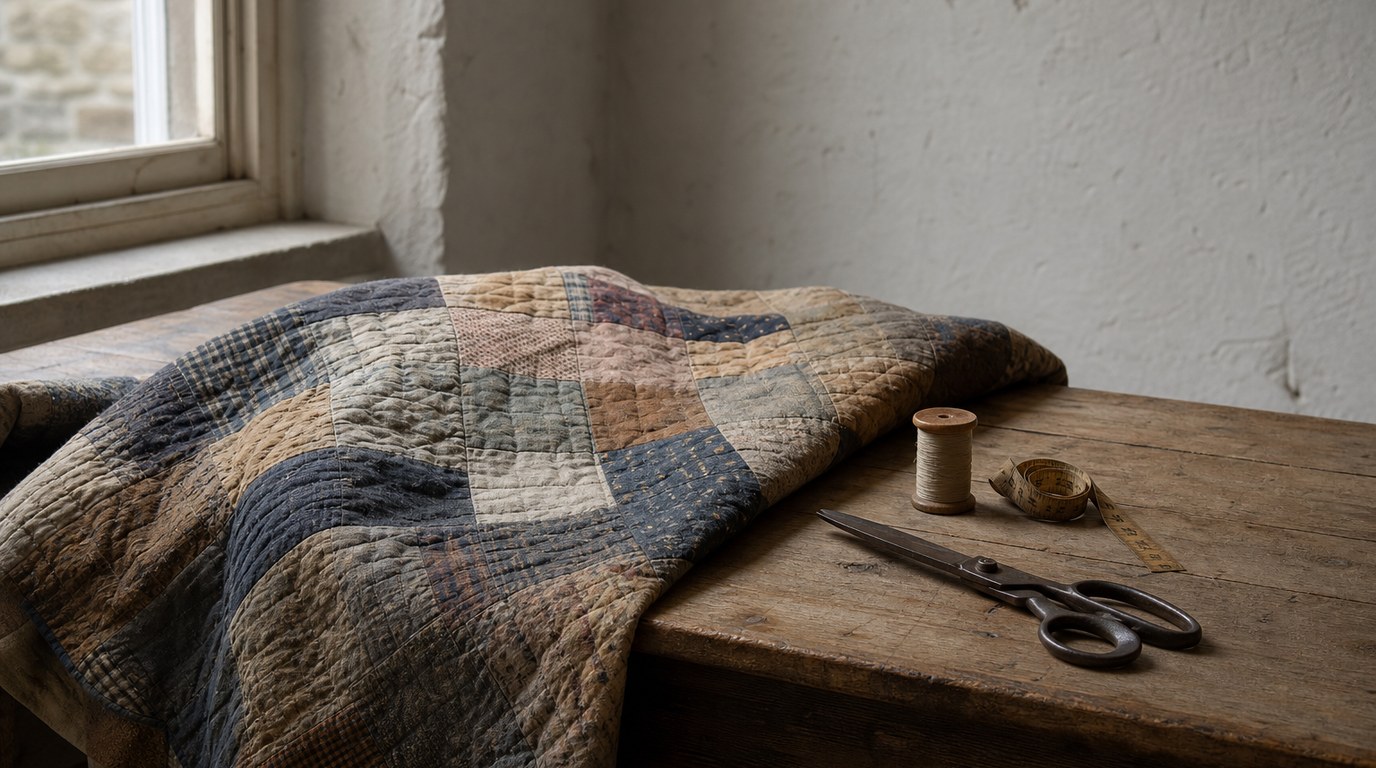
The Wrexham Tailors Quilt is known as a quilt linked to the tailoring trade in Wrexham, a town with a long history of practical textile use, clothing work, and local craft skill. Rather than being defined by one single decorative block pattern, its importance lies in the relationship between cloth, workmanship, and place.
The word “tailors” in the name is especially important. It suggests a quilt connected with men’s tailoring, workshop remnants, or a maker familiar with garment construction. Such quilts often differ from domestic cotton patchwork because their fabrics may include wool, worsted, suiting, lining, or heavier woven cloth. That gives the quilt a different handle, weight, and visual character from lighter bed quilts made mainly from printed cottons.
Wrexham, Tailoring, and Textile Work in Context
To understand the Wrexham Tailors Quilt, it helps to picture tailoring as a skilled trade rather than simply “sewing.” A tailor measured bodies, cut cloth economically, shaped garments, controlled seams, and worked with expensive fabrics. Cloth was not waste to be discarded lightly. Even small remnants could have value.
In towns such as Wrexham, clothing work sat within everyday local life. Tailors served workers, shopkeepers, chapel-goers, professionals, and families who needed durable garments. A tailor’s shop would generate oddly shaped scraps: narrow strips, triangular cutaways, sleeve and collar remnants, linings, facings, and small pieces too irregular for another garment but still usable.
A quilt made from these materials reflects that world. It may carry the evidence of a workshop economy, where skill included both precision and thrift. For textile historians and modern stitchers, this context matters because it explains why the quilt may look more controlled, denser, or darker than a domestic cotton quilt.
Who Might Have Made It?
The maker of the Wrexham Tailors Quilt should be discussed carefully. The name indicates a connection with tailoring, but it does not prove, by itself, that a named professional tailor stitched every part. Records suggestive of trade, family ownership, or local memory can guide interpretation, but many historic quilts survive without full documentation.
One possibility is that the quilt was made by a tailor using workshop scraps. Another is that it was made by a family member with access to a tailor’s offcuts. It may also have been a collaborative household object, combining professional cloth knowledge with domestic stitching time.
The strongest evidence usually comes from the textile itself: fabric types, cutting accuracy, seam handling, and the maker’s comfort with difficult cloth. These clues can suggest training or access, even when a maker’s name is uncertain.
Materials: Cloth, Scraps, and the Tailor’s Eye
The materials are central to the quilt’s meaning. A tailor’s quilt is likely to include cloth chosen first for availability and durability, not simply for pretty print. Suiting wool, dark broadcloth, serge, worsted, linings, and small contrasting pieces may all appear in quilts of this kind. These fabrics behave differently from quilting cotton. They can stretch, fray, resist pressing, or create bulky seams.
That is where the “tailor’s eye” matters. A maker used to garment cloth would understand grain, nap, weight, and drape. Grain is the direction of the woven threads; cutting with or against it changes how fabric behaves. Nap is the raised surface on some cloths, which can look lighter or darker depending on direction.
Using remnants also affects design. Instead of cutting from fresh yardage, the maker may have shaped the design around available pieces. Skill appears in making irregular scraps look intentional.
Construction and Stitching Details
The construction of the Wrexham Tailors Quilt is the craft-focused heart of its interest. A quilt made from tailoring remnants requires control at every stage: cutting, joining, pressing, layering, and finishing. Heavier cloth does not forgive careless seam allowances in the way thin cotton sometimes can.
The piecing may show careful alignment, repeated shapes, or a disciplined use of small fragments. Seam allowance—the extra cloth beyond the stitched line—would need to be managed to reduce bulk. In a heavy wool or suiting quilt, stacked seams can become stiff ridges. A skilled maker might press seams open, grade them by trimming layers to different widths, or arrange joins so that bulk is spread across the surface.
The stitching itself may be practical rather than showy. Small, even stitches would hold firm under weight. If the quilt includes quilting stitches through layers, those stitches may be wider spaced than fine cotton quilting because dense cloth is harder to needle. Tying, backing, or minimal quilting may also be possible, depending on the object’s structure.
For modern stitchers, the key lesson is that construction follows material. A quilt of tailor’s cloth asks for different choices than a lightweight patchwork coverlet.
Table: Key Features of the Wrexham Tailors Quilt
| Feature | What to Notice | Why It Matters |
|---|---|---|
| Place association | Link with Wrexham | Grounds the quilt in local textile history |
| Tailoring connection | Suiting, linings, or workshop scraps | Suggests trade skill and material thrift |
| Fabric weight | Dense or varied cloth | Affects seams, quilting, and durability |
| Stitching | Even seams, controlled joins | Shows practical needlework ability |
| Design logic | Scrap use made orderly | Combines economy with visual planning |
Design Meaning: Utility, Display, or Both?
One interpretation is that the Wrexham Tailors Quilt was made for use: a warm, durable covering created from available cloth. Tailoring fabrics can be dense and insulating, making them practical for bedding or household warmth. In that sense, the quilt belongs to a tradition of making value from remnants.
But utility does not rule out display. A carefully arranged scrap quilt can demonstrate skill, taste, and control. If the maker was connected to tailoring, the quilt may have shown professional pride: straight cutting, confident handling of cloth, and an ability to make leftovers look composed. Like many historic textiles, it may sit between categories. It could be useful, decorative, economical, and expressive at the same time.
Why the Quilt Matters to Modern Stitchers
The Wrexham Tailors Quilt matters because it encourages stitchers to look beyond pattern names and notice workmanship. It asks practical questions: What cloth did the maker have? How did they control it? Where did they accept irregularity, and where did they insist on precision?
For quilters, embroiderers, and needleworkers, the quilt is a reminder that good design can begin with constraints. Limited scraps can produce rhythm. Heavy fabric can lead to bold structure. Plain cloth can make seam lines and shape placement more important.
It also connects modern sustainable making with older habits of thrift. Today, using remnants may be described as eco-conscious. In earlier textile work, it was often common sense. The quilt gives that practical discipline a historical form.
How to Study a Historic Quilt Like This
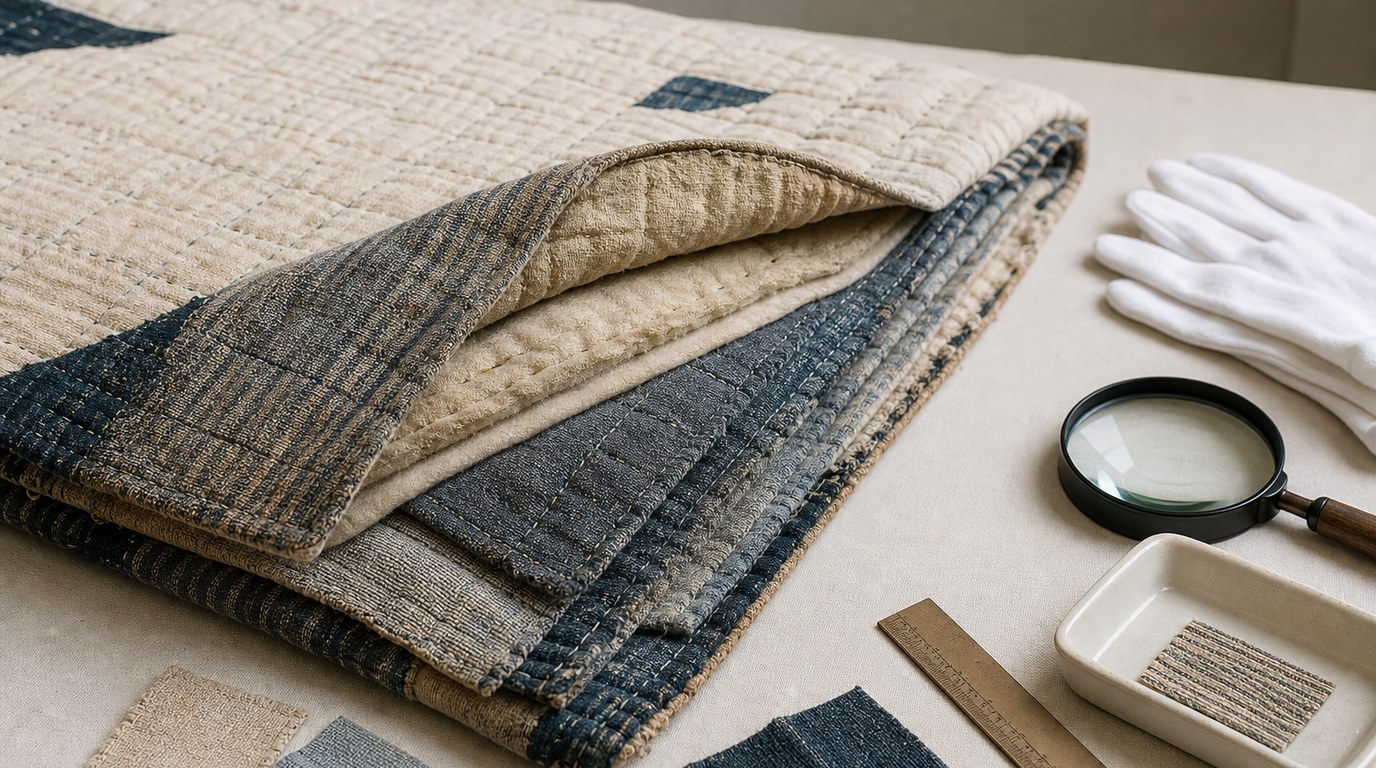
A useful way to study a historic quilt is to move from the outside inward: material, construction, design, then meaning. First, identify the fabrics as far as possible. Are they wool, cotton, silk, lining, or mixed cloth? Notice weight, weave, wear, and color.
Next, study construction. Look at seam width, stitch length, pressing, backing, binding, and any quilting or tying. Then consider design. Are pieces repeated, balanced, randomly placed, or arranged by color and size?
Only after that should interpretation begin. Ask what the evidence supports. The Wrexham Tailors Quilt may suggest professional skill, workshop access, thrift, household use, or display, but the strongest reading comes from matching those ideas to visible textile clues.
FAQ
What Is the Wrexham Tailors Quilt Known for?
The Wrexham Tailors Quilt is known for its association with Wrexham and the tailoring trade. Its importance lies in its likely use of tailor’s cloth or scraps, careful construction, and evidence of practical textile skill shaped by economy, durability, and design judgment.
Was the Wrexham Tailors Quilt Made by a Professional Tailor?
It may have been, but that should not be stated as certain unless supported by records. The name indicates a tailoring connection, which could mean a professional maker, access to a tailor’s workshop scraps, or a household maker familiar with tailoring materials.
What Can Quilters Learn from the Wrexham Tailors Quilt?
Quilters can learn how material choice affects construction. Heavy or varied cloth requires thoughtful seam control, pressing, cutting, and stitching. The quilt also shows how scraps can be arranged with purpose, turning leftover fabric into a durable and meaningful textile.