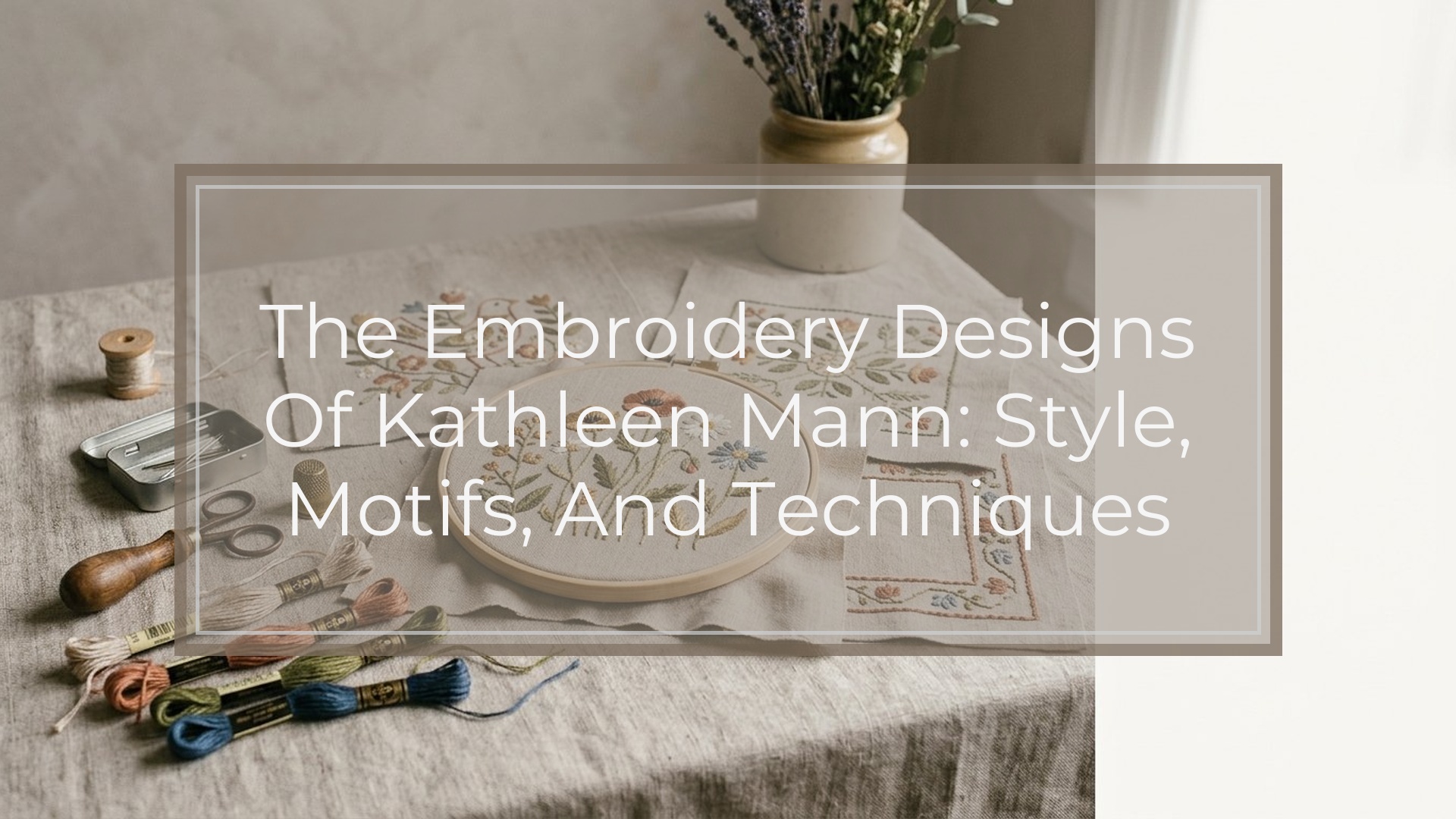
The embroidery designs of Kathleen Mann are best understood as decorative, historically minded patterns with a strong sense of line, rhythm, and surface ornament. For stitchers, their appeal lies less in dramatic realism and more in graceful arrangement: flowers, leaves, scrolling stems, borders, and balanced panels that invite careful hand embroidery. Mann’s work is useful to study because it shows how a design can feel rich without being overcrowded. Modern embroiderers can learn from her approach to motif placement, restrained color, and stitch texture while still adapting the designs for contemporary fabric, threads, and practical projects.
Who Was Kathleen Mann in Embroidery Design?
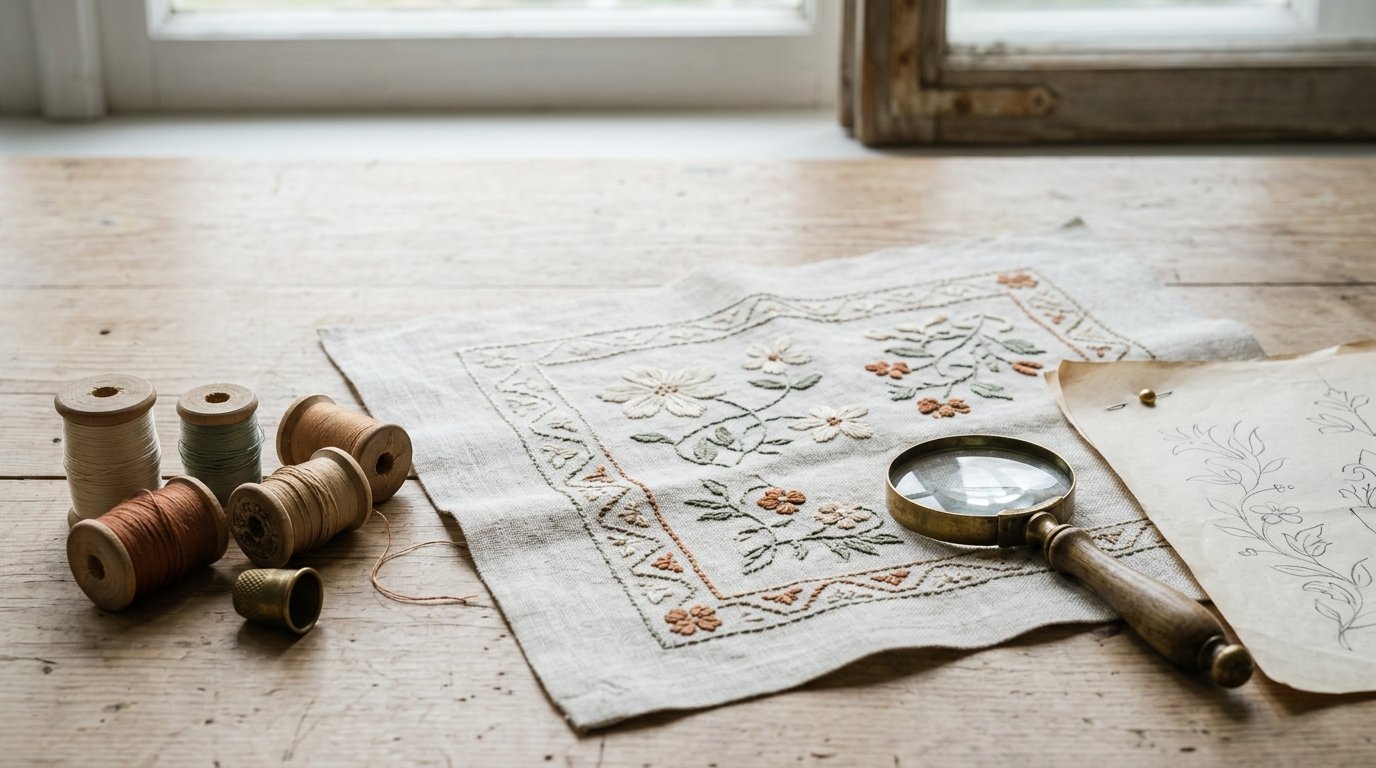
Kathleen Mann is associated with early twentieth-century decorative design, including embroidery patterns that reflect the period’s interest in handwork, domestic art, and historically inspired ornament. Rather than treating her only as a biographical subject, stitchers benefit most from looking at how her designs function on cloth.
Her name appears in connection with embroidery designs that suit panels, borders, household textiles, and ornamental needlework. Like many designers of her era, she worked within a visual world shaped by Arts and Crafts ideals, stylized natural forms, and a respect for traditional hand skills. Her importance for modern makers is practical: her work offers clear lessons in line, balance, and elegant surface decoration.
The Overall Look of Kathleen Mann’s Embroidery Designs
The overall look of Kathleen Mann’s embroidery designs is controlled, decorative, and flowing. The designs often depend on strong outlines rather than heavy shading. Shapes are simplified enough for stitching but not so plain that they lose character. A flower may be reduced to a clear profile, a leaf to a curved shape with a central vein, or a stem to a long, rhythmic line.
The effect is usually graceful rather than busy. Motifs tend to sit within an organized structure: a border, a central spray, a repeating vine, or a framed panel. This gives the stitcher a useful mental model: first see the skeleton of the design, then the decorative filling. The line leads the eye, while stitches and color add emphasis.
Common Motifs: Flowers, Leaves, Scrolls, and Borders
Mann-style embroidery often uses a vocabulary of natural and ornamental forms. Flowers are important, but they are usually stylized rather than botanical illustrations. Petals may be broad, rounded, pointed, or arranged in simple layers. Leaves often curve along the direction of a stem, helping the whole design feel connected.
Scrolls and tendrils give movement. They can turn a simple floral spray into a decorative composition suitable for a cushion, runner, or framed textile. Borders are especially worth studying. A repeated flower-and-leaf unit, a vine running along an edge, or a corner motif can teach a stitcher how repetition creates structure. These motifs work because they are readable from a distance and still rewarding up close.
Design Feature Table: What Stitchers Can Learn from Her Work
| Design feature | What to notice | Stitcher’s takeaway |
|---|---|---|
| Flowing outlines | Curves guide the eye through the design | Use smooth line stitches and avoid broken curves |
| Stylized flowers | Petals are simplified, not overly realistic | Choose clear fills over fussy detail |
| Repeating borders | Motifs return in measured intervals | Keep spacing consistent before stitching |
| Balanced open space | Empty fabric supports the ornament | Do not fill every area with thread |
| Decorative leaves | Leaves often echo stem direction | Use stitch direction to strengthen movement |
Stitch Choices That Suit Kathleen Mann-style Designs
The best stitches for Kathleen Mann-style designs are those that respect line and shape. Stem stitch is an obvious choice for scrolling stems, outlines, and fine curves because it creates a flexible, corded line. Split stitch can give a slightly finer outline, especially around petals or small leaves. Chain stitch works well when a bolder decorative line is needed.
For filled areas, satin stitch suits small petals and leaves, provided the shapes are not too large. Long and short stitch can be used sparingly where soft shading is wanted, but heavy realism may weaken the period feel. Laid work, couching, and simple filling patterns can also suit ornamental panels. The key is to let the design remain readable. Choose stitches that clarify the drawing instead of competing with it.
Color and Composition in Her Embroidery Designs
Color in these designs is often most effective when handled with restraint. A limited palette of greens, soft reds, blues, golds, creams, or muted pinks can preserve a historical feeling. Strong modern brights may be used, but they can quickly change the mood from period-inspired to contemporary.
Composition matters as much as color. Mann-style designs rely on balance between motif and ground fabric. A border should feel steady, not cramped. A central floral arrangement should have breathing room. If adapting a design, test the color plan on a small section first. The aim is harmony: line, fabric, and thread should feel like one decorative surface.
How Modern Embroiderers Can Adapt Kathleen Mann’s Design Ideas
Modern stitchers can adapt Kathleen Mann’s design ideas without copying every detail. Start with the structure: a curved vine, a border repeat, or a central spray. Then choose a project that suits the scale, such as a needle book cover, linen panel, cushion front, table runner, or framed sampler.
To keep the period character, preserve the flowing outlines and stylized motifs. Avoid adding too many extra flowers or dense background stitches. If the original design feels too large, reduce it carefully and simplify fills before stitching. If it feels too formal, use only one border section as an accent. Adaptation works best when the design’s rhythm remains intact, even if the materials are modern.
What Makes Her Designs Historically Interesting?
Kathleen Mann’s embroidery designs are historically interesting because they sit at the meeting point of art, domestic craft, and practical pattern making. They show how decorative design could be translated into stitchable forms for home embroidery. The motifs are not random embellishments; they reflect a period taste for stylized nature, orderly pattern, and hand-finished surfaces.
For embroidery readers, the value is not only in age or attribution. The designs demonstrate how historical makers thought about ornament: repeat, curve, balance, and texture. Studying them helps stitchers understand why some traditional patterns still feel usable today.
Tips for Studying Original Kathleen Mann Designs
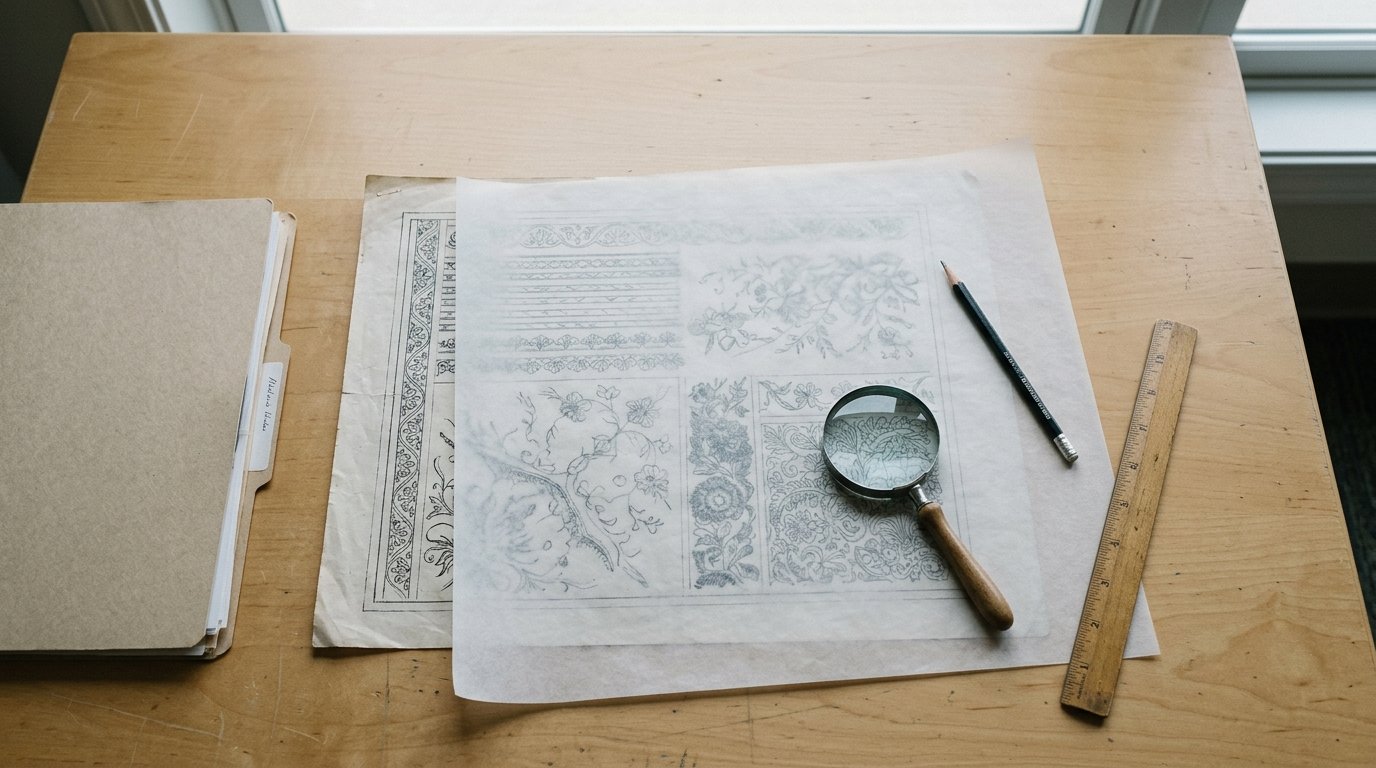
When studying original Kathleen Mann designs, begin by separating the drawing from the stitching. Trace the main lines with your eye before thinking about thread. Notice where the design is dense, where it opens up, and how corners or borders are handled.
Use cautious sourcing. Look for museum records, period publications, auction listings, or reputable needlework references, and compare details before assuming attribution. If recreating a design, document your source and avoid “improving” it too quickly. First stitch a small test to understand the scale, line weight, and color balance.
FAQ
What Should a Beginner Know First About the Embroidery Designs of Kathleen Mann?
A beginner should first notice the structure of the design. Look for the main stems, borders, flowers, and open spaces before choosing stitches. Mann-style work is not about filling everything; it is about graceful line, balanced ornament, and controlled decorative detail.
What Matters Most When Evaluating the Embroidery Designs of Kathleen Mann?
The most important points are line quality, motif rhythm, and composition. Ask whether the curves flow smoothly, whether flowers and leaves repeat in a pleasing way, and whether the design leaves enough open fabric. Good stitching should support those qualities rather than overpower them.
What Mistakes Should Readers Avoid with the Embroidery Designs of Kathleen Mann?
Avoid using too many colors, overfilling open areas, or turning stylized flowers into heavily shaded realistic ones. Also avoid assuming every similar period floral pattern is by Mann. Use careful sourcing, and when adapting, preserve the design’s movement and spacing.
What Is the Next Logical Step After Learning About the Embroidery Designs of Kathleen Mann?
The next step is to study one small design or border closely. Sketch its main lines, choose a limited thread palette, and stitch a sample on linen or cotton. A small test piece will teach more about the style than planning a large project immediately.