Cross stitch is a simple, satisfying needlework craft with benefits that go far beyond making pretty designs. Because it uses small X-shaped stitches on an even grid, it is easy to understand, beginner-friendly, and naturally calming. The benefits of cross stitch include relaxation, improved focus, creative confidence, fine motor practice, and the pleasure of finishing something handmade. It can also connect you with a long craft tradition and a welcoming community of stitchers. Whether you want a screen-free hobby, a creative outlet, or a practical way to make gifts and home décor, cross stitch offers a gentle, structured place to begin.
| Benefit | What It Looks Like in Practice |
|---|---|
| Relaxation | Repeating stitches at a steady pace |
| Focus | Following a chart and counting squares |
| Creativity | Choosing colors, patterns, and finishes |
| Handmade results | Framed art, cards, ornaments, and gifts |
| Community | Sharing progress, tips, and finished pieces |
Why Cross Stitch Is so Beginner-friendly
One of the biggest benefits of cross stitch is how approachable it feels. The basic stitch is simple: bring the needle up through the fabric, make one diagonal stitch, then cross it with another diagonal stitch to form an X. Most patterns are built from that same repeated motion.
Cross stitch also has a clear visual system. The fabric is woven in squares, and the pattern is usually shown on a grid. Each symbol or color on the chart tells you where to place a stitch. That structure makes it easier for beginners to see progress and correct small mistakes.
You do not need advanced drawing, sewing, or embroidery skills to start. A small kit with fabric, thread, needle, and a printed chart can guide you through your first project.
Cross Stitch Can Help You Relax and Slow Down
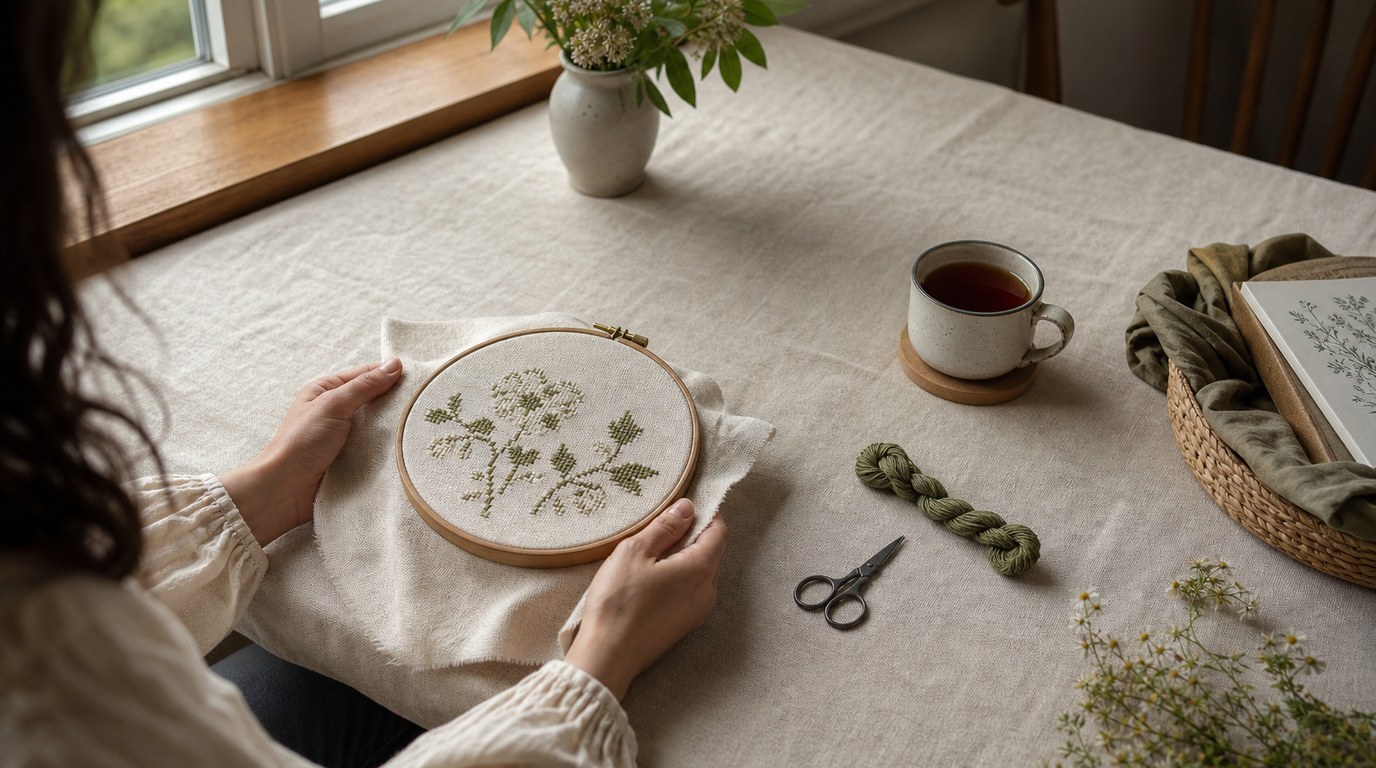
Cross stitch is often enjoyed because it creates a quiet, steady rhythm. Pulling the thread through the fabric, making each X, and watching the design grow can help you settle into the moment. It gives your hands something useful to do while your mind takes a break from rushing.
This does not mean cross stitch is a cure for stress, but many stitchers find it a comforting part of their routine. It can be especially helpful as a screen-free activity in the evening, during travel, or while listening to music or an audiobook.
The pace is part of the appeal. Cross stitch does not demand speed. You can stitch for ten minutes or an hour, set the project down, and return to it later.
It Builds Focus, Patience, and Attention to Detail
Cross stitch encourages concentration in a practical, gentle way. You count squares, match thread colors to chart symbols, and pay attention to where each stitch belongs. This makes it a craft that rewards careful observation without feeling overly complicated.
As you work, you also build patience. A design appears one small stitch at a time, so progress is gradual. That can be a refreshing contrast to fast, instant results in daily life. Even a simple pattern teaches you to keep going through repeated steps.
Attention to detail improves naturally. You start noticing thread tension, stitch direction, fabric count, and neat backs. These small refinements make each future project cleaner and more enjoyable.
Cross Stitch Encourages Creativity Without Feeling Overwhelming
Cross stitch is creative, but it also gives you a helpful framework. Instead of starting with a blank page, you can begin with a pattern that already maps out the design. This is ideal if you want to make something beautiful but feel unsure about drawing or designing from scratch.
Within that structure, there is still plenty of room for choice. You can swap colors, choose different fabric, add initials, change a border, or finish the piece in a hoop, frame, card, cushion, or ornament.
As your confidence grows, you may try designing small motifs or adapting patterns to suit your style. Cross stitch lets creativity develop gradually, which makes it less intimidating for beginners and returning crafters alike.
It Gives You Tangible, Handmade Results
A finished cross stitch project gives you something real to hold, display, gift, or use. That tangible result is one of the most rewarding benefits of the craft. After spending time on each stitch, you end with a piece that clearly shows your effort.
Projects can be practical or decorative. You might make a framed quote, a floral hoop, a bookmark, a greeting card, a baby sampler, or a seasonal ornament. Small projects are excellent for quick wins, while larger designs can become keepsakes.
Handmade pieces also carry personal meaning. Even a simple stitched heart or monogram can feel special because it took time and care. Cross stitch turns thread and fabric into something thoughtful and lasting.
Cross Stitch Can Improve Fine Motor Skills and Hand-eye Coordination
Cross stitch uses small, repeated hand movements. Threading a needle, guiding it through fabric holes, controlling tension, and placing stitches accurately all involve fine motor control. Over time, these motions can become smoother and more confident.
The craft also supports hand-eye coordination because you constantly match what you see on the chart with where your needle goes on the fabric. Counting across rows and checking stitch placement keeps your eyes and hands working together.
For craft beginners, this skill-building happens naturally. You are not drilling a technique in isolation; you are improving through the enjoyable process of making a finished design.
It Connects You with Tradition, Community, and Shared Learning
Cross stitch has been practiced for generations, and that sense of continuity is part of its charm. When you stitch, you are taking part in a familiar needlework tradition while still making choices that reflect your own taste.
It is also an easy craft to share. Stitchers often exchange tips about fabric, thread brands, framing methods, and pattern reading. Online groups, local craft circles, and social media communities make it simple to ask questions or celebrate progress.
This shared learning can be motivating. Seeing another stitcher finish a sampler or solve a mistake reminds you that every project is part of a larger creative conversation.
How to Start Enjoying the Benefits of Cross Stitch
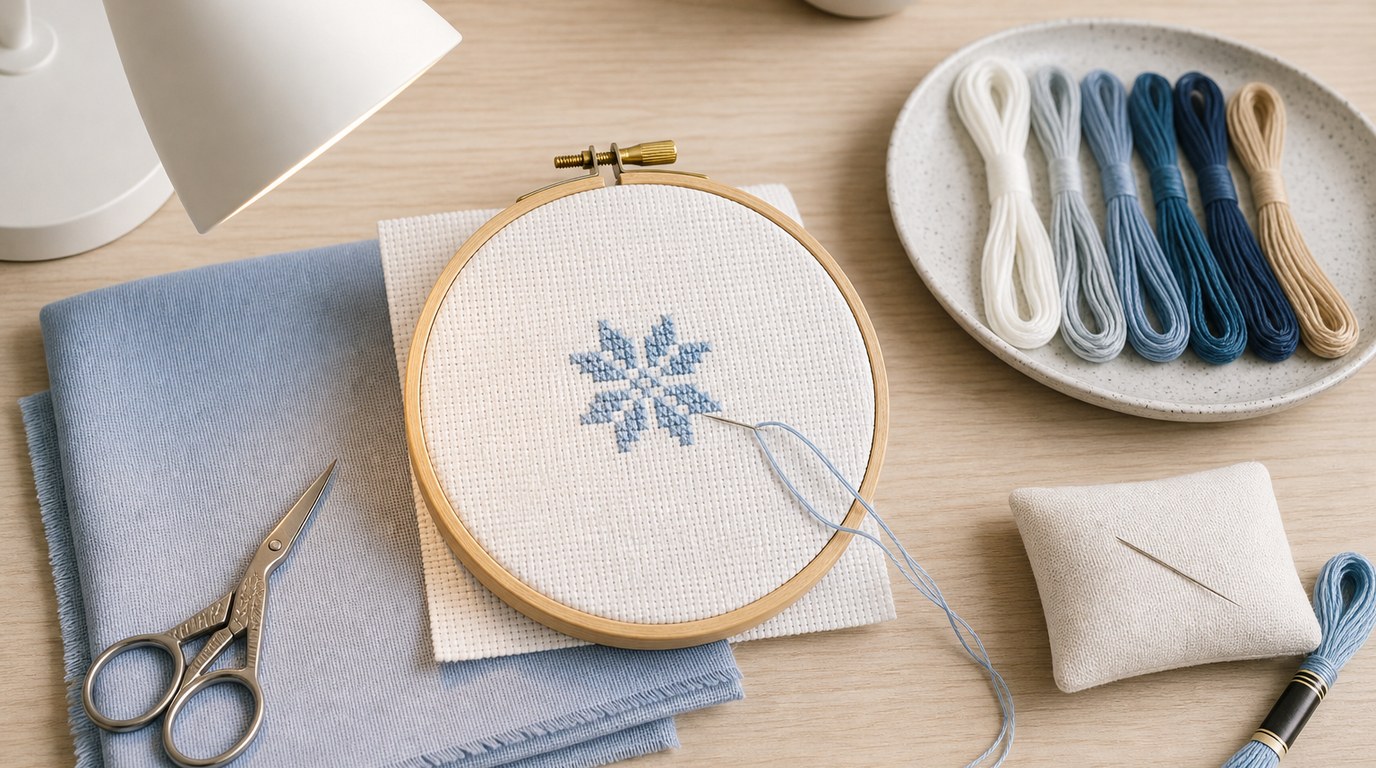
The easiest way to begin is with a small beginner kit. Look for a simple design with only a few colors, clear instructions, and easy-to-see fabric such as 14-count Aida. A small hoop, embroidery scissors, and good lighting will make stitching more comfortable.
Start by learning the basic X stitch and keeping all top stitches in the same direction. Work in short sessions so you stay relaxed rather than frustrated. If you miscount, do not panic; small errors are common and often fixable.
Choose a project you actually like. A motif, quote, animal, flower, or seasonal design that appeals to you will keep you interested long enough to enjoy the process and the finished result.
FAQ
Is Cross Stitch Good for Beginners?
Yes. Cross stitch is one of the most beginner-friendly needlework crafts because it uses a simple repeated X-shaped stitch and a grid-based pattern. A starter kit can provide everything you need, including fabric, thread, needle, and instructions, so you can learn step by step.
Can Cross Stitch Help with Stress?
Cross stitch can be a calming hobby because it encourages slow, repetitive movement and focused attention. Many people use it as a relaxing screen-free activity. It should not replace professional support for serious stress or health concerns, but it can be a soothing part of a daily routine.
What Do You Need to Start Cross Stitch?
To start cross stitch, you need Aida fabric, embroidery floss, a tapestry needle, scissors, and a pattern. An embroidery hoop is also helpful because it keeps the fabric steady. Beginner kits are convenient because they usually include the main supplies in one package.
How Long Does It Take to Learn Cross Stitch?
Most beginners can learn the basic cross stitch in one short session. Reading patterns, counting accurately, and keeping stitches neat improve with practice. A small first project may take a few hours, while larger designs can take days, weeks, or longer depending on size and detail.