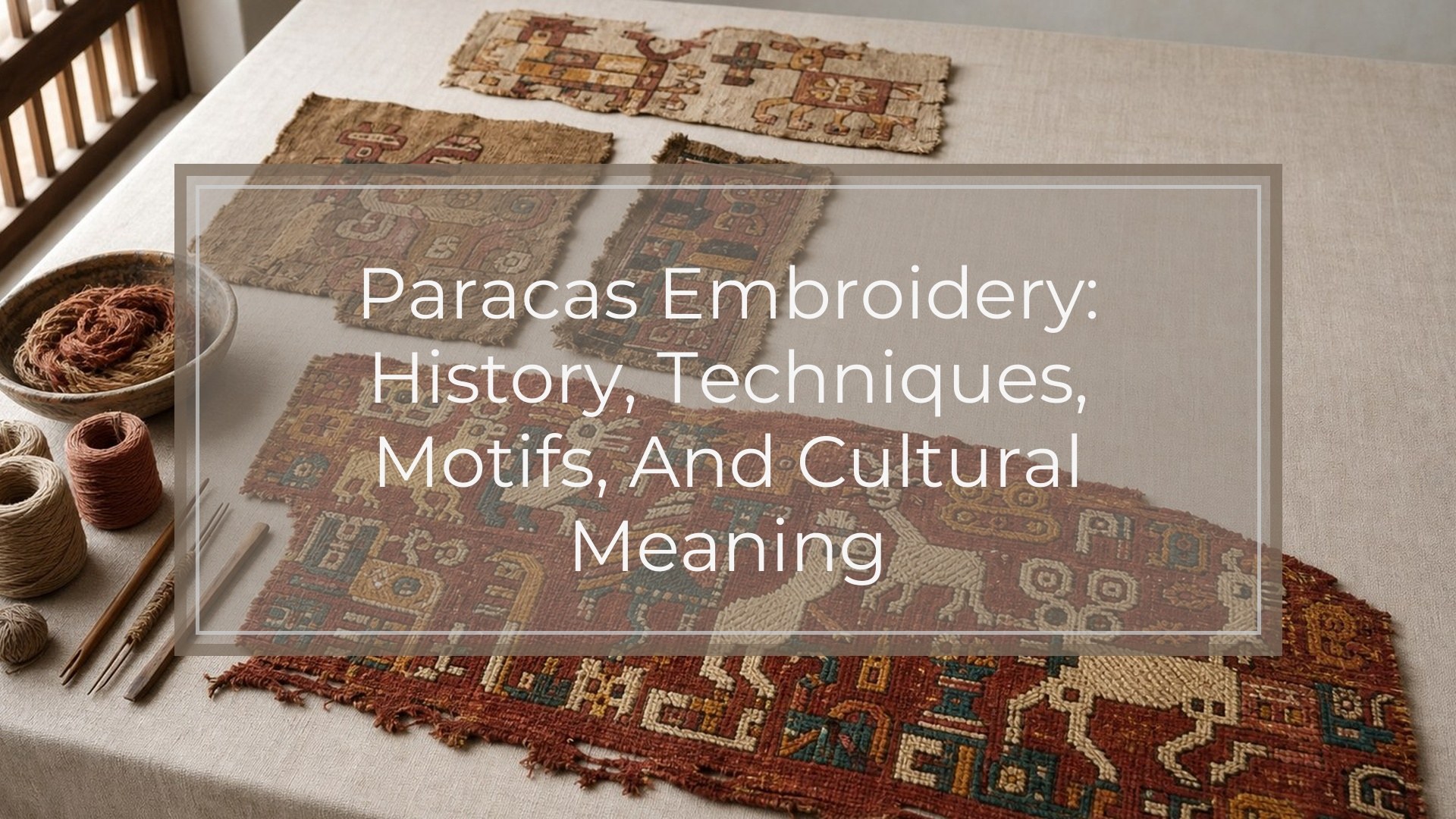
Paracas embroidery is an ancient textile tradition from the Paracas culture of Peru, best known for richly stitched burial cloths, mantles, and garments made more than 2,000 years ago. These textiles combine fine cotton grounds, brilliantly dyed camelid fibers, and dense embroidery in complex images of people, animals, birds, serpents, plants, and supernatural beings.
For embroidery history, Paracas work matters because it shows extraordinary technical control, color planning, and symbolic design long before modern needlework traditions developed. For today’s stitchers, it offers a powerful reminder that embroidery has never been only decoration. In Paracas textiles, stitch, cloth, color, and image worked together as markers of identity, ritual, status, and belief.
What Is Paracas Embroidery?
Paracas embroidery refers to the stitched decoration found on textiles made by the Paracas culture of ancient Peru, especially on funerary mantles and wrapped burial bundles. The most famous examples are large cloths covered with repeated figures, borders, and edge details worked in vivid thread.
A useful mental model is this: Paracas embroiderers often began with a woven cloth, then transformed it with needlework. The embroidery could define figures, fill shapes, outline borders, and create movement across the surface. Unlike a small sampler or isolated motif, many Paracas textiles operate as complete visual fields. Every repeated figure, color shift, and border element contributes to the overall design.
Historical Setting: the Paracas Culture of Ancient Peru
The Paracas culture flourished on the south coast of Peru, mainly on the Paracas Peninsula and nearby valleys, roughly from about 800 BCE to 100 BCE. This dry coastal region was bordered by the Pacific Ocean, desert, and access routes to the Andean highlands. That geography mattered: coastal cotton, highland camelid fiber, plant dyes, and trade connections all helped shape the textile tradition.
Paracas society is known through archaeology, especially cemeteries and burial sites where textiles survived in remarkable condition. These finds show that cloth was culturally important, not merely practical. Textiles could be layered, displayed, exchanged, worn, and ultimately buried with the dead.
Paracas embroidery also sits within a wider Andean world where weaving and fiber arts were central technologies. Still, its particular combination of color, figural imagery, and needleworked surfaces gives it a distinctive place in embroidery history.
Key Features at a Glance
| Feature | What to Notice |
|---|---|
| Time and place | Ancient south coast Peru, especially the Paracas region |
| Main objects | Mantles, garments, borders, and funerary wrappings |
| Ground cloth | Often cotton fabric used as the base |
| Embroidery thread | Commonly dyed camelid fiber, such as alpaca or llama wool |
| Visual style | Repeated figures, strong outlines, vivid color contrasts |
| Common imagery | Birds, felines, serpents, humans, plants, and supernatural beings |
| Historical importance | Among the most sophisticated ancient embroidery traditions known |
Materials: Cotton Grounds, Camelid Fibers, and Natural Color
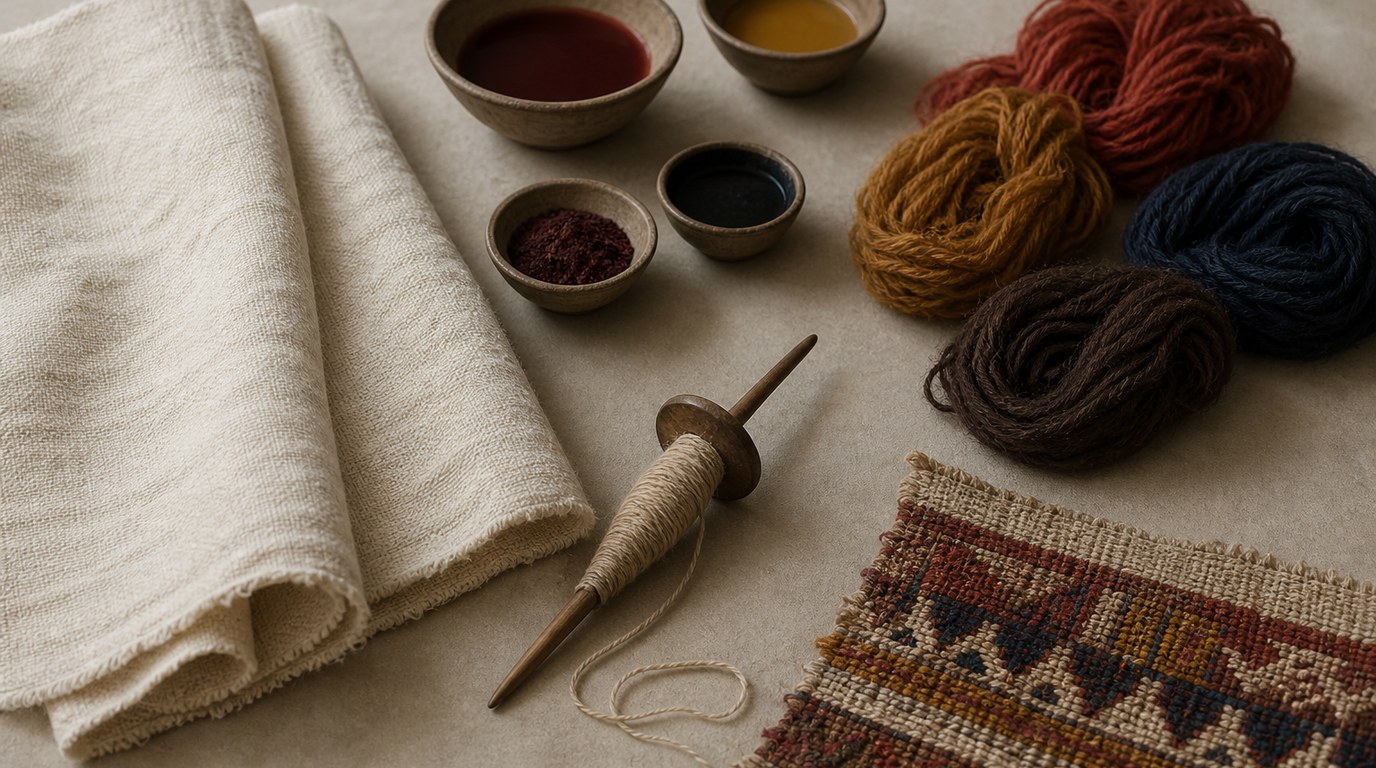
Paracas textiles often combined two major fiber worlds: cotton from the coast and camelid fiber from the Andes. Cotton made a strong, flexible ground cloth. Camelid fibers, from animals such as alpacas or llamas, supplied fine thread that could take dye beautifully and produce a soft but brilliant embroidered surface.
The colors are one of the most striking features. Paracas embroiderers used natural dyes to achieve reds, yellows, blues, greens, browns, and purples, often in combinations that still feel bold today. The survival of this color is partly due to the dry desert environment, but the dye knowledge itself was highly advanced.
For craft readers, the material lesson is important: Paracas embroidery was not just about stitch placement. It depended on the relationship between ground fabric, thread quality, dye, tension, and design planning. The materials were chosen and handled with deep technical knowledge.
How Paracas Embroidery Was Made
Paracas embroidery was made with needle and thread on woven cloth, but the results were far from simple surface decoration. Embroiderers used stitches to outline figures, fill areas, attach borders, and animate repeated motifs. Many designs show careful planning before the stitching began, because figures repeat with variation while still fitting the cloth’s structure.
One of the best-known techniques associated with Paracas textiles is stem-stitch-like embroidery used to build curving lines and filled forms. The direction of the stitches could affect the texture and flow of the image. In dense areas, stitches sit closely together, creating a smooth field of color. In outlines and borders, they help sharpen the silhouette.
Some textiles also include elaborate edging, fringes, or separately worked decorative elements. These details matter because they show that Paracas makers thought about the whole textile: center, border, edge, movement, and how the cloth might be folded or wrapped.
Modern embroiderers may recognize familiar concerns: thread coverage, rhythm, contrast, stitch direction, and motif spacing. What makes Paracas work extraordinary is the scale and consistency. Large mantles could contain dozens or even hundreds of figures, each stitched with control while maintaining a lively, hand-made energy.
Common Motifs in Paracas Embroidery
Paracas embroidery is famous for its visual vocabulary. The motifs are often bold, repeated, and highly stylized rather than naturalistic. A bird may not look like a field-guide illustration; instead, it may combine wings, claws, human features, and symbolic attributes into a powerful image.
Common motifs include birds, especially flying or spread-wing figures. These may relate to the coast, sky, movement, or transformation. Felines also appear, sometimes with strong teeth, claws, or staring eyes. Serpents and snake-like forms curve through designs, adding motion and linking earth, water, or underworld associations in possible interpretations.
Human figures are especially important. Some appear as warriors, dancers, ritual specialists, or beings holding staffs, weapons, trophy heads, fans, or plants. Many are shown frontally or in profile, with elaborate garments and headdresses. These figures can look human and supernatural at the same time.
Plants, seeds, and agricultural references also appear, reminding us that food, fertility, and land were part of the symbolic world. Repetition is a key feature: a mantle might show the same type of figure many times, but with color changes or slight variations. This gives the textile rhythm, like a stitched procession.
What the Motifs May Have Meant
Interpreting Paracas motifs requires care. Archaeologists and textile scholars can compare images, burial contexts, and later Andean traditions, but they cannot interview the makers. That means meanings are often likely or possible rather than certain.
Some motifs probably relate to status, ritual power, ancestry, fertility, warfare, transformation, or the journey between life and death. Figures with animal traits may represent supernatural beings, masked performers, shamans, or symbolic identities rather than ordinary portraits. Trophy head imagery, where present, may connect to ritual practices, conflict, or beliefs about life force.
For stitchers, the key point is that Paracas motifs were not random decoration. They formed a visual language. Color, repetition, pose, objects held in the hands, and placement on the cloth all likely mattered. The embroidery carried meaning through design choices as much as through individual symbols.
Funerary Use: Why so Many Paracas Textiles Survived
Many famous Paracas embroideries come from burials. The dead were wrapped in layers of textiles, sometimes forming large funerary bundles. Fine mantles, garments, and decorated cloths could be placed around the body as part of mortuary practice.
This burial context is one reason the textiles survived. The south coast of Peru is extremely dry, and desert conditions helped preserve fibers and dyes that would normally decay. As a result, archaeologists found textiles with astonishing color and detail still visible after more than two millennia.
The funerary setting also tells us something about value. These were not casual scraps. The labor invested in them was immense, and their placement with the dead suggests that cloth had social, spiritual, and ceremonial importance.
Why Paracas Embroidery Matters in Textile and Embroidery History
Paracas embroidery matters because it expands the history of embroidery beyond the traditions most often discussed in European or Asian contexts. It shows that ancient American textile artists developed complex systems of stitch, color, and symbolic design at an exceptionally high level.
Technically, Paracas textiles demonstrate mastery of materials, planning, and execution. The makers understood how to create crisp shapes, flowing outlines, repeated motifs, and intense color relationships across large surfaces. Visually, the work feels both controlled and energetic, with figures that seem to move across the cloth.
Historically, these textiles also challenge the idea that embroidery is secondary to weaving. In Paracas work, embroidery is often the dominant image-making method. It carries narrative, identity, and ritual force.
For embroidery history, Paracas textiles are not a side note. They are evidence that needlework has long been a major art form, capable of preserving cultural memory and complex belief systems in thread.
What Modern Embroiderers Can Learn from Paracas Textiles
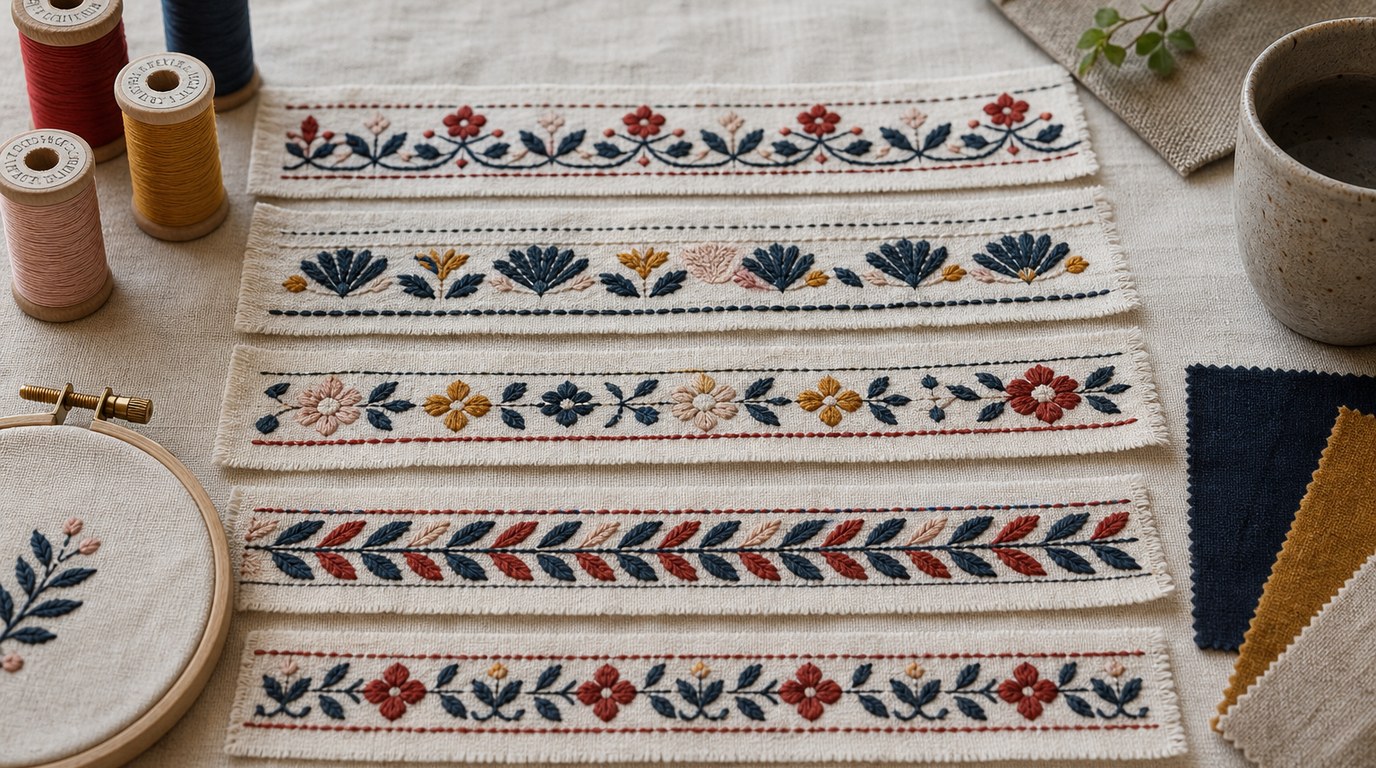
Modern embroiderers can learn from Paracas textiles without treating them as simple pattern sources. The biggest lessons are design-based: repeat motifs with variation, use color boldly, consider borders as active parts of the composition, and let stitch direction support movement.
They also teach respect for material intelligence. Thread, ground cloth, dye, and edge finishing all affect meaning and impact. If you study Paracas embroidery for inspiration, credit the source culture, avoid sacred or funerary imagery as casual decoration, and focus on principles rather than direct copying.
FAQ
How Old Is Paracas Embroidery?
Paracas embroidery is more than 2,000 years old. The Paracas culture flourished roughly between 800 BCE and 100 BCE on the south coast of Peru. Many surviving textiles come from burial contexts, where the desert climate helped preserve fibers, colors, and stitched details.
What Materials Were Used in Paracas Embroidery?
Paracas embroiderers commonly used cotton cloth as the ground fabric and dyed camelid fiber for embroidery thread. Camelid fiber, from animals such as alpacas or llamas, accepted color well and allowed for vivid stitched surfaces. Natural dyes produced the strong reds, yellows, blues, greens, and browns.
What Do Paracas Embroidery Motifs Represent?
Paracas motifs may represent birds, felines, serpents, plants, humans, ancestors, ritual specialists, or supernatural beings. Their exact meanings are not always certain. Scholars often interpret them in relation to status, transformation, fertility, warfare, death, and ritual power, based on imagery and archaeological context.
Was Paracas Embroidery Used for Everyday Clothing?
Some Paracas textiles may relate to garments and wearable forms, but the most famous surviving embroideries come from funerary settings. Fine mantles and wrappings were placed with the dead. Their quality and burial use suggest ceremonial, social, and spiritual importance beyond ordinary daily clothing.
Can Modern Embroiderers Copy Paracas Designs?
Modern embroiderers can study Paracas textiles, but direct copying should be approached carefully. These designs come from a specific ancient culture and often from funerary or ritual contexts. A respectful approach is to learn from their color, repetition, borders, and stitch movement while crediting the tradition and avoiding sacred imagery.