
Alice Kettle is a major contemporary textile artist whose embroidery shows how thread can behave like drawing, painting, storytelling, and construction at once. Her work matters because it pushes embroidery beyond decoration while still respecting the physical intelligence of stitch. In Kettle’s practice, cloth is not just a base and thread is not just a surface detail. Materials carry memory, weight, touch, labour, and meaning. For stitchers, her work offers a useful lesson: embroidery can be expressive because of its materials, not in spite of them. Looking at Alice Kettle through the idea of “material matters” helps readers understand her scale, layered surfaces, machine stitch, figures, journeys, and community-based themes.
| Aspect of Kettle’s work | What to notice |
|---|---|
| Material | Cloth and thread shape meaning, not just appearance |
| Line | Stitch works like drawing, gesture, and movement |
| Surface | Dense layers build colour, texture, and visual depth |
| Scale | Large works challenge expectations of embroidery as small or domestic |
| Themes | Figures, migration, memory, myth, and shared human experience |
Who Is Alice Kettle?
Alice Kettle is a British textile artist known for large-scale embroidered works that combine drawing, colour, narrative, and dense machine stitching. She is often discussed in relation to contemporary embroidery because her work demonstrates how stitch can hold the seriousness and ambition usually associated with painting or tapestry.
Her practice is rooted in textile knowledge, but it reaches into fine art, public art, collaboration, and education. Rather than treating embroidery as a quiet finishing technique, Kettle uses it as the main language of the work. Her pieces often feature figures, landscapes, symbolic forms, and layered compositions that feel both personal and universal.
For craft readers, her importance lies in how visibly she thinks through thread. The stitch is not hidden; it is the structure, surface, and voice of the artwork.
Why Material Matters in Kettle’s Embroidery
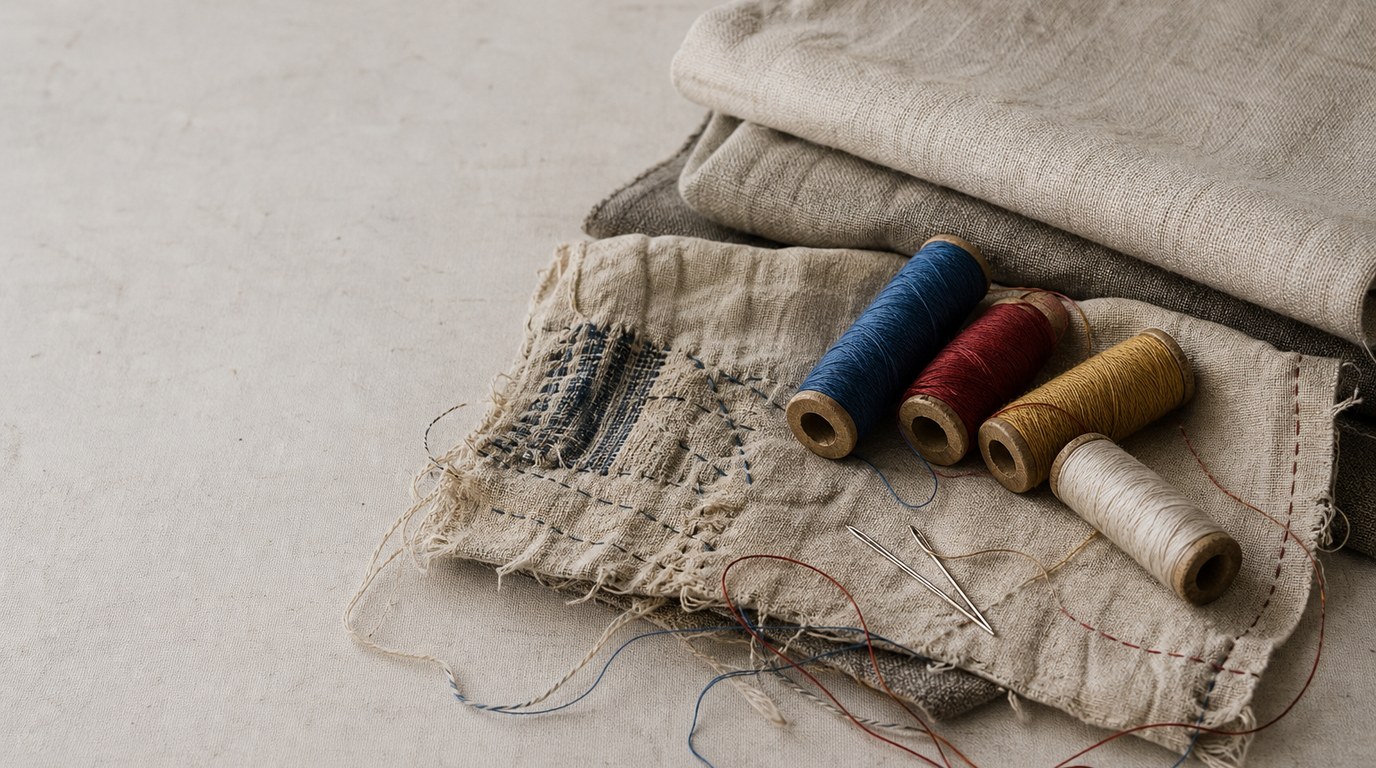
In Alice Kettle’s embroidery, material is never neutral. Cloth brings associations of use, care, domestic life, repair, clothing, and memory. Thread brings line, tension, sheen, colour, and the trace of repeated movement. Together, they create meaning before the viewer even identifies a figure or story.
This is central to understanding “material matters” in relation to Alice Kettle on embroidery. The work is not simply an image translated into stitch. It is an image made possible by stitch. A drawn line on paper and a stitched line on cloth may describe the same shape, but they do not feel the same. Stitch has thickness, direction, drag, and accumulation.
Kettle’s surfaces often make the viewer aware of time and labour. Dense areas of thread can feel protective, heavy, restless, or luminous. Sparse areas can feel open, fragile, or unfinished. The material choices become part of the emotional reading.
A Mental Model for Reading Her Work: Thread as Drawing, Cloth as Story
A helpful way to read Kettle’s work is this: thread acts as drawing, while cloth acts as story. The thread makes marks, defines figures, interrupts space, and creates movement. It can be fine and searching, or dense and insistent. Like pencil or ink, it records decision-making, but unlike pencil, it also builds a tactile surface.
Cloth, meanwhile, holds the image in a different way. It suggests body, shelter, use, history, and touch. Because cloth is flexible and familiar, it can make large narrative subjects feel intimate.
When looking at her embroidery, ask three questions: Where is the thread drawing? Where is it covering or concealing? Where does the cloth seem to carry memory? This mental model helps turn looking into close reading.
Signature Techniques: Layering, Scale, and Machine Stitch
Kettle is especially associated with energetic machine embroidery. The sewing machine allows speed, repetition, density, and sweeping movement, but the result is not mechanical in feeling. Her stitched marks often retain the urgency of hand-drawn lines. Direction changes, overlapping threads, and uneven densities make the surface active.
Layering is one of her key technical qualities. Threads may cross, cover, tangle, or build into fields of colour. Instead of using a single flat shade, Kettle often lets colour emerge through accumulation. A figure might be shaped by many lines rather than one outline. A background may vibrate because several colours sit over and under one another.
Scale is another important feature. Embroidery is often expected to be small, contained, and close to the hand. Kettle’s larger works challenge that assumption. At scale, stitch becomes architectural. The viewer can step back to see image and composition, then move close to study thread density, line direction, and surface decisions.
For embroiderers, this shows that technique is not only about neatness. It is also about energy, pressure, rhythm, and the courage to let stitch remain visible.
Themes in Alice Kettle’s Embroidery: Figures, Journeys, Memory, and Community
Kettle’s work frequently includes human figures, often presented in ways that suggest movement, encounter, vulnerability, or collective experience. These figures may feel mythic, historical, or contemporary rather than strictly portrait-like. They help the embroidery speak about human presence without becoming simple illustration.
Journeys are another recurring concern. Movement across land, water, borders, or emotional states can be suggested through composition and surface. Thread is especially suited to this because it can trace routes, crossings, connections, and disruptions. A stitched line can feel like a path, a wound, a map, or a tie between people.
Memory also sits naturally within textile work. Cloth is close to the body and to daily life, so it can suggest what is carried, inherited, or remembered. Kettle’s layered surfaces can feel like memory itself: partial, accumulated, and sometimes obscured.
Community matters too. Some of her projects have involved collaboration and shared making, extending embroidery beyond the individual artist’s hand. This connects the personal act of stitching with wider social meaning.
Creative Influence: What Kettle Changed About How Embroidery Is Seen
Alice Kettle has helped shift how embroidery is understood in contemporary art and craft. Her work argues, through practice rather than slogan, that stitch can be monumental, intellectually serious, and visually complex. It does not need to imitate painting to be important; it can use its own material strengths.
For many viewers, her embroidery expands the idea of what thread can do. It can draw, obscure, connect, build colour, suggest time, and carry narrative. For makers, this is especially significant because it validates the knowledge embedded in textile processes.
Her influence also lies in making surface visible as thought. In her work, thread density, scale, and cloth are not secondary choices. They are creative decisions that shape interpretation. This helps move embroidery away from being judged only by precision and toward being understood as a full visual language.
Lessons Embroiderers Can Take from Alice Kettle’s Approach
Stitchers do not need to work at Kettle’s scale to learn from her practice. The first lesson is to treat material as active. Before beginning a piece, ask what the cloth already suggests. Is it crisp, worn, translucent, heavy, plain, patterned, personal, or anonymous? Those qualities can guide the design.
Second, think of thread as mark-making. Try using stitch for gesture, not only outline or fill. Vary direction, density, and colour layering. A small sample can explore whether a line feels tense, soft, broken, fast, or heavy.
Third, let scale affect meaning. Even a slightly larger hoop or panel can change how an embroidered image feels. More space allows movement, layering, and atmosphere.
Fourth, separate expressiveness from messiness. Kettle’s work may feel energetic, but it is still controlled through composition, colour, and repeated decisions. The lesson is not to abandon skill; it is to use skill in service of meaning.
How to Study Her Work Without Copying It
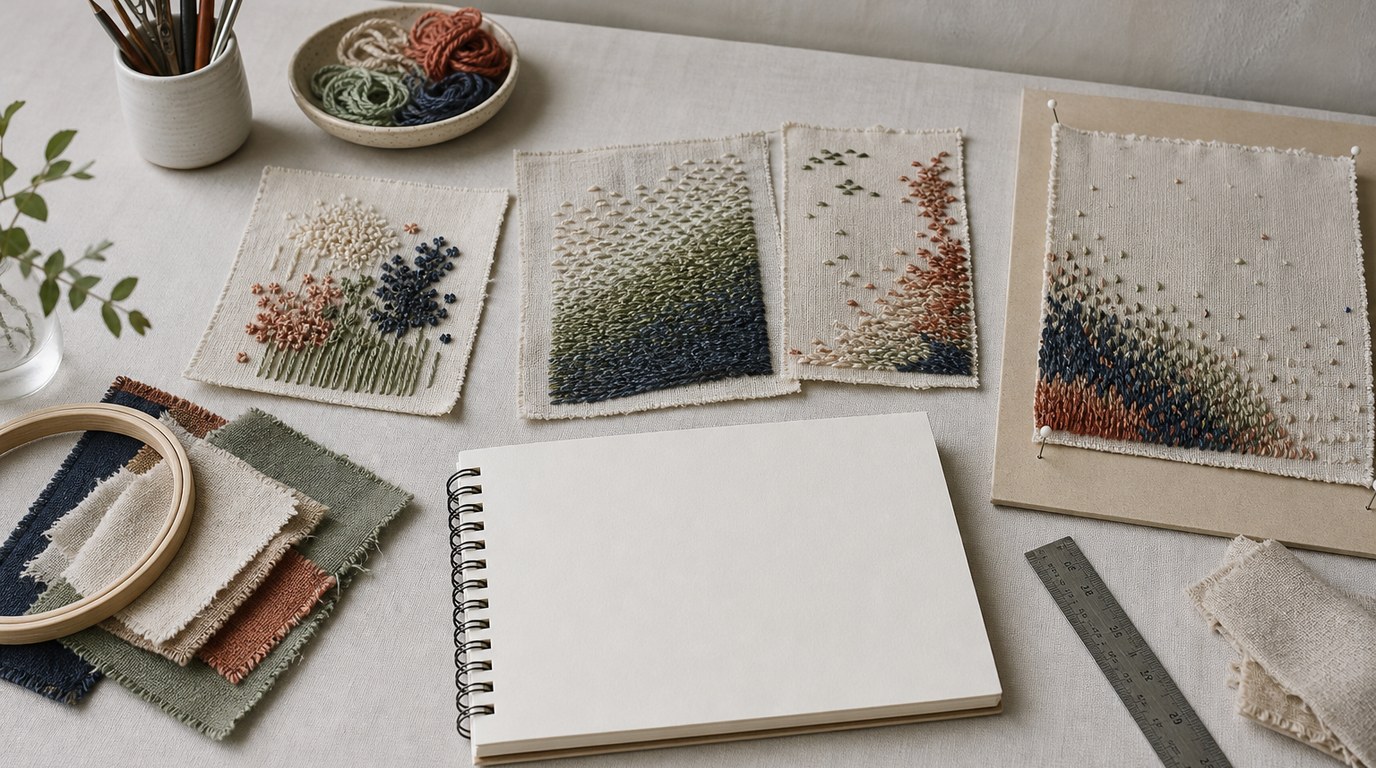
The best way to study Alice Kettle’s embroidery is to analyse principles rather than repeat images. Look at how she uses thread density, figure placement, layered colour, and scale. Then apply one principle to your own subject.
For example, instead of copying a figure from her work, stitch a personal memory using layered machine lines. Instead of imitating her compositions, test how dense thread changes mood on different cloths. Keep notes on what you learn.
Ethical inspiration means asking, “What can this teach me about embroidery?” rather than “How can I make something that looks like hers?”
FAQ
What Should a Beginner Know First About Material Matters Alice Kettle on Embroidery?
Beginners should first understand that “material matters” means cloth and thread are part of the meaning, not just the method. In Alice Kettle’s embroidery, stitch creates line, texture, colour, and emotion. Start by looking closely at how thread behaves across the surface.
What Matters Most When Evaluating Material Matters Alice Kettle on Embroidery?
Look at the relationship between image and material. Notice thread density, line direction, colour layering, cloth choice, and scale. The key question is not only what the work shows, but how stitch and cloth make that subject feel more layered, physical, or emotionally charged.
What Mistakes Should Readers Avoid with Material Matters Alice Kettle on Embroidery?
Avoid judging the work only by neatness or realism. Kettle’s embroidery often values energy, layering, and expressive surface over tidy uniformity. Also avoid treating the textile base as incidental. In her work, material choices are central to how meaning is built.
What Is the Next Logical Step After Learning About Material Matters Alice Kettle on Embroidery?
Study a few works closely, then make small samples based on principles: layered thread, stitched drawing, varied density, or a larger-than-usual cloth ground. Use your own subject matter. This turns admiration into practical learning without copying Kettle’s imagery or artistic identity.