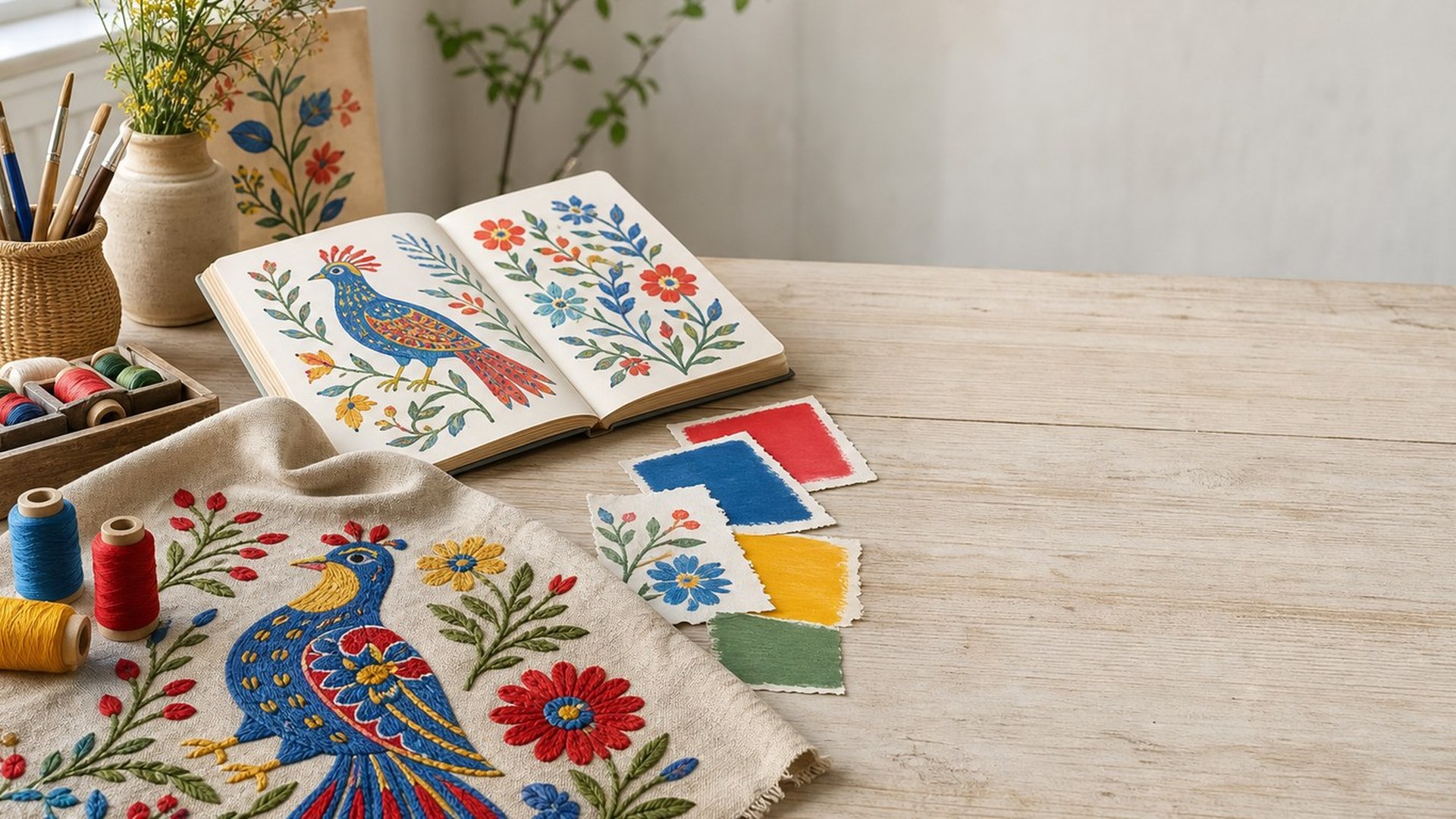
Maria Prymachenko’s paintings are rich inspiration for embroidery, cross stitch, appliqué, and decorative needlework because they combine bold silhouettes, bright color, fantasy animals, flowers, and strong folk-art patterning. Her work does not need to be copied directly to be useful. Instead, stitchers can study how she built lively creatures, filled shapes with dots and stripes, balanced decorative borders, and used color with confidence. For a needleworker, her paintings offer a practical lesson: start with a simple form, make it expressive, then decorate it generously. The result can become a hoop, sampler, patch, cushion panel, bookmark, or cross stitch chart with a joyful Ukrainian folk-art spirit.
Who Was Maria Prymachenko?
Maria Prymachenko, also spelled Pryimachenko, was a Ukrainian folk artist known for imaginative paintings of animals, birds, plants, and dreamlike creatures. She worked in a vivid, decorative style rooted in Ukrainian village culture and folk art traditions. For needleworkers, the most useful context is this: her art feels handmade, symbolic, rhythmic, and ornamental. It often looks as if it could move naturally into textiles, because the shapes are clear and the surfaces are filled with repeatable marks.
What Maria Prymachenko’s Paintings Look Like
Maria Prymachenko’s paintings often feature a central animal, bird, beast, or flower form placed against a strong, flat background. The creatures may be playful, fierce, strange, or humorous, with patterned bodies, expressive eyes, and exaggerated shapes. You might see striped legs, dotted wings, curling tails, petal-like feathers, or plant forms growing around the figure. The compositions are usually easy to read from a distance, but full of detail up close. That mix of bold outline and decorative filling is exactly what makes them so useful for stitch design.
Why Her Paintings Translate so Well to Embroidery and Cross Stitch
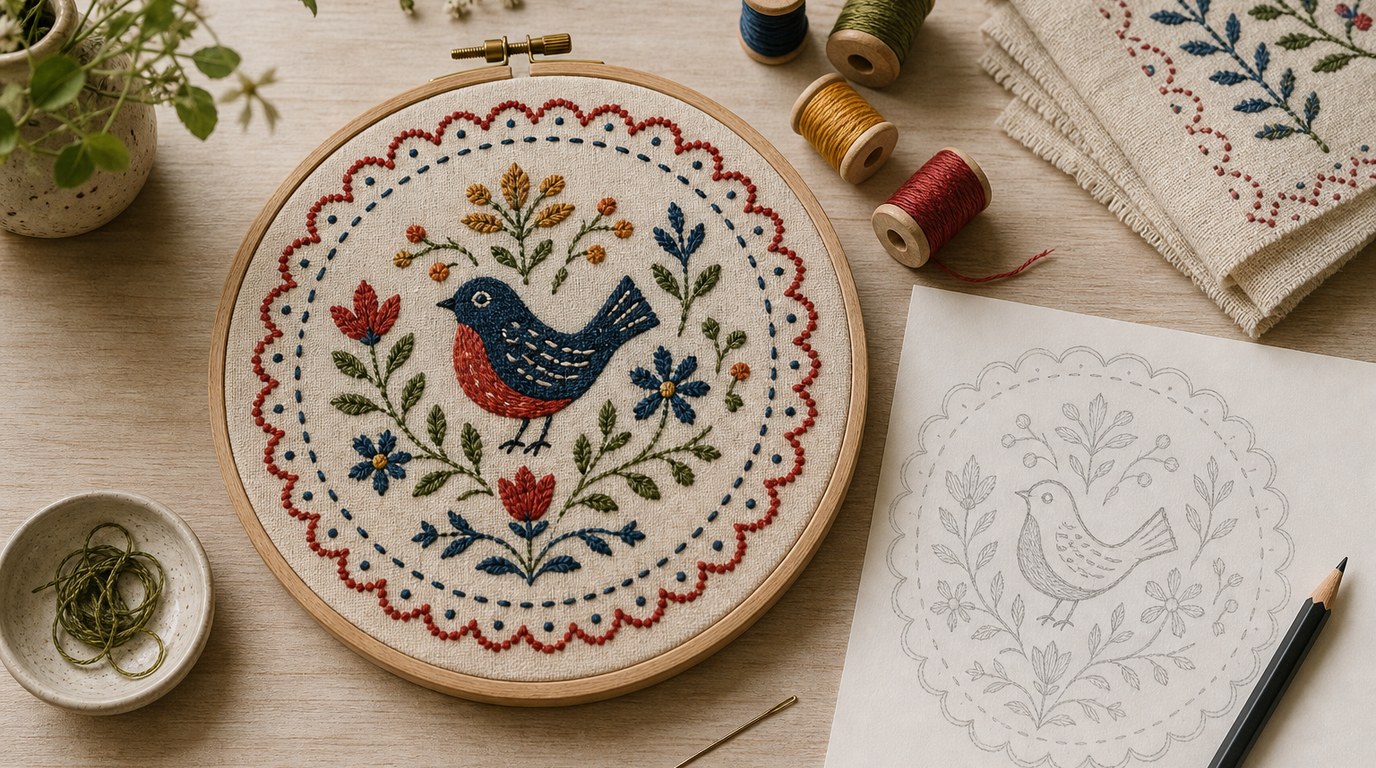
Needlework likes clarity. A shape needs to be readable when reduced to stitches, and Prymachenko’s paintings often begin with strong, simple silhouettes. Her decorative marks also translate beautifully: dots become French knots or single cross stitches, stripes become satin stitch bands, and scallops become blanket stitch edges. Her work also supports limited but lively palettes, which helps stitchers plan thread colors without needing subtle shading. Instead of painterly blending, you can use blocks of color, repeated motifs, and graphic contrast.
Key Visual Lessons Needleworkers Can Take from Her Work
The first lesson is to make the main shape bold. A bird, fox, fish, horse, or fantasy beast should be recognizable before any decoration is added. The second lesson is to fill the shape with pattern rather than realism. Think spots, lines, diamonds, flowers, leaves, and zigzags.
A third lesson is to use expression. Prymachenko’s creatures feel alive because of their eyes, posture, teeth, tails, and gestures. In embroidery, one curved eyebrow or oversized eye can change the whole mood.
| Painting feature | Needlework translation |
|---|---|
| Bold animal silhouette | Simple appliqué shape or cross stitch outline |
| Dotted body pattern | French knots, seed stitch, or isolated crosses |
| Stripes and bands | Satin stitch, backstitch rows, or charted color blocks |
| Floral surrounds | Border motifs, corner sprays, or filler stitches |
| Flat bright background | Solid fabric choice or stitched frame |
How to Build a Prymachenko-inspired Needlework Palette
Start with one strong background color: deep blue, warm yellow, grassy green, coral, black, or cream. Then choose three to five bright motif colors, such as red, orange, pink, turquoise, leaf green, violet, and white. Avoid making every color equally important. Let one color dominate, one support it, and one or two provide surprise accents. For cross stitch, test contrast on graph paper or a digital chart before stitching. For embroidery, lay floss skeins directly on your fabric and check that small details will still show.
Motif Ideas Inspired by Maria Prymachenko’s Paintings
Try a fantasy bird with a fan tail, striped legs, and flowers growing from its back. Make a small hoop with a spotted blue beast surrounded by red tulips. Chart a cross stitch bookmark using one long animal shape, a border of leaves, and repeated dots. Stitch a patch with a smiling fish, patterned scales, and a bright eye. For a sampler, create four small squares: bird, flower, beast, and tree. The goal is not to reproduce one of Maria Prymachenko’s paintings, but to borrow the visual logic of bold folk-art imagination.
Stitch Choices That Match the Folk-art Feeling
Use backstitch or stem stitch for confident outlines. Fill large areas with satin stitch, long and short stitch kept simple, or appliqué if you want a strong flat-color effect. Add French knots for dots, detached chain stitches for petals and leaves, and couching for decorative lines. In cross stitch, use clean blocks of color, small repeated marks, and strong borders. Blackwork-style fills can also work if they stay playful rather than overly delicate.
A Simple Design Exercise: from Painting Inspiration to Stitch Plan
Choose one theme: bird, beast, flower, or fish. Sketch a large, simple outline without interior details. Add three kinds of decoration inside it: dots, stripes, and one floral or leaf shape. Pick a background fabric and five thread colors. Decide which areas need outline, fill, and texture. Then make a small test section before committing to the full piece. If the design still reads clearly from arm’s length, it is ready to stitch.
Respectful Inspiration: What to Copy and What Not to Copy
Use Maria Prymachenko’s paintings as study material, not as patterns to trace and sell. Avoid copying a complete composition, exact creature, or distinctive arrangement. Instead, learn from her methods: bold silhouettes, bright color, fantasy forms, and dense decoration. If you share your work, credit her as inspiration and acknowledge the Ukrainian folk-art context.
FAQ
What Is Maria Prymachenko Best Known for?
Maria Prymachenko is best known for vivid Ukrainian folk-art paintings filled with fantasy animals, birds, flowers, and imaginative creatures. Her work combines strong shapes, bright colors, decorative patterns, and expressive character, making it especially inspiring for textile artists and needleworkers.
Can I Use Maria Prymachenko’s Paintings for Embroidery Patterns?
You can study her paintings for inspiration, but you should not directly copy a complete painting into a pattern, especially for sale. A respectful approach is to create original motifs using broad ideas from her work: bold animals, bright palettes, folk-style borders, and patterned surfaces.
What Stitches Work Well for Prymachenko-inspired Embroidery?
Good choices include backstitch for outlines, satin stitch for flat color, French knots for dots, detached chain stitch for petals, and couching for decorative lines. For cross stitch, use strong silhouettes, repeated small marks, simple borders, and high-contrast color blocks.
What Colors Should I Use for a Maria Prymachenko-inspired Project?
Choose bright, confident colors rather than soft realism. Try combinations like blue, red, yellow, green, black, and white, or coral, turquoise, violet, orange, and cream. Keep the palette controlled: one dominant color, two supporting colors, and a few small accents.