
Cross stitching on linen fabric feels different at first, but the basic idea is simple: instead of stitching into ready-made square holes like Aida, you count the linen threads and make each cross over a set number of threads, usually two. That gives linen its softer, more traditional look. The keys to success are choosing an easy linen count, preparing the fabric well, and staying consistent with your counting and stitch direction. If you start with the center, use good light, and check your thread coverage early, linen quickly becomes much less intimidating and often more enjoyable once your hands learn the rhythm.
What Makes Cross Stitch on Linen Different from Aida
Aida has obvious holes arranged in a firm grid, so each stitch naturally lands in a square. Linen is woven differently. The threads are more visible, the weave can look slightly uneven, and the holes are not as bold, so you usually create your stitch by counting fabric threads rather than following pre-made squares.
For most cross stitch on linen, you stitch over 2, meaning each full cross covers two vertical threads and two horizontal threads. That creates a square unit similar to cross stitch blocks on Aida. You can also stitch over 1 for very fine detail, but that is less beginner-friendly.
The mental model is this: linen still has a grid, but you are building it by counting. Once you see those over-2 squares consistently, stitching becomes much easier and more accurate.
Choose the Right Linen, Needle, Floss, and Setup Tools
Beginners usually do best with a softer, easier count such as 28-count linen stitched over 2. That works out to 14 stitches per inch, which feels familiar if you normally use 14-count Aida. A neutral color like antique white, cream, or light beige also makes holes and threads easier to see.
Here is a quick comparison:
| Linen count | Stitching over 2 equals | Similar Aida size |
|---|---|---|
| — | —: | —: |
| 25-count | 12.5 stitches per inch | between 11 and 14-count |
| 28-count | 14 stitches per inch | 14-count |
| 32-count | 16 stitches per inch | 16-count |
| 36-count | 18 stitches per inch | 18-count |
Use a tapestry needle, usually size 24 for 28-count or size 26 for finer linen. Start with two strands of floss for over-2 stitching on most counts. Helpful tools include a hoop or scroll frame, good lighting, sharp embroidery scissors, and a fabric-safe pen or thread for gridding.
How to Prepare Linen Before You Make the First Stitch
Cut your linen with at least 2 to 3 inches of extra fabric on each side beyond the design area. Linen frays, so finish the raw edges with masking tape, a zigzag stitch, or a serger before you begin.
Next, find the center of the fabric by folding it in half both ways and lightly marking the center point. If your pattern is full coverage or has complex counting, consider gridding the fabric in 10-by-10 stitch blocks. On linen, that means counting over-2 spaces, not single threads, so work carefully.
Mount the fabric in a hoop or frame so it is taut but not stretched harshly out of shape. Check the grain so the fabric sits straight. Finally, test a few stitches in a corner to confirm your needle size, thread coverage, and comfort before starting the actual pattern.
How to Cross Stitch on Linen Fabric Step by Step
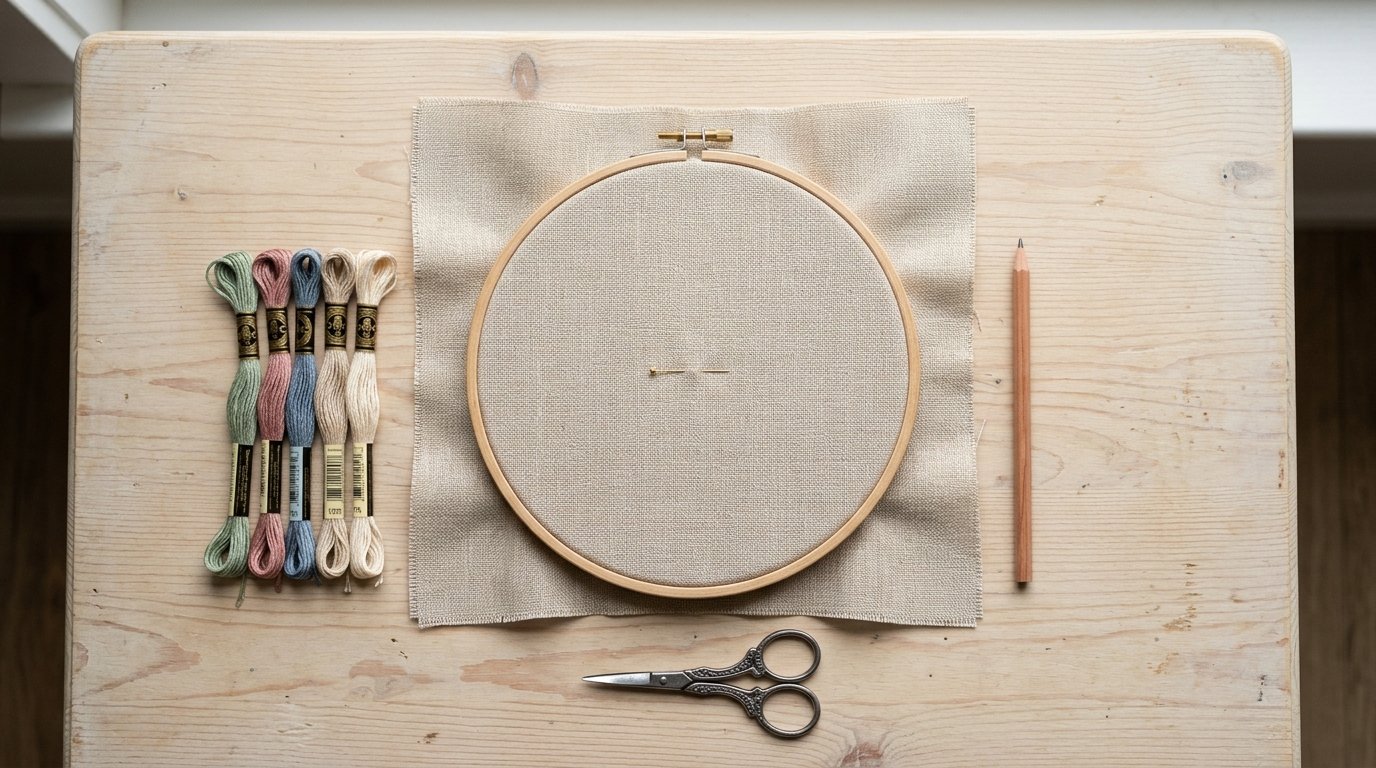
Start by locating the center of your chart and the center of your linen. Most stitchers begin there to reduce counting errors and make fabric margins even.
- Identify your stitch unit. Decide whether the pattern will be stitched over 2 or over 1. For beginners, over 2 is the standard choice.
- Count the threads carefully. Bring the needle up at the first corner of the stitch. Instead of moving to the next visible hole as you would on Aida, count over two fabric threads horizontally and two vertically to form one square.
- Make the first half stitch. Bring the needle down diagonally across that counted square. Then come up at the lower opposite corner and down again to complete the cross. Keep all top stitches going the same direction across the project.
- Check the shape. A correct over-2 stitch should look square, not tall or narrow. If it looks distorted, you likely counted one thread wrong in one direction.
- Work in a small area first. Stitch a short row of 5 to 10 crosses, then compare it with the chart. This is the easiest time to catch counting mistakes.
- Use parking or complete-cross methods as needed. On linen, many beginners prefer completing each cross before moving on because it makes counting easier. If you do rows of half stitches first, recheck your counting often.
- Travel carefully between motifs. Long thread carries can show through linen more than on Aida, especially on light fabric. End and restart thread when the jump is noticeable from the front.
- Watch your tension. Pull the floss until the stitch lies flat, but do not tug tightly. Tight stitches can distort the weave and make holes look uneven.
- Confirm chart alignment often. After each small section, count outward from a stitched landmark rather than relying on guesswork. Linen rewards frequent checking.
- Handle special stitches last if needed. If your pattern includes fractional stitches, backstitch, or over-1 detail, finish the main over-2 crosses first so the structure is easier to read.
A practical example: on 28-count linen stitched over 2, every cross covers the same stitched area as one cross on 14-count Aida. So if a chart is designed for 14-count Aida, the finished size stays the same when worked this way.
Common Problems When Stitching on Linen and How to Fix Them
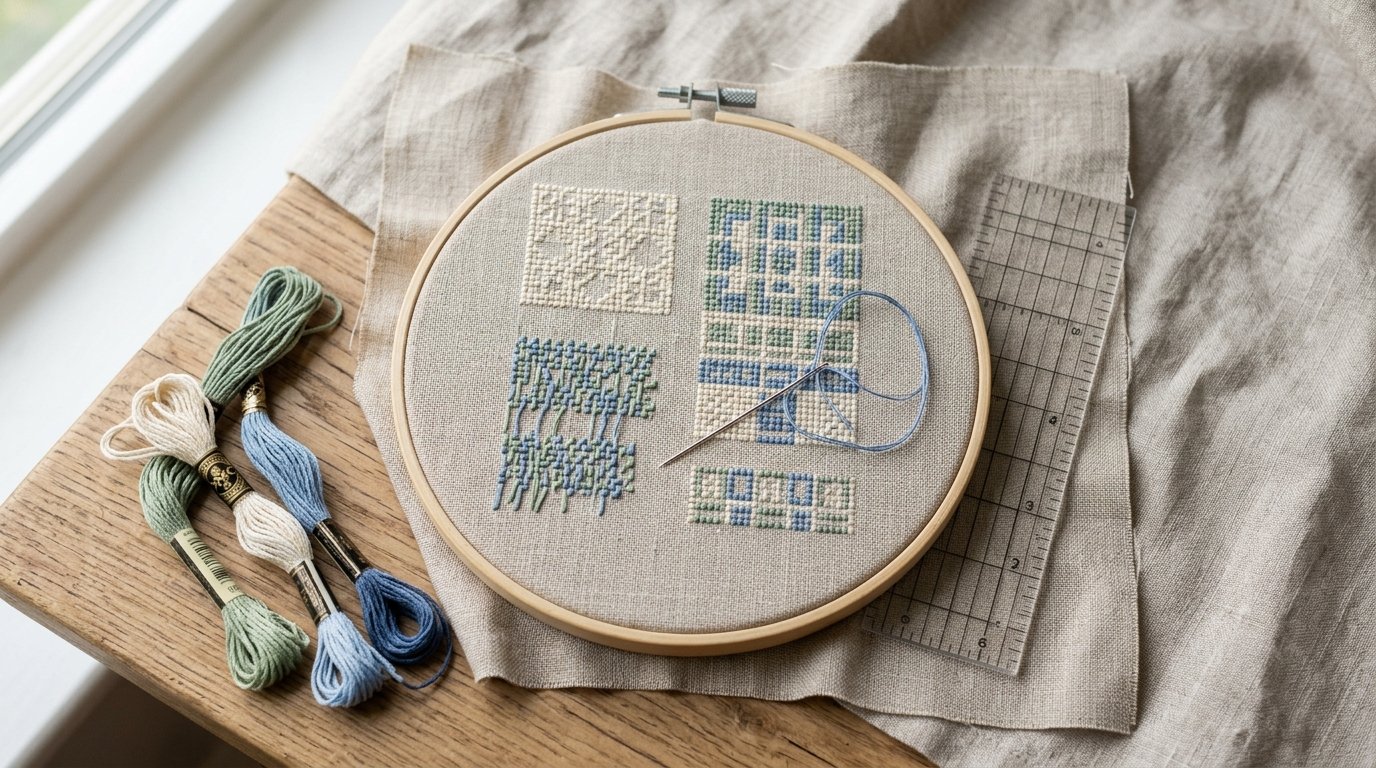
The most common issue is losing your place while counting. Fix this by working in smaller sections, using a grid, and checking every few stitches instead of after a whole motif.
If your stitches look slanted or rectangular, you probably counted two threads in one direction and one or three in the other. Remove the stitch early and recount from a known point.
If the fabric holes seem hard to see, improve your setup before blaming your technique: use brighter lighting, a lighter linen color, and a magnifier if needed.
If coverage looks thin, test one extra strand on a small area. If the floss looks bulky or rubs badly, go back down a strand or use a larger needle.
Tips for Getting Neat, Even Results on Linen
Use shorter thread lengths to reduce fuzzing and twisting. Let the needle dangle occasionally so the floss untwists. Keep the fabric evenly tensioned in the hoop or frame, and avoid crushing stitched areas for too long. Always cross the top leg in the same direction. Most of all, slow down on counting; neat linen stitching comes from accuracy first and speed later.
Is Linen a Good Choice for Your Next Cross Stitch Project?
Linen is a great choice if you want a more refined, traditional finish and do not mind counting carefully. It can feel slower than Aida at first, but many stitchers love the softer texture and polished look. If you are new to it, start with 28-count linen over 2 and a simple pattern. That combination gives you the linen look without making the learning curve unnecessarily steep.
FAQ
Do You Cross Stitch on Linen Over 1 or Over 2?
Most cross stitch on linen is done over 2 threads because it creates an easy-to-see square and matches many standard chart sizes. Over 1 is used for fine detail, miniature work, or specialty areas, but it is much more demanding on the eyes.
What Linen Count Is Best for Beginners?
A 28-count linen is usually the easiest starting point. When stitched over 2, it equals 14-count Aida, which feels familiar to many stitchers. It gives you the linen look without forcing you into very tiny stitches or overly fine counting.
Can I Use a Regular Cross Stitch Pattern on Linen?
Yes. Most regular patterns work well on linen if you stitch over 2 and choose a linen count that matches the intended finished size. For example, a pattern for 14-count Aida can be stitched on 28-count linen over 2 with the same dimensions.
How Many Strands Should I Use on Linen Fabric?
Two strands is the usual starting point for over-2 cross stitch on linen, especially on 28-count or 32-count. Coverage can vary by thread brand, fabric color, and personal preference, so test a few stitches first before committing to the whole piece.
Should I Use a Hoop When Cross Stitching on Linen?
Yes, if it helps you keep the fabric evenly tensioned and the holes visible. Many beginners find a hoop or scroll frame especially useful on linen. Just avoid pulling too tightly, since that can distort the weave and affect your counting.