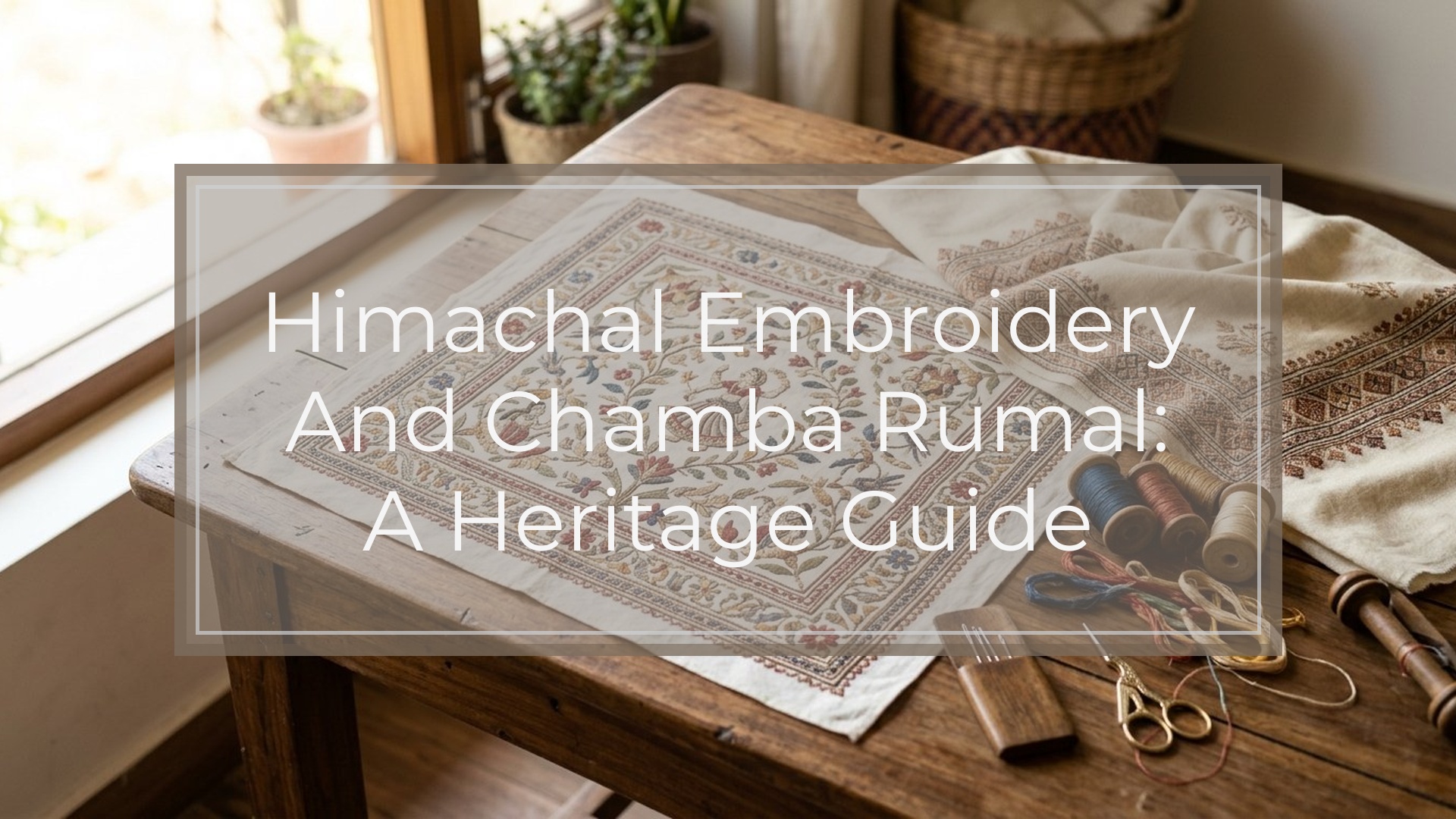
Himachal embroidery is a broad craft tradition from the hill regions of Himachal Pradesh, shaped by local dress, temple culture, courtly patronage, and domestic needlework. Its best-known form is the Chamba Rumal, a square or rectangular embroidered cloth associated with the former hill state of Chamba. It is valued for fine pictorial embroidery, especially scenes from Krishna lore, the Ramayana, the Mahabharata, weddings, processions, and devotional life.
For craft readers, the key point is this: Chamba Rumal is not just “decorative embroidery.” It is a narrative textile tradition. Its identity comes from drawn outlines, silk-thread filling, balanced compositions, and a double-sided stitch effect that makes both sides of the cloth look finished.
Quick Answer
Himachal embroidery and Chamba Rumal are closely linked, but they are not identical terms. Himachal embroidery refers to needlework traditions from Himachal Pradesh, while Chamba Rumal is the most celebrated and historically documented example within that wider regional craft world.
A Chamba Rumal is usually made on fine cotton or muslin, with untwisted silk threads. The design is first drawn or transferred onto the cloth, then embroidered with a stitch often described as do-rukha, meaning double-sided. This creates a surface where the front and back appear almost the same. For a needleworker, that double-sided clarity is one of the most important technical signatures.
Historically, Chamba Rumals were linked with royal courts, temples, marriage gifts, and ceremonial exchange. Many pieces show episodes from Hindu mythology: Krishna with gopis, Radha-Krishna scenes, the Raas Leela, hunting scenes, wedding processions, or figures arranged in decorative borders. The art reflects both folk practice and miniature painting influence, especially the Pahari painting traditions of the western Himalayas.
The main features to notice are:
| Feature | What to Look For |
|---|---|
| Base cloth | Fine cotton, muslin, or handwoven fabric |
| Thread | Silk floss in rich but controlled colors |
| Stitch effect | Double-sided satin-like filling |
| Motifs | Deities, court scenes, animals, flowers, borders |
| Composition | Story-like layout, often with a central scene |
In short, Chamba Rumal is important because it combines embroidery skill, regional identity, religious storytelling, and painterly design in one textile form.
How to Think About This Topic
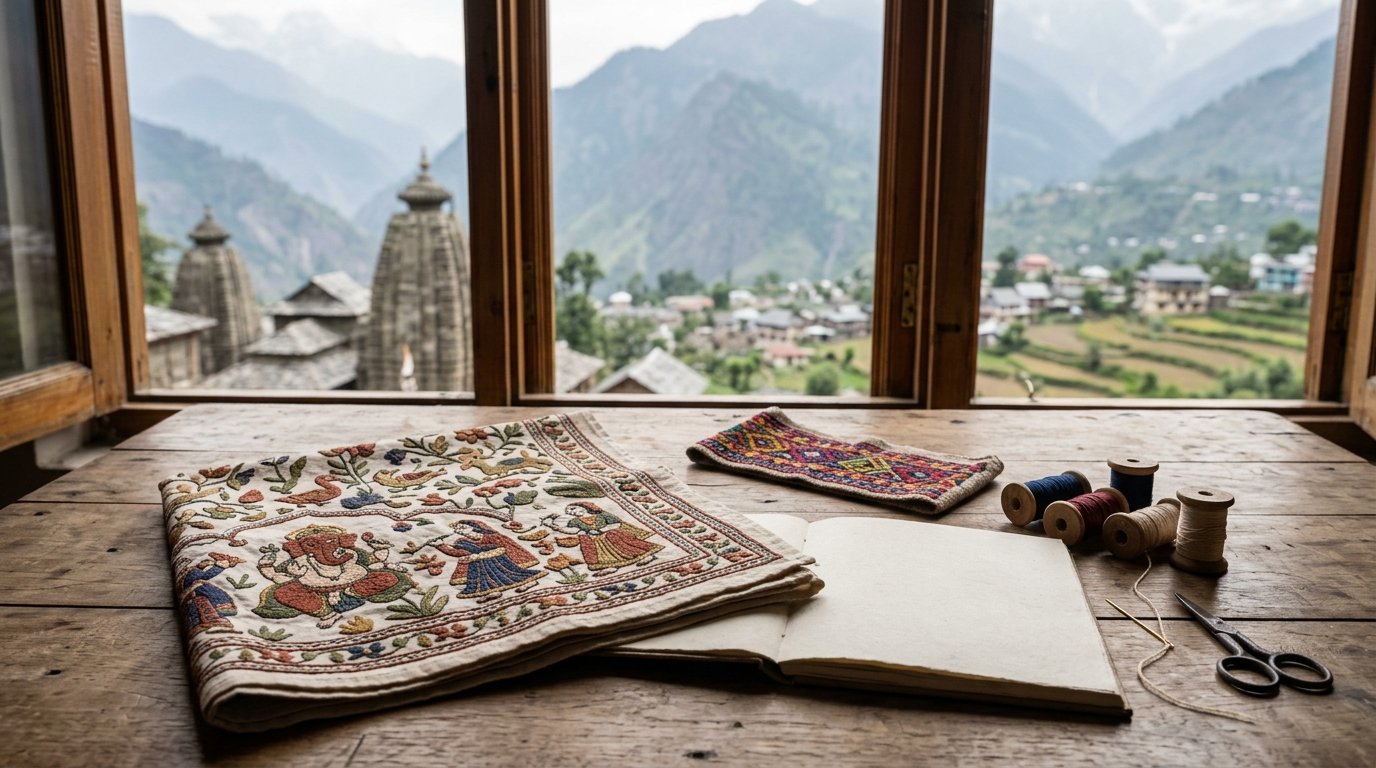
A useful way to understand Himachal embroidery and Chamba Rumal is to think of them through three connected layers: place, picture, and stitch.
The first layer is place. Himachal Pradesh is not a single flat craft region; it is a mountain landscape of valleys, princely states, temple towns, pastoral communities, and domestic textile practices. Needlework in such regions often developed around practical cloth use, ritual gifting, household decoration, and local identity. Chamba, in particular, became strongly associated with embroidered rumals because it had the right mix of courtly patronage, skilled women embroiderers, access to fine materials, and visual influence from Pahari painting.
The second layer is picture. Chamba Rumal is best understood as embroidery that behaves almost like a painting. Many traditional designs were drawn by trained artists or adapted from painting styles before being stitched by women. This helps explain why the figures often have graceful outlines, expressive gestures, stylized trees, lotus forms, animals, musicians, chariots, or architectural details. The cloth is not filled randomly. It is planned as a visual story.
This is why Chamba Rumal differs from simple border embroidery or counted-thread decoration. A border may repeat a flower. A Chamba Rumal may show Krishna dancing with the gopis, a bridegroom’s procession, or a devotional scene arranged inside a decorated frame. The embroidery is not only about surface beauty; it carries a subject.
The third layer is stitch. The famous double-sided effect is central to the identity of the craft. In many embroidery styles, the back of the work is secondary and may show knots, thread carries, or irregular floats. In Chamba Rumal, the expectation is different. The reverse should appear clean and close to the front. This is why the technique demands planning, controlled tension, and careful filling. The stitch is often compared to satin stitch, but its value lies in how evenly it works across both faces of the cloth.
For someone studying the tradition, this mental model prevents confusion. You are not only asking, “What motifs are used?” You are also asking: Where does this textile come from? What story is it showing? How is the stitch handled? Those three questions reveal the craft more clearly than a general description of “Indian embroidery.”
History matters here, but mainly because it explains the look of the textile. Chamba Rumals flourished under royal and aristocratic patronage, especially from around the eighteenth and nineteenth centuries. The influence of Pahari miniature painting gave many compositions their refined drawing style. At the same time, domestic women’s embroidery gave the rumal its handmade textile character. The result is a rare meeting of trained design and household needle skill.
Materials also help explain the final appearance. Fine cotton or muslin allowed delicate drawing and close stitching. Silk thread provided sheen and color depth. Traditional palettes often used reds, blues, greens, yellows, and black outlines, though exact shades vary by period and maker. Because the cloth was used ceremonially, not merely as a casual handkerchief, the finish and symbolism mattered.
The word “rumal” can be misleading for modern readers because it may suggest a small everyday handkerchief. In this context, it refers to an embroidered ceremonial cloth, often square, used as a cover, wrapper, offering cloth, gift textile, or decorative object. In marriage customs, such embroidered cloths could be part of exchange and presentation. In devotional contexts, they could honor sacred images or stories.
So the practical mental model is simple: Himachal embroidery is the broader regional field; Chamba Rumal is the jewel-like narrative textile within it. Its distinctiveness comes from pictorial design, double-sided embroidery, silk thread, ceremonial use, and a deep connection to the art and culture of the Himalayan hill states.
Practical Guidance
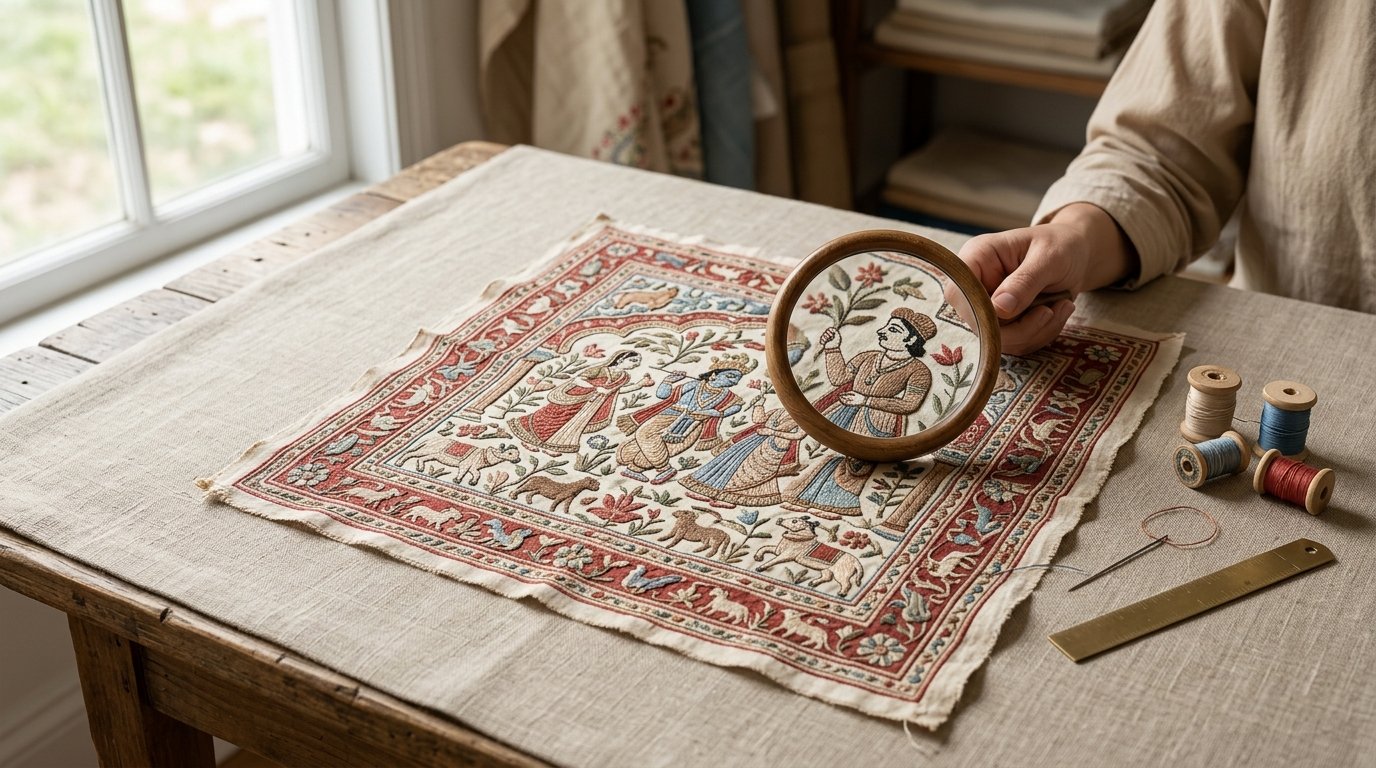
If you want to recognize, study, or appreciate Himachal embroidery and Chamba Rumal, begin by looking at structure before judging beauty. A genuine or well-made Chamba Rumal-inspired piece should show control in design, stitching, and storytelling.
First, examine the composition. Traditional Chamba Rumals often have a central theme, not just scattered motifs. A Krishna scene may place the main figures in the middle, with attendants, cows, trees, musicians, or floral borders around them. A wedding scene may show the procession moving across the cloth. The layout should feel intentional. Even when the drawing is folk-like, the visual arrangement usually has rhythm.
Second, look at the line quality. Because many historical designs were influenced by Pahari painting, the outlines matter. Faces, hands, garments, animals, and trees are often defined with care. In high-quality work, the figures are not stiff blocks of color; they have movement. Krishna may be shown playing the flute, gopis may turn toward him, or animals may curve into the scene. The embroidery follows and supports the drawing.
Third, check the stitch behavior. The double-sided method is a defining feature, so the back should not look messy. It may not be mechanically identical to the front, especially in contemporary or student work, but it should show discipline. Long loose threads, bulky knots, and careless carrying across empty space suggest weak technique or a decorative imitation rather than serious Chamba Rumal work.
Fourth, observe color use. Traditional pieces can be vivid, but they are usually not random. Silk threads give brightness, yet the colors should support the scene. Red borders, blue or dark-toned figures, green vegetation, yellow garments, and black or dark outlines may appear. Modern pieces may use a wider palette, but the best ones still respect balance.
Fifth, notice the motifs. Common subjects include Radha-Krishna, Raas Leela, Vishnu themes, Shiva-Parvati, scenes from epics, wedding processions, musicians, animals, birds, lotus flowers, creepers, and decorative borders. A piece does not need every motif to be authentic in spirit. What matters is whether the motifs connect to the regional visual language and are handled with care.
For craft learners, the most useful comparison is between surface embroidery and narrative embroidery. If a sampler teaches you neat stitches, a Chamba Rumal teaches you how stitch, drawing, and story work together. That makes it valuable even if you never make a full traditional rumal yourself. You can study how outlines guide filling, how borders frame a scene, and how repeated colors unify a complex design.
If you are selecting a piece, ask these practical questions:
- Does the design tell a clear story or show a recognizable ceremonial or devotional theme?
- Is the stitching neat on both sides of the fabric?
- Are the figures, borders, and motifs balanced across the cloth?
- Does the thread have a silk-like sheen and controlled tension?
- Is the piece presented as handmade, and does the seller explain the process or origin?
If you are learning from the tradition, avoid treating it as a quick motif bank. Copying a peacock, lotus, or Krishna figure without understanding the composition can flatten the craft. Instead, study one complete rumal. Notice the border first, then the central scene, then the smaller supporting elements. Look at how empty space is managed. Look at how garments are filled without overwhelming faces and hands.
A beginner does not need to start with a complex mythological scene. A respectful study exercise might involve drawing a small floral border inspired by Chamba layouts, then practicing double-sided filling on plain cotton with silk or rayon floss. Another approach is to trace a simple animal or leaf form and focus on making the reverse as clean as the front. This builds appreciation for the discipline behind the tradition.
Contemporary Chamba Rumal work also deserves attention. Revival efforts, craft clusters, museums, designers, and individual artisans have helped keep the form visible. Some modern pieces follow classical themes closely, while others adapt the technique for wall panels, garments, accessories, or framed textiles. Adaptation is not automatically a problem; the key question is whether the work respects the craft’s design grammar and stitch integrity.
For collectors and craft enthusiasts, provenance matters. A museum-quality antique rumal, a revival piece by a trained artisan, and a tourist-market embroidery are not the same thing. All may have value in different ways, but they should not be described as equal. Look for clear information about maker, region, materials, technique, and whether the piece is handmade or machine-assisted.
The best way to appreciate Himachal embroidery and Chamba Rumal is slow looking. See the cloth as an object of devotion, skill, story, and regional memory. The more you understand the relationship between painting-like design and double-sided stitch, the easier it becomes to recognize why this tradition holds such an important place in Indian embroidery heritage.
FAQ
What Should a Beginner Know First About Himachal Embroidery and Chamba Rumal?
Start by understanding the relationship between the two terms. Himachal embroidery is the broader regional category, while Chamba Rumal is its most famous narrative textile form. Focus first on the double-sided stitch effect, pictorial scenes, silk thread, and links to Chamba’s courtly and devotional culture.
What Matters Most When Evaluating Himachal Embroidery and Chamba Rumal?
The most important factors are design clarity, stitch control, and cultural fit. A strong Chamba Rumal should have a planned composition, neat work on both sides, balanced colors, and motifs connected to regional storytelling, such as Krishna scenes, processions, animals, flowers, or epic themes.
What Mistakes Should Readers Avoid with Himachal Embroidery and Chamba Rumal?
Avoid judging the craft only by bright colors or isolated motifs. Chamba Rumal is not just a decorative pattern style; it is a narrative textile tradition. Also avoid assuming every embroidered cloth from Himachal is a Chamba Rumal, or that machine-like neatness is the only sign of value.
What Is the Next Logical Step After Learning About Himachal Embroidery and Chamba Rumal?
Study images of museum examples or documented artisan work, then compare composition, borders, figures, and stitch finish. If you embroider, practice a small double-sided filling sample before attempting a larger design. This builds respect for the technique without reducing the tradition to a quick project.