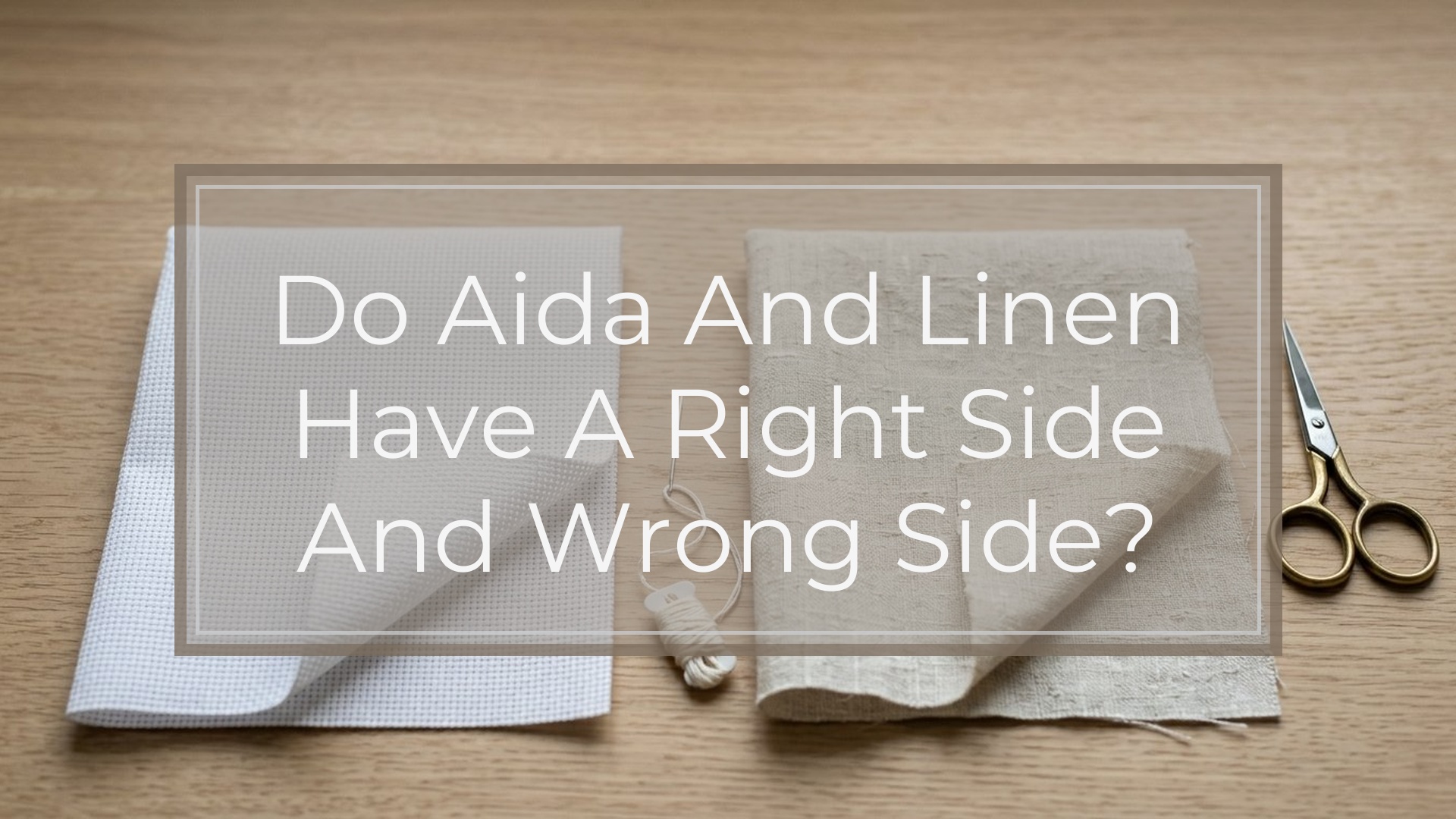
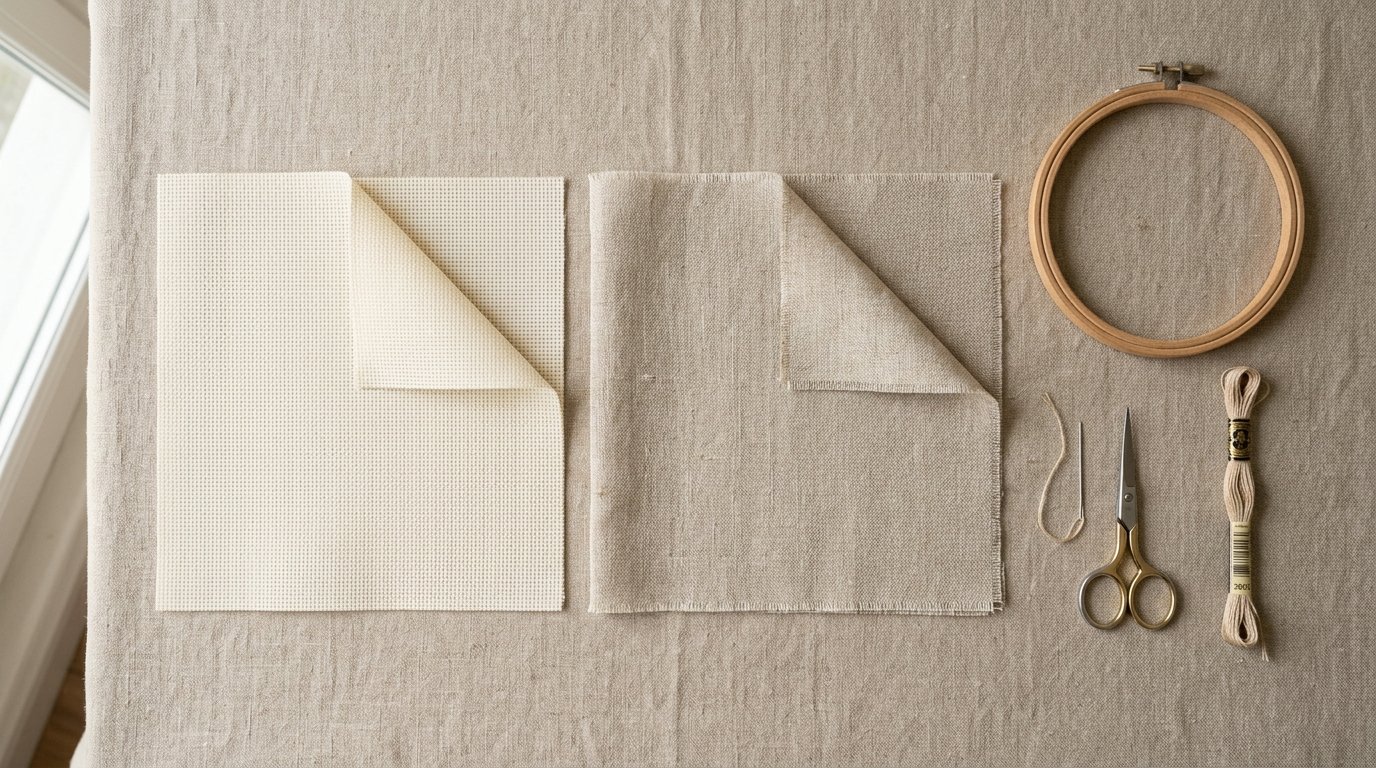
Aida and linen can have a right side and a wrong side, but it is not always obvious—and for many cross stitch projects, it does not make a big difference. Aida is usually very even, so beginners can often stitch on either side with no visible problem. Linen is more variable because it is woven from natural fibers, so one side may look smoother, cleaner, or more attractive than the other.
The best rule is simple: inspect both sides before you start, choose the side that looks best to you, and mark it. If you already began stitching on the “wrong” side, do not panic. In most cases, especially with full-coverage or framed cross stitch, your finished piece will still look fine.
What “Right Side” and “Wrong Side” Mean in Needlework Fabric
In sewing, the “right side” is the side meant to show on the finished item, while the “wrong side” is the back or inside. Needlework fabric is a little different because many fabrics are woven to look usable from both sides.
For cross stitch, the right side usually means the side you choose as the front of your project. It may have a smoother surface, clearer holes, brighter dye, or fewer knots and slubs. The wrong side is simply the side that will face the back of the frame, hoop, ornament, or finished item.
So the question is less “Is there an official side?” and more “Which side looks best for this project?”
Does Aida Have a Right Side and Wrong Side?
Aida usually does not have a strong right side or wrong side. Because it is woven in a regular grid with clear holes, both sides often look nearly identical. For most beginner cross stitch projects, you can stitch on either side of Aida and get a neat result.
That said, some Aida does show small differences. One side may look slightly smoother, flatter, or more even. The holes may appear a little cleaner on one side. If the fabric is printed, hand-dyed, glittered, stiffened, or has a special finish, the front may be more obvious.
Before starting, hold the Aida in good light and compare both sides. If one side looks nicer, use that as the front. If they look the same, choose either side and begin.
Does Linen Have a Right Side and Wrong Side?
Linen is more likely than Aida to have a side you prefer. It is made from flax fibers, which can create small texture variations such as slubs, thicker threads, fine knots, and uneven areas. These are part of linen’s character, but they can make one side look cleaner than the other.
On some linen, both sides are very similar. On other pieces, one side may look smoother, have fewer raised fibers, or show the dye more attractively. If you are stitching over two threads, tiny irregularities can also affect how easy it feels to count.
Side choice matters more with linen when the background fabric will remain visible, such as samplers, minimalist designs, monograms, and heirloom-style pieces. If your design has large unstitched areas, choose the side with the most pleasing texture and color.
How to Tell Which Side of Fabric to Stitch on
Before you put fabric in a hoop or frame, take a minute to inspect it. This quick check can prevent second-guessing later.
- Look at both sides in natural light. Lay the fabric flat and compare the color, texture, and evenness.
- Check for flaws. Look for knots, snags, stains, thick slubs, or printing marks. If one side hides them better, make that the front.
- Notice the holes and weave. On Aida, choose the side where the holes look clean and easy to see. On linen, choose the side where the threads look most even.
- Feel the surface. The smoother side is often easier to stitch on, especially for beginners.
- Consider the design. If much of the fabric will show, be pickier. If the design is full coverage, the side matters less.
A simple comparison can help:
| Fabric type | Usually has a clear right side? | What to look for |
|---|---|---|
| — | —: | — |
| Aida | Rarely | Cleaner holes, smoother finish |
| Linen | Sometimes | Better texture, fewer slubs, nicer dye |
| Hand-dyed fabric | Often | Preferred color pattern or stronger side |
When It Matters—and When It Does Not
The side you choose matters most when the fabric itself is part of the finished look. This includes samplers, wedding pieces, alphabets, bands, ornaments with open backgrounds, and designs with lots of negative space. In these projects, texture, dye placement, and small flaws stay visible.
It matters less when the stitching covers most or all of the fabric. Full-coverage cross stitch, dense motifs, and pieces framed behind glass are usually forgiving. Once the stitches are in place, tiny differences between fabric sides often disappear.
It also matters more with specialty fabrics. Printed, sparkly, opalescent, hand-dyed, or pre-finished fabrics may have an intentional front. Plain white or cream Aida is usually the least fussy.
What If You Already Started on the Wrong Side?
If you already started stitching and realize the other side may have looked better, pause before ripping anything out. Ask yourself: Can you actually see a problem? Will the fabric background show? Are the stitches neat from the front you chose?
If the answer is mostly yes, keep going. Many “wrong side” worries are only noticeable while the fabric is empty. If there is a visible stain, dye issue, or texture problem in an open area, then restarting may be worth it. Otherwise, your time is usually better spent stitching forward.
Best Habits Before You Start Stitching
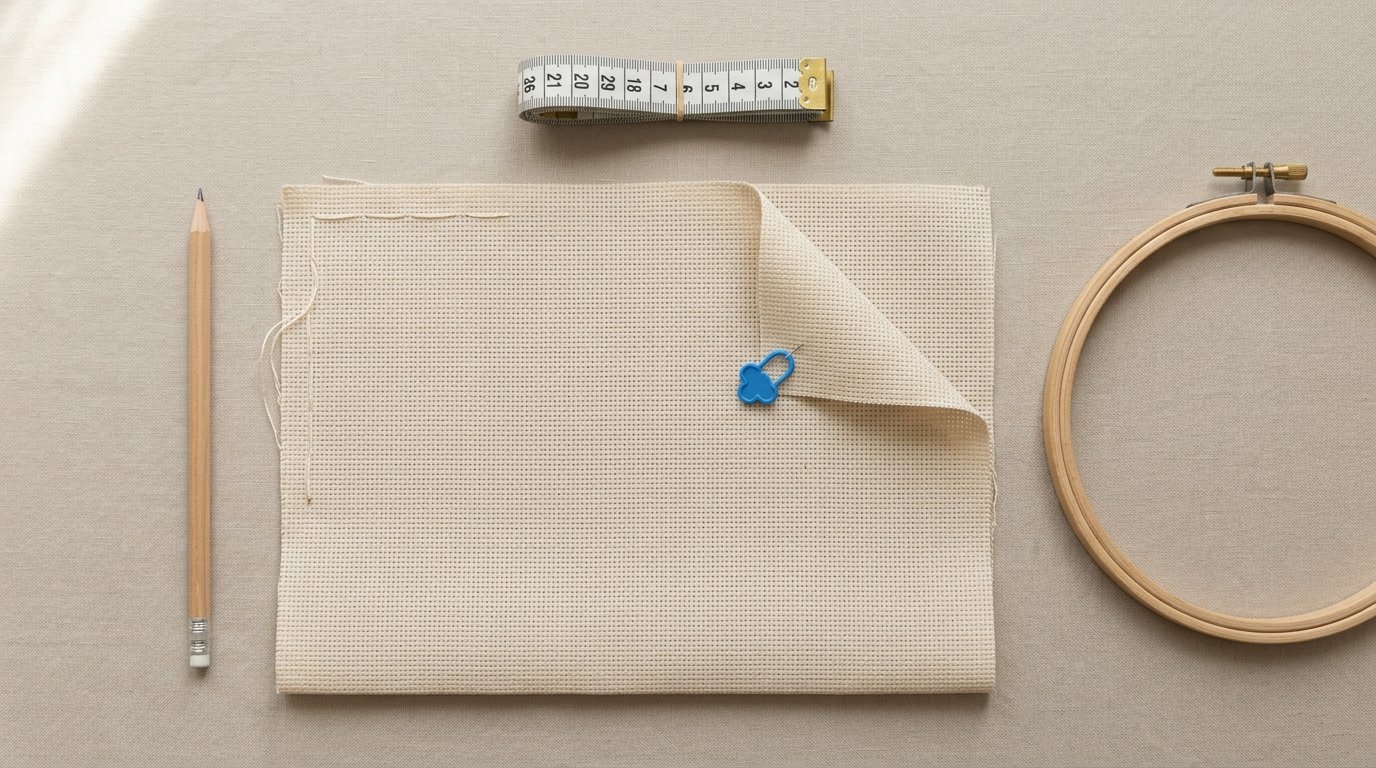
Make side-checking part of your normal setup. Open the fabric fully, inspect both sides, and decide which side will be the front before you cut, fold, or hoop it.
Once chosen, mark the back lightly with a small removable note, a loose basting thread in the corner, or a tiny pencil mark in the seam allowance if it will be hidden. If using hand-dyed fabric, take a quick photo of the front. These small habits remove doubt once stitching begins.
FAQ
Can I Cross Stitch on Either Side of Aida?
Yes, most plain Aida can be stitched on either side. The weave is usually regular enough that both sides look almost the same. If one side has cleaner holes, fewer marks, or a smoother surface, use that side as the front.
Is the Shiny Side of Linen the Right Side?
Not always. A slight shine can come from pressing, finishing, or the angle of the fibers. Instead of relying only on shine, compare both sides for texture, color, slubs, and overall appearance. The best-looking side should be your right side.
Does Hand-dyed Fabric Have a Right Side?
Hand-dyed fabric often has a preferred side because the color may be stronger, softer, or more interesting on one face. There may not be an official right side, but there is usually a side you like better. Always inspect hand-dyed fabric before stitching.
Should I Wash Fabric Before Deciding the Right Side?
Usually, decide the right side before stitching, not after washing. Many cross stitch fabrics are not washed first, especially hand-dyed or specialty fabrics that may bleed or change texture. If you plan to wash, test first and follow the fabric maker’s care instructions.
How Can I Remember Which Side Is the Front?
Mark the back as soon as you choose the front. Use a sticky note, safety pin, loose basting thread, or small removable label. Avoid permanent marks in the stitching area. For larger projects, write “back” on a paper tag attached to one edge.