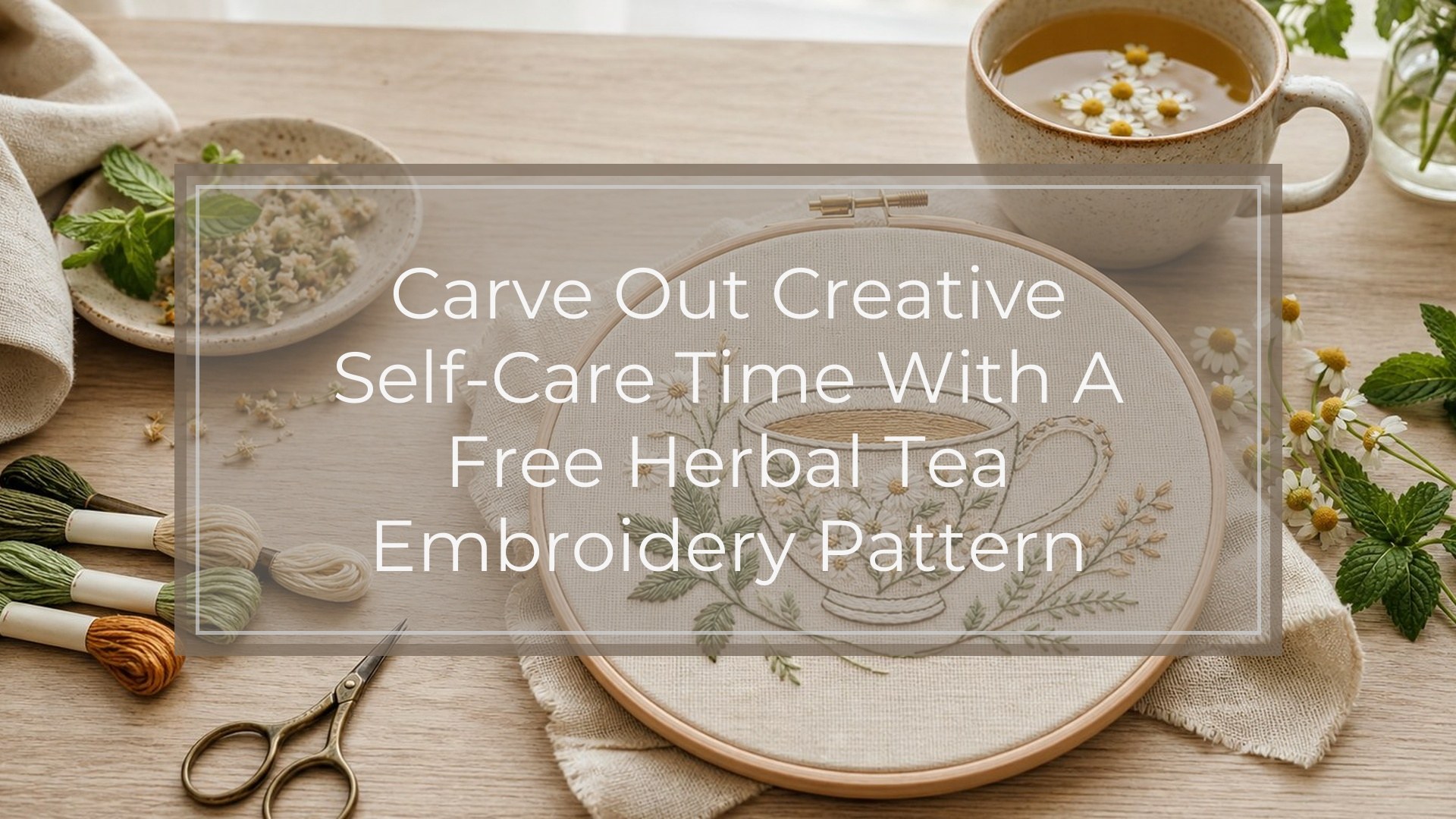
A free herbal tea embroidery pattern is a cozy way to slow down with a small, manageable project. The theme naturally suits quiet stitching: a teacup, leafy sprigs, steam curls, florals, or a tiny tea tag can all be worked with simple lines and soft colors. It is friendly for beginners, but still satisfying if you already stitch and want a peaceful evening project. Use the finished piece as hoop art, a kitchen accent, a handmade gift, or a gentle reminder to pause and make something by hand.
Why This Herbal Tea Embroidery Pattern Works for Slow Stitching
Herbal tea motifs work well for slow stitching because the shapes are soft, familiar, and forgiving. Leaves, tiny flowers, mugs, tea bags, and steam lines do not need perfect precision to look charming.
The project also has a natural rhythm: outline the cup, stitch the stems, add leaves and flowers, then finish with steam, dots, or lettering. That steady path keeps the work calming instead of complicated.
What You’ll Need Before You Begin
Gather your supplies before transferring the pattern so your stitching session feels easy and uninterrupted. You will need:
- The printed free herbal tea embroidery pattern
- Cotton, linen, or cotton-linen fabric
- A 5- to 7-inch embroidery hoop
- Embroidery floss in soft herbal colors
- Embroidery needle
- Small sharp scissors
- Water-soluble pen, heat-erasable pen, window, or light box
- Optional felt or backing fabric for finishing
Choose a fabric that is smooth enough to trace clearly but sturdy enough to hold stitches without puckering.
Herbal Tea Embroidery Pattern at a Glance
| Detail | Recommendation |
|---|---|
| Skill level | Beginner to confident beginner |
| Best fabric | Cotton, linen, or cotton-linen blend |
| Hoop size | 5–7 inches, depending on printed pattern size |
| Useful stitches | Back stitch, stem stitch, satin stitch, lazy daisy, French knots |
| Estimated time | 2–5 relaxed stitching sessions |
| Best uses | Hoop art, kitchen decor, gift tag, sachet panel, journal cover |
Use this quick view to decide whether the project fits your time, supplies, and skill level. If you are new to embroidery, keep the design small but not cramped, and limit the number of colors. If you enjoy detail work, add extra leaves, flower buds, or a short tea label.
Choosing Colors for a Calm Herbal Tea Design
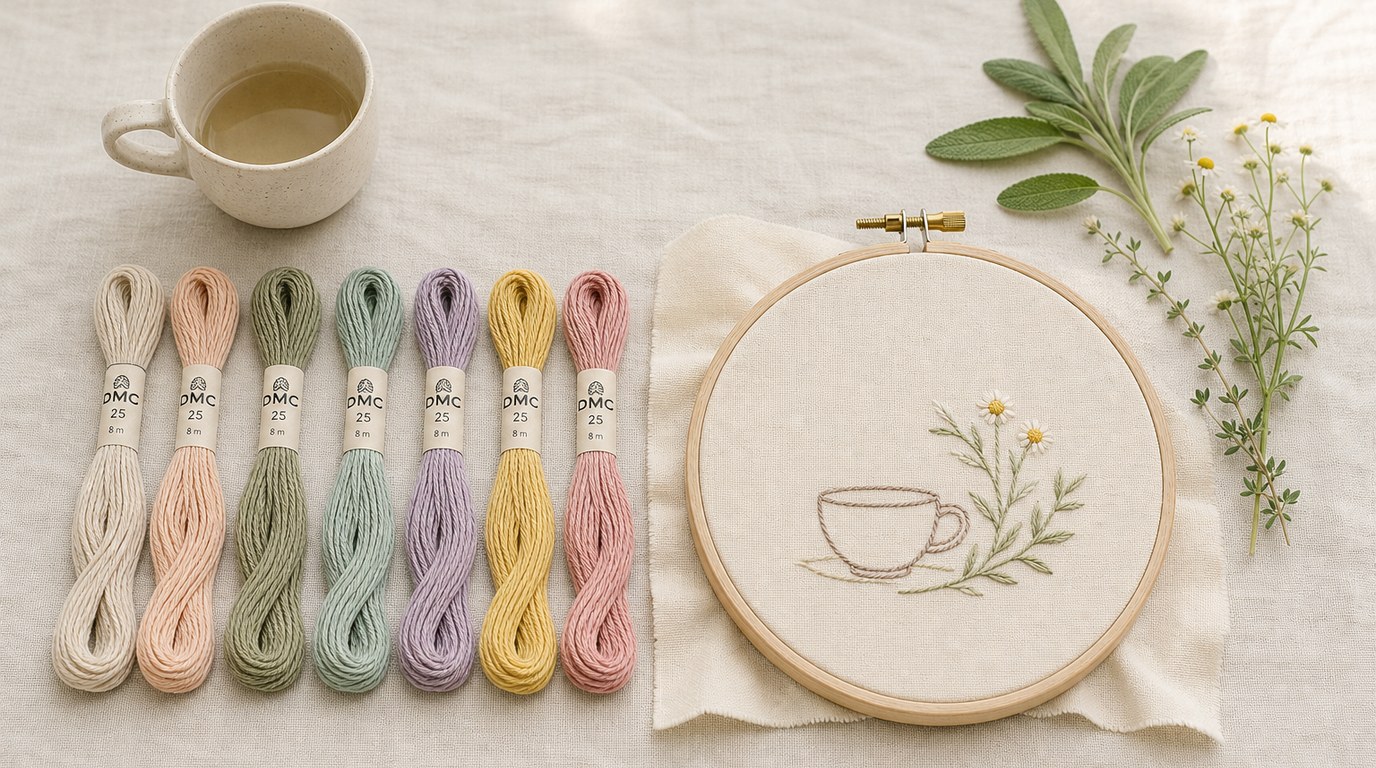
A soothing palette helps the pattern feel cohesive. Start with one warm neutral for the cup, such as cream, oatmeal, pale peach, or soft gray. Then add botanical tones: sage green, muted mint, olive, dusty lavender, chamomile yellow, or rose pink.
For a chamomile-inspired version, try cream, golden yellow, leaf green, and warm brown. For lavender tea, use pale purple, silvery green, ivory, and a tiny touch of deep plum. For a cleaner kitchen style, keep the cup mostly monochrome and let the herbs provide the color.
Three to six floss colors are usually enough. Too many bright shades can make the design feel busy rather than restful.
Best Stitches for the Free Herbal Tea Embroidery Pattern
Think of the design in four parts: outlines, botanicals, texture, and accents. Assigning stitches this way makes the pattern easier to plan.
Use back stitch for the cup outline, tea bag string, simple lettering, and fine details. It creates clean lines and is easy to control. Use stem stitch for curved steam lines and plant stems because it follows curves smoothly.
For leaves, choose lazy daisy stitches if you want an airy herbal look, or small satin stitches if you want fuller leaves. French knots work well for tiny flower centers, seed heads, or decorative dots around the cup. If the pattern includes a tea tag, keep it simple with initials, a tiny heart, or a few short back-stitched lines.
How to Transfer and Stitch the Pattern
Follow a simple reader path from pattern to finished piece:
- Print the pattern at a size that fits your hoop. For beginners, avoid shrinking it too much; larger details are easier to stitch.
- Trace the design onto fabric with a removable fabric pen. Use a window or light box if the lines are hard to see.
- Hoop the fabric firmly, but do not stretch it out of shape.
- Stitch the main outline of the cup or mug first. This gives the design structure.
- Add stems, leaves, and flowers next, using your chosen botanical stitches.
- Save small accents for last, including French knots, lettering, tea tag details, and steam curls.
- Remove transfer marks according to your pen instructions, let the fabric dry fully, and press gently from the back.
Use thread lengths around 12 to 18 inches to prevent tangling. Two or three floss strands work well for most outlines, while one strand is better for delicate lettering.
Finishing Ideas for Your Herbal Tea Embroidery
The simplest finish is hoop art. Trim the excess fabric, gather it at the back, and cover the back with felt for a clean look. Hang it near a tea station, breakfast nook, kitchen shelf, or cozy reading corner.
You can also turn a compact stitched panel into a sachet, appliqué it onto a project pouch, or add it to a fabric journal cover. For gifting, pair the finished hoop with a box of tea, a mug, or a handmade mug cozy. The theme feels thoughtful without requiring an elaborate finish.
Ways to Make the Pattern More Personal
Small changes can make the free herbal tea embroidery pattern feel custom. Add an initial to the tea tag, stitch the name of a favorite blend, or adjust the herbs to suggest chamomile, mint, lavender, rosehip, or lemon balm.
You can also shift the mood with color. Use pastels for a soft cottage look, earthy greens and browns for a natural style, or crisp blues and whites for a clean kitchen display. If you add words, keep them short: “slow sip,” “tea time,” or “pause” fits the theme without crowding the design.
FAQ
What Should a Beginner Know First About Carve Out Some Creative Self Care Time with This Free Herbal Tea Embroidery Pattern?
Beginners should know that this is meant to be a manageable slow-stitching project, not a high-pressure technical piece. Start with a small hoop, use simple stitches, limit the palette, and focus on clean outlines rather than perfection.
What Matters Most When Evaluating Carve Out Some Creative Self Care Time with This Free Herbal Tea Embroidery Pattern?
Look for clear lines, simple stitch areas, and a finished size that suits your plan. The best version is easy to trace, not overly detailed, and useful as hoop art, a gift, or a small decor piece.
What Mistakes Should Readers Avoid with Carve Out Some Creative Self Care Time with This Free Herbal Tea Embroidery Pattern?
Avoid using too many floss colors, stitching with very long thread, or transferring details smaller than you can comfortably sew. Also avoid overfilling the design; herbal tea embroidery looks best when it has some breathing room.
What Is the Next Logical Step After Learning About Carve Out Some Creative Self Care Time with This Free Herbal Tea Embroidery Pattern?
Print the pattern, choose your fabric and palette, and prepare a simple stitching setup. Transfer the design, stitch the main outlines first, add the botanical details, then finish it as hoop art or a small handmade gift.