To start punch needle, you need a compatible punch needle tool, suitable yarn or thread, foundation fabric, and a hoop or frame that holds the fabric very tight. Those four supplies determine whether your loops stay in place or pull out as you work.
For a first project, keep the setup simple: choose one tool size, match it with the right fiber, and use fabric made for punch needle rather than ordinary quilting cotton. A small pattern, scissors, a marker or transfer method, and basic finishing supplies will help you complete the piece neatly.
| Must-have for beginners | Helpful but optional |
|---|---|
| Punch needle tool | Needle threader replacements |
| Matching yarn, thread, or floss | Gripper frame |
| Foundation fabric | Fabric glue |
| Hoop or frame | Backing felt |
| Pattern or simple design | Storage pouch |
How Punch Needle Supplies Work Together
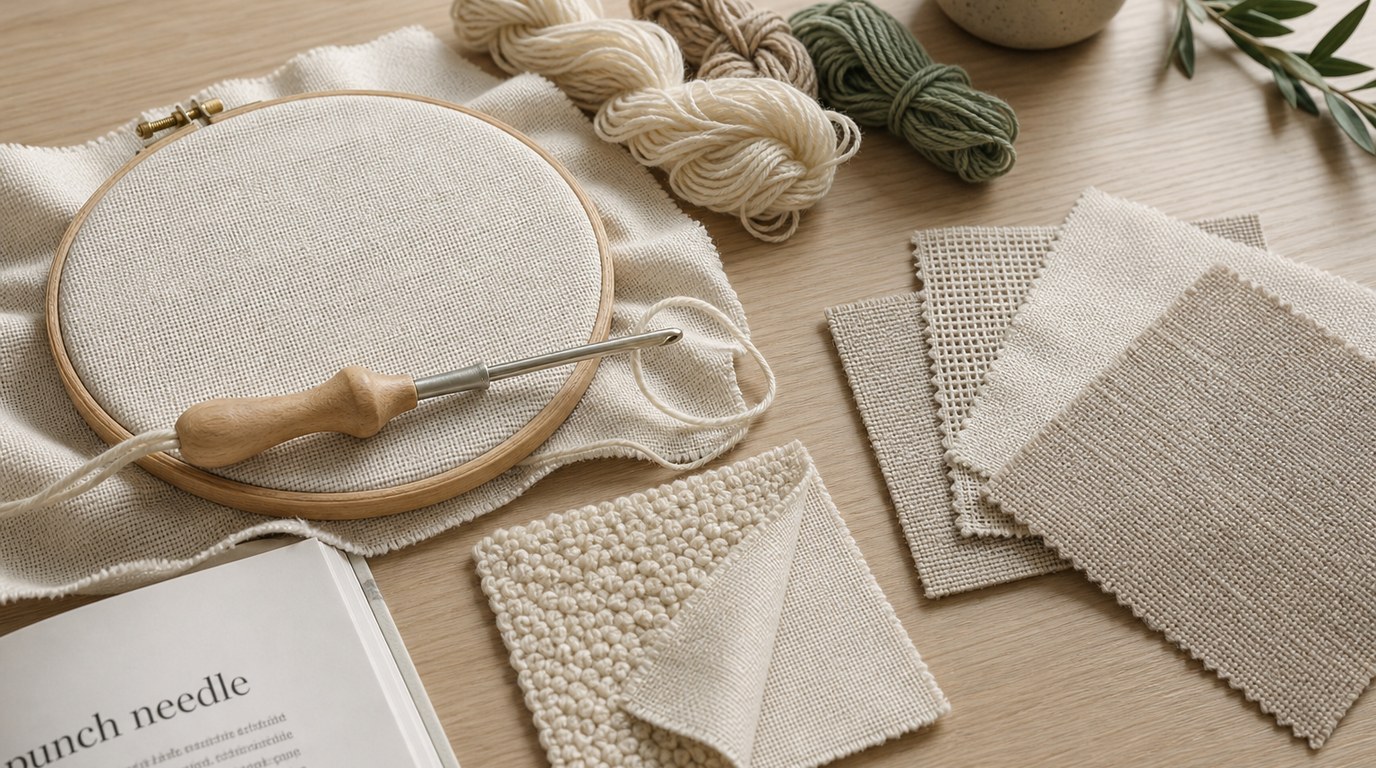
Punch needle works because a hollow needle pushes fiber through a woven foundation fabric, creating loops on the opposite side. The fabric grips the fiber just enough to hold each loop in place. If the tool, fiber, and fabric do not match, the loops may slip out, snag, or become uneven.
Think of the supplies as a system. A thick punch needle needs thicker yarn and a more open foundation fabric. A fine punch needle needs embroidery floss or fine thread and a tighter fabric. The hoop or frame supports the whole process by keeping the fabric stretched firmly, so the needle can pass through cleanly.
The Punch Needle Tool: Your First Essential Supply
The punch needle tool is the main supply to choose first because it determines what fiber and fabric you should buy next. Beginner-friendly punch needles are usually either fixed-size or adjustable. A fixed-size needle is simple: it makes one loop height and works with one general fiber weight. An adjustable tool gives more loop-height options, but it can feel less straightforward at first.
For your first project, choose a tool made for the look you want. Large punch needles work well with rug yarn, bulky yarn, or worsted-weight yarn, creating chunky loops. Fine punch needles are better for detailed designs using embroidery floss or fine thread.
Check the tool packaging for recommended fiber size. That guidance is more useful than choosing by appearance alone.
Yarn, Thread, or Floss: What Should Beginners Use?
Beginners often do best with medium-weight yarn because it is easy to see, easy to handle, and forgiving while learning. Worsted-weight yarn is a common choice for chunky punch needle tools and simple wall hangings, coasters, or decorative patches.
Embroidery floss creates a finer, more detailed look, but it requires a smaller punch needle and compatible fabric. It is excellent for delicate designs, though it can feel slower for a first project. Pearl cotton sits between floss and yarn, offering smooth texture with less separation than stranded floss.
Avoid fuzzy, slippery, or highly textured fibers at the beginning. They can catch in the tool or make it harder to judge loop consistency. Start with one smooth fiber type.
Foundation Fabric: the Material That Holds Your Loops
Foundation fabric is not just a background; it is what locks your punch needle loops in place. Regular cotton fabric is usually too tightly woven and may tear, resist the needle, or fail to hold loops properly. Stretchy fabrics are also difficult because they shift under pressure.
For thicker yarn punch needle, monk’s cloth is a popular beginner choice because its weave allows the needle through while gripping the yarn. For finer punch needle work, weaver’s cloth or tightly woven punch needle fabric may be better, depending on the tool.
Buy fabric based on your needle and fiber size. If you are using a kit or pattern, follow its fabric recommendation closely. A good foundation fabric makes the learning process much smoother.
Hoop or Frame: Keeping the Fabric Drum Tight
Punch needle fabric needs to be tight, almost like a drum. Loose fabric moves with the needle, which can cause uneven loops and make punching harder than it needs to be.
A sturdy embroidery hoop can work for small beginner projects, especially if it grips the fabric firmly. For larger or repeated projects, a frame is more comfortable. Gripper frames hold fabric especially well, but they are an upgrade rather than a first-day requirement.
Whatever you choose, test the tension before starting. If the fabric sags when you press the needle in, tighten or reposition it.
Patterns, Transfer Tools, and Marking Supplies
A beginner pattern should have simple shapes, clear outlines, and not too many tiny details. Punch needle is easiest to learn when you can focus on consistent spacing and loop height rather than complicated design changes.
To transfer a design, you may use a washable fabric marker, transfer pen, light box, tracing paper, or an iron-on transfer method if appropriate for your fabric. Always mark on the correct side according to your project instructions. Many punch needle designs are worked from the back, so direction matters, especially for letters or asymmetrical images.
Small Tools That Make Punch Needle Easier
A few small tools make the process neater, even if they are not all mandatory. Sharp scissors are essential for trimming yarn ends and cleaning up the back of the work. A needle threader may be needed for some punch needle tools, and it is worth having a spare because thin wire threaders can bend.
A ruler helps with fabric margins and pattern placement. Clips or tape can secure excess fabric around a frame. A small project bag or box also helps keep yarn, tools, and pattern pieces together between stitching sessions.
Finishing Supplies: What You Need After Punching
Once the punching is complete, you need a way to secure and display the project. Some pieces can stay in their hoop as finished art. Others may be removed from the frame and finished as patches, ornaments, pillows, or wall hangings.
Common finishing supplies include felt or fabric backing, a sewing needle, thread, fabric glue, or fusible interfacing, depending on the project. Not every punch needle piece needs glue, and too much glue can stiffen the work. For a first project, choose a finish before you start so you leave enough fabric around the design.
Should You Buy a Punch Needle Kit or Separate Supplies?
A punch needle kit is often the easiest choice for a beginner because the tool, fabric, fiber, and pattern are usually designed to work together. This removes the biggest early challenge: supply compatibility. Kits are especially helpful if you want to try the craft before investing in multiple tools.
Buying separate supplies gives you more control over colors, fabric size, and project type. It can also be more economical if you plan to make several pieces. If you build your own setup, start with the punch needle tool, then choose the recommended fiber and fabric for that tool. Avoid mixing random supplies until you understand the system.
Beginner Supply Checklist for Your First Punch Needle Project
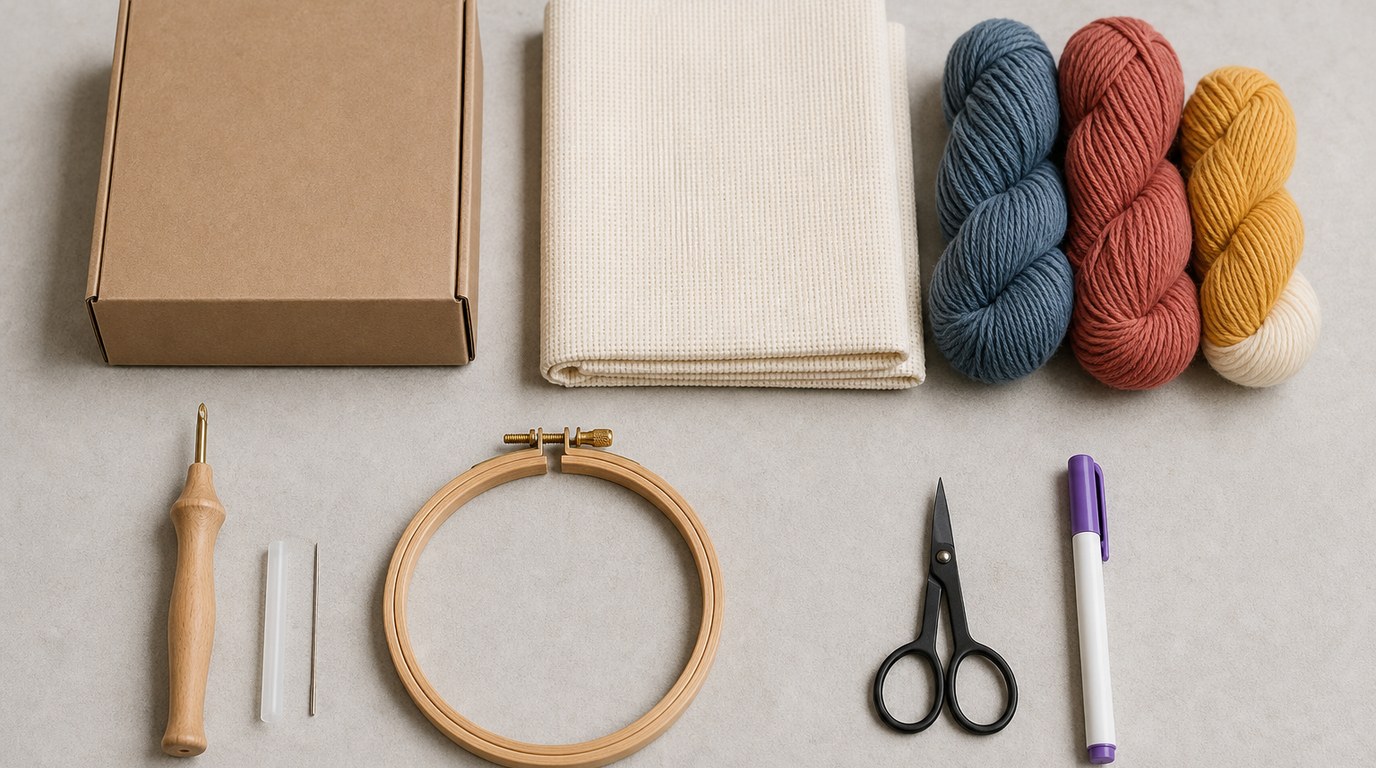
Use this checklist when shopping for your first project:
- Punch needle tool in one beginner-friendly size
- Yarn, thread, or floss that matches the tool
- Foundation fabric suited to that fiber size
- Embroidery hoop, frame, or gripper frame
- Simple pattern or printed design
- Washable marker or transfer tool
- Sharp scissors
- Needle threader, if your tool requires one
- Backing fabric, felt, glue, or sewing thread for finishing
- Small storage bag or container for loose supplies
If you are unsure, choose a kit or follow one pattern’s exact material list.
FAQ
What Should a Beginner Know First About Beginner Punch Needle Guide Which Supplies Do You Need?
A beginner should know that punch needle supplies must be compatible. The punch needle tool, fiber, foundation fabric, and hoop or frame work as one system. If one part is wrong, loops may not hold. Start with a simple project and matched materials.
What Matters Most When Evaluating Beginner Punch Needle Guide Which Supplies Do You Need?
The most important factor is whether the needle size matches the yarn, thread, or floss and whether the fabric can grip that fiber. Comfort matters too, but compatibility comes first. A basic, well-matched setup is better than buying many optional accessories.
What Mistakes Should Readers Avoid with Beginner Punch Needle Guide Which Supplies Do You Need?
Avoid using random fabric, loose hoop tension, or fiber that is too thick or thin for the needle. Do not start with a highly detailed pattern or slippery novelty yarn. These choices make the craft feel harder than it is and can cause loops to pull out.
What Is the Next Logical Step After Learning About Beginner Punch Needle Guide Which Supplies Do You Need?
Choose one small beginner project and gather only the supplies it requires. A kit is a simple option, or you can buy separate materials from a pattern list. Before punching the full design, test a few rows on scrap foundation fabric.