Barkcloth can mean two different textile materials, which is why the term often causes confusion. Traditional barkcloth is a nonwoven material made by harvesting, soaking, and beating the inner bark of certain trees until it becomes soft, flexible, and cloth-like. In sewing and vintage fabric shops, however, “barkcloth” often refers to a textured woven cotton or cotton-blend fabric, especially the mid-century home décor fabric used for curtains, cushions, and upholstery.
For crafters, the key is to ask which barkcloth is being discussed: handmade bark-based cloth, or woven fabric with a bark-like texture. Both are interesting, but they behave very differently under a needle.
What Is Barkcloth?
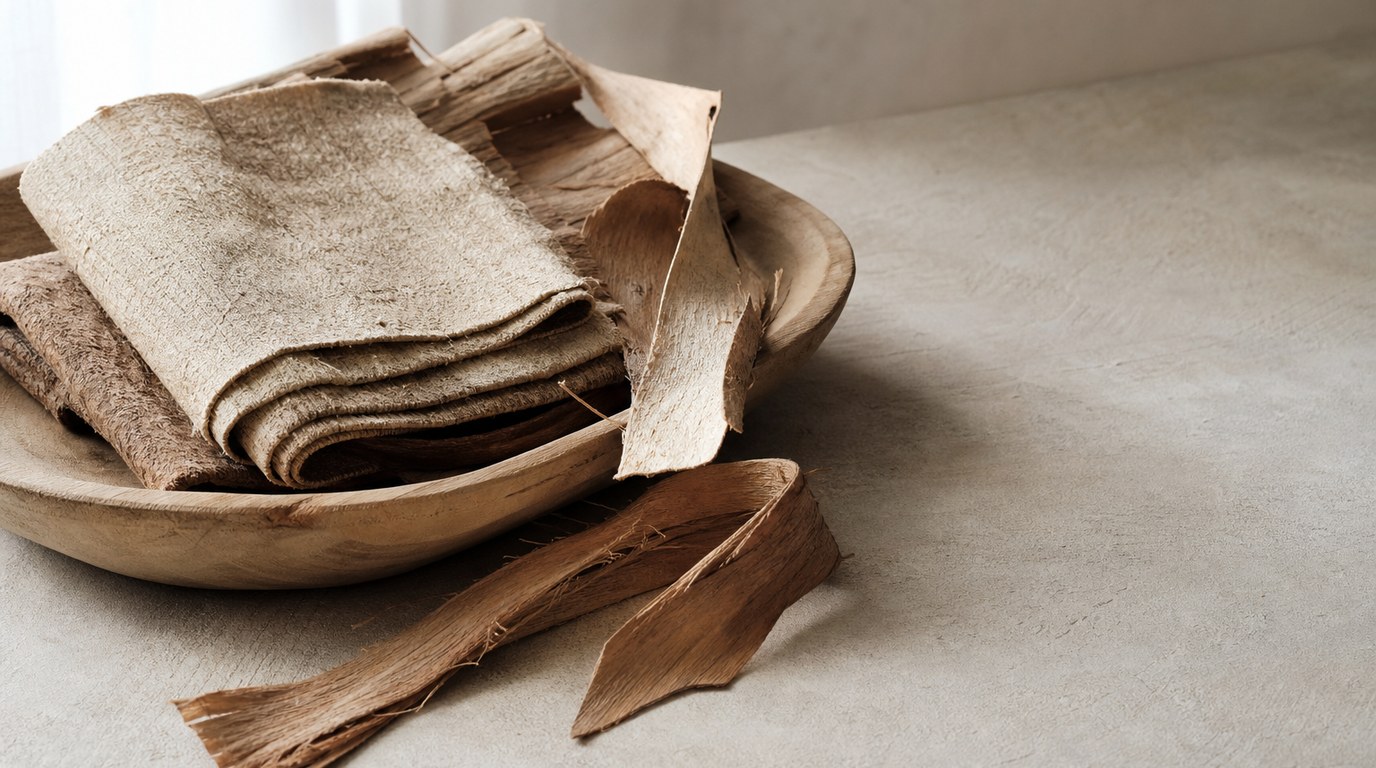
Barkcloth is a cloth-like material associated with the inner bark of trees. In its traditional form, it is not spun from yarn and woven on a loom. Instead, bark fibers are softened and beaten into a flexible sheet. The result can be used for clothing, wrapping, ceremonial objects, wall hangings, and decorative work.
The name is also used for a completely different commercial fabric: woven barkcloth. This is usually cotton or a cotton blend with a nubby, pebbled, or slubbed surface that resembles tree bark. If you are shopping for sewing fabric, you are most likely seeing this woven version rather than handmade bark-based cloth.
How Traditional Barkcloth Is Made
Traditional barkcloth starts with carefully selected trees, often species with an inner bark that can be removed in sheets. Makers separate the outer bark from the inner bark, then prepare the inner layer through soaking, scraping, or softening.
The key step is beating. Using wooden mallets or similar tools, the bark is repeatedly struck and stretched. This spreads the fibers, thins the sheet, and changes the material from stiff bark into something more flexible and textile-like. Some pieces are joined, layered, dyed, smoked, painted, or decorated depending on local practice.
This process does not create fabric in the same way weaving does. There are no warp and weft threads. Instead, the sheet is formed by mechanically opening and matting the bark fibers into a continuous surface.
Barkcloth in Textile History and Culture
Traditional barkcloth has a long history in many parts of the world, including areas of the Pacific, Africa, Southeast Asia, and the Americas. It has been used for practical garments, bedding, ceremonial dress, ritual objects, gifts, and visual storytelling.
Because barkcloth traditions are tied to specific communities, plants, tools, and meanings, it is best understood as more than a raw material. A decorated barkcloth may carry social, spiritual, or historical importance. In museum collections, barkcloth is often treated as both textile and cultural object.
For craft readers, this context matters. Handmade barkcloth is not simply a rustic substitute for cotton; it may be a heritage material that deserves respectful handling and accurate description.
Traditional Barkcloth Vs. Woven Barkcloth Fabric
The easiest way to understand barkcloth is to separate the two common meanings. One is a handmade, bark-based material. The other is a woven fabric named for its bark-like surface texture. They may share a name, but they differ in structure, care, and craft use.
| Feature | Traditional barkcloth | Woven barkcloth fabric |
|---|---|---|
| Main material | Inner tree bark | Cotton, rayon, linen, or blends |
| Structure | Nonwoven, beaten sheet | Woven fabric with texture |
| Common look | Matte, fibrous, organic surface | Nubby, slubbed, pebbled weave |
| Typical use | Cultural objects, art, wrapping, display | Curtains, cushions, bags, garments, décor |
| Sewing behavior | Can be delicate or irregular | Handles more like medium-weight fabric |
| Care | Often dry, careful, conservation-minded | Depends on fiber content and finish |
What Barkcloth Looks and Feels Like
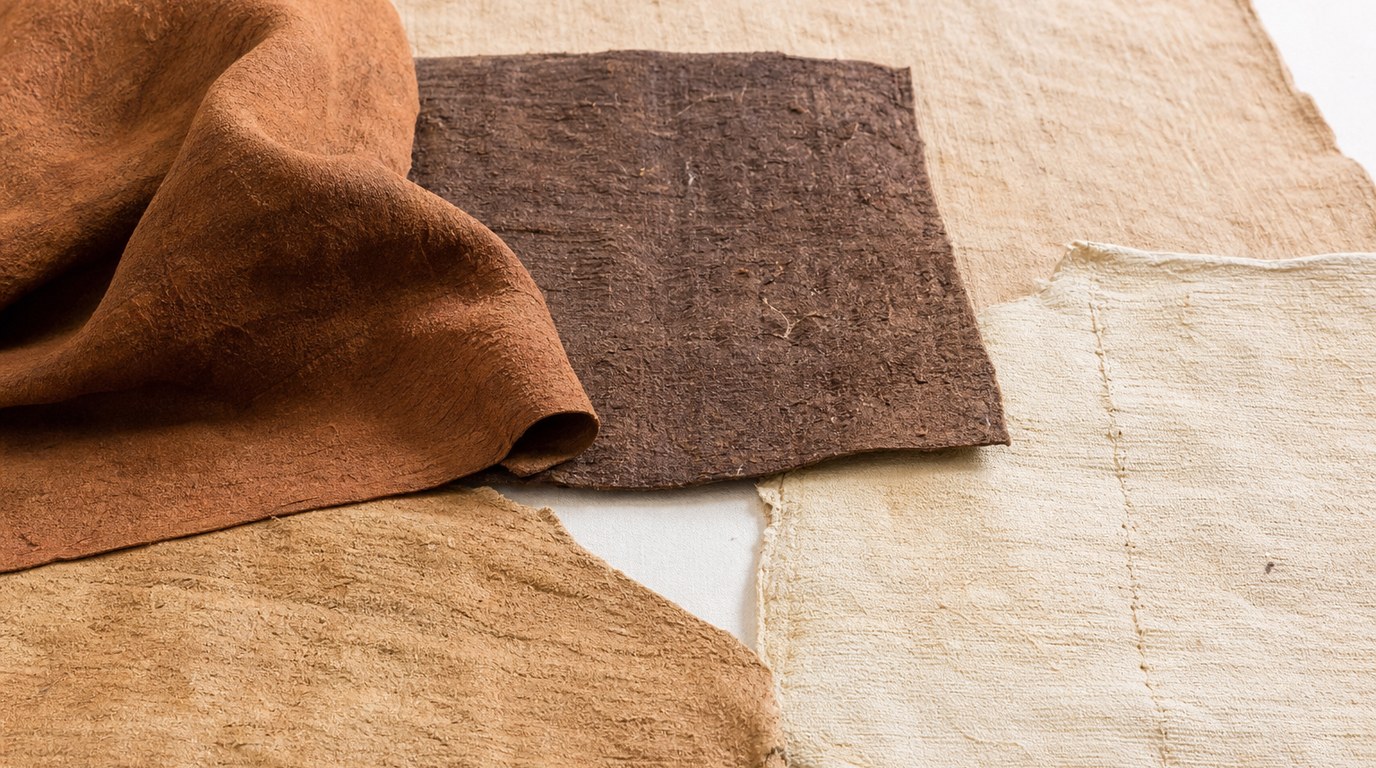
Traditional barkcloth often looks fibrous, matte, and slightly uneven. It may show natural color variations, surface marks, joins, painted decoration, or a papery-leathery quality. Depending on how it was made, it can feel soft and pliable, crisp, thick, thin, fragile, or suede-like.
Woven barkcloth has a different feel. It usually has visible texture from slub yarns or an irregular weave. Vintage pieces may feel sturdy and slightly coarse, making them popular for home décor. Printed designs, especially large florals and tropical motifs, are common in mid-century examples.
How Barkcloth Is Used in Sewing, Embroidery, and Craft Projects
For most sewing and embroidery projects, woven barkcloth is the practical choice. Its texture gives cushions, wall hangings, tote bags, table runners, and decorative panels a warm, tactile surface. Medium-weight woven barkcloth can also work for simple jackets, skirts, or structured accessories, depending on drape and fiber content.
Embroidery on woven barkcloth is possible, but the textured surface affects stitch definition. Bold stitches, simple motifs, crewel-style designs, couching, and visible mending often suit it better than tiny detailed cross stitch. Use an appropriate needle, test a scrap, and consider stabilizer if the weave shifts.
Traditional handmade barkcloth is usually better approached as an art or display material unless you know it is strong enough for stitching. Avoid dense needlework that could tear or distort it.
Care, Handling, and Storage Basics
Care depends entirely on which barkcloth you have. Woven barkcloth should be treated according to its fiber content, age, dyes, and finish. Some modern cotton versions may be washable, while vintage pieces can shrink, fade, or weaken.
Traditional barkcloth needs gentler handling. Keep it dry, support it when moving, and avoid folding fragile pieces sharply. Store flat if possible, away from direct sunlight, dampness, insects, and heavy pressure. If a piece appears old, ceremonial, painted, or brittle, do not wash it casually; seek conservation advice instead.
How to Choose Barkcloth for a Craft Project
Start by identifying the type. If you want fabric for sewing, look for woven barkcloth sold by the yard and check weight, fiber content, width, care instructions, and whether it has stretch or drape.
For embroidery, choose a stable piece with enough body to hold stitches without puckering. For home décor, consider heavier woven barkcloth with a durable weave. If you are buying traditional barkcloth, think in terms of display, collage, or low-stress surface embellishment rather than hard-wearing use.
Key Takeaways
Barkcloth has two main meanings. Traditional barkcloth is made from inner tree bark that is softened and beaten into a cloth-like sheet. Woven barkcloth is a manufactured textile, often cotton or a blend, with a textured surface that resembles bark.
The distinction matters for sewing, embroidery, care, and buying decisions. Woven barkcloth is generally the craft-friendly option for cushions, bags, décor, and some garments. Traditional barkcloth may be delicate, culturally significant, and better suited to careful display or light embellishment.
FAQ
Is Barkcloth Actually Made from Tree Bark?
Traditional barkcloth is made from the inner bark of certain trees. The bark is prepared, softened, and beaten until it becomes flexible and cloth-like. However, many fabrics sold as barkcloth today are woven cotton or blends with a bark-like texture, not actual tree bark.
Is Barkcloth Woven?
Traditional barkcloth is not woven. It is a nonwoven sheet made by beating and spreading bark fibers. Woven barkcloth fabric, on the other hand, is woven from yarns and named for its textured surface. The same word can describe two structurally different materials.
Can You Embroider on Barkcloth?
You can embroider on woven barkcloth, especially with bold stitches and simple designs. Test first because the texture can affect stitch neatness. Traditional barkcloth may be too delicate or irregular for dense embroidery, so use light stitching only if the material is strong and stable.
What Is Vintage Barkcloth Fabric?
Vintage barkcloth fabric usually refers to textured woven décor fabric, especially from the mid-20th century. It is often cotton or a cotton blend and may feature large floral, tropical, scenic, or abstract prints. It was commonly used for curtains, cushions, upholstery, and home sewing projects.