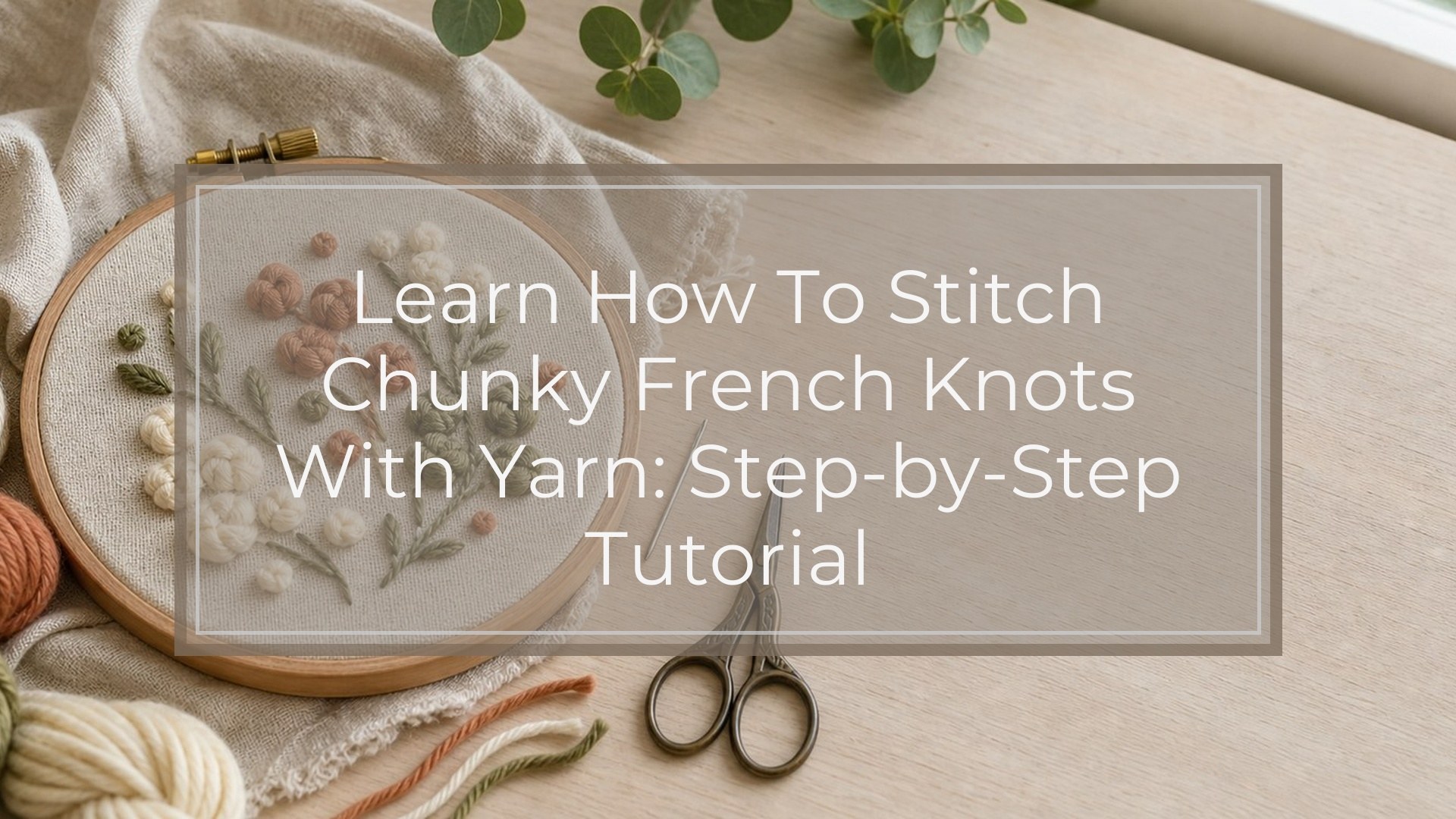
Chunky French knots are oversized, textured knots stitched with yarn instead of embroidery floss. They are worked like traditional French knots, but the thicker yarn, larger needle, and looser fabric require gentler tension and a little more space. To stitch one, bring the yarn up through the fabric, wrap it around the needle, reinsert the needle close to the starting point, hold the wraps snug, and pull the needle through slowly. The result is a raised, bobbly stitch that works beautifully for flowers, sheep wool, berries, snow, dots, and playful surface texture.
What Makes a Chunky Yarn French Knot Different?
A standard French knot is small and tight because it is usually made with embroidery floss on closely woven fabric. A chunky yarn French knot is larger, softer, and more dimensional. The yarn creates bulk quickly, so you need fewer wraps than you might expect.
The main mental model is simple: the wraps form the knot, while your tension shapes it. Too much pulling can distort the knot or fabric. Too little control can make the knot loose and loopy.
Materials You’ll Need
Choose supplies that let the yarn pass through the fabric without shredding or forcing.
| Material | Best choice | Why it helps |
|---|---|---|
| Yarn | Wool, acrylic, cotton, or tapestry yarn | Smooth enough to pull through fabric |
| Needle | Chenille or tapestry needle with a large eye | Holds yarn without splitting it |
| Fabric | Linen, evenweave, monk’s cloth, canvas, or sturdy cotton | Supports bulky stitches |
| Hoop or frame | Medium tension, not drum-tight | Keeps fabric stable |
| Scissors | Sharp embroidery scissors | Clean yarn ends |
Avoid very fuzzy yarn for your first practice. It can catch on the fabric and make the knot harder to control.
Before You Start: Prepare the Fabric and Yarn
Place your fabric in a hoop so it is firm but not stretched out of shape. Cut a yarn length around 12 to 18 inches; long pieces are more likely to fray, twist, or snag.
Thread the needle and secure the yarn on the back with a small knot, a woven tail, or a few anchoring stitches. If your fabric holes are tight, test one knot near the edge first. The yarn should move through with gentle resistance, not force.
How to Stitch a Chunky French Knot with Yarn
- Bring the needle up. Push the threaded needle from the back of the fabric to the front at the spot where you want the knot.
- Hold the yarn steady. Use your non-stitching hand to keep the working yarn lightly taut. Do not pull hard; just remove slack.
- Wrap the yarn around the needle. Wrap the yarn around the needle one or two times. Keep the wraps close together, not stacked far apart.
- Insert the needle back into the fabric. Place the needle tip very close to the original hole, but not in the exact same hole. If you go back through the same hole, the knot may pull to the back.
- Slide the wraps down. Gently guide the wraps down the needle until they rest against the fabric surface.
- Hold the wraps in place. Keep a light grip on the working yarn so the wraps stay neat while you pull the needle through.
- Pull slowly. Draw the needle and yarn through the fabric. Slow pulling prevents tangles and helps the knot settle into a rounded shape.
- Finish the knot. Stop pulling once the knot sits on the surface. It should feel secure, raised, and slightly springy, not strangled flat.
For the next knot, leave enough space so the bulky stitches do not crowd each other unless you are intentionally making a dense cluster.
How Many Wraps Should You Use?
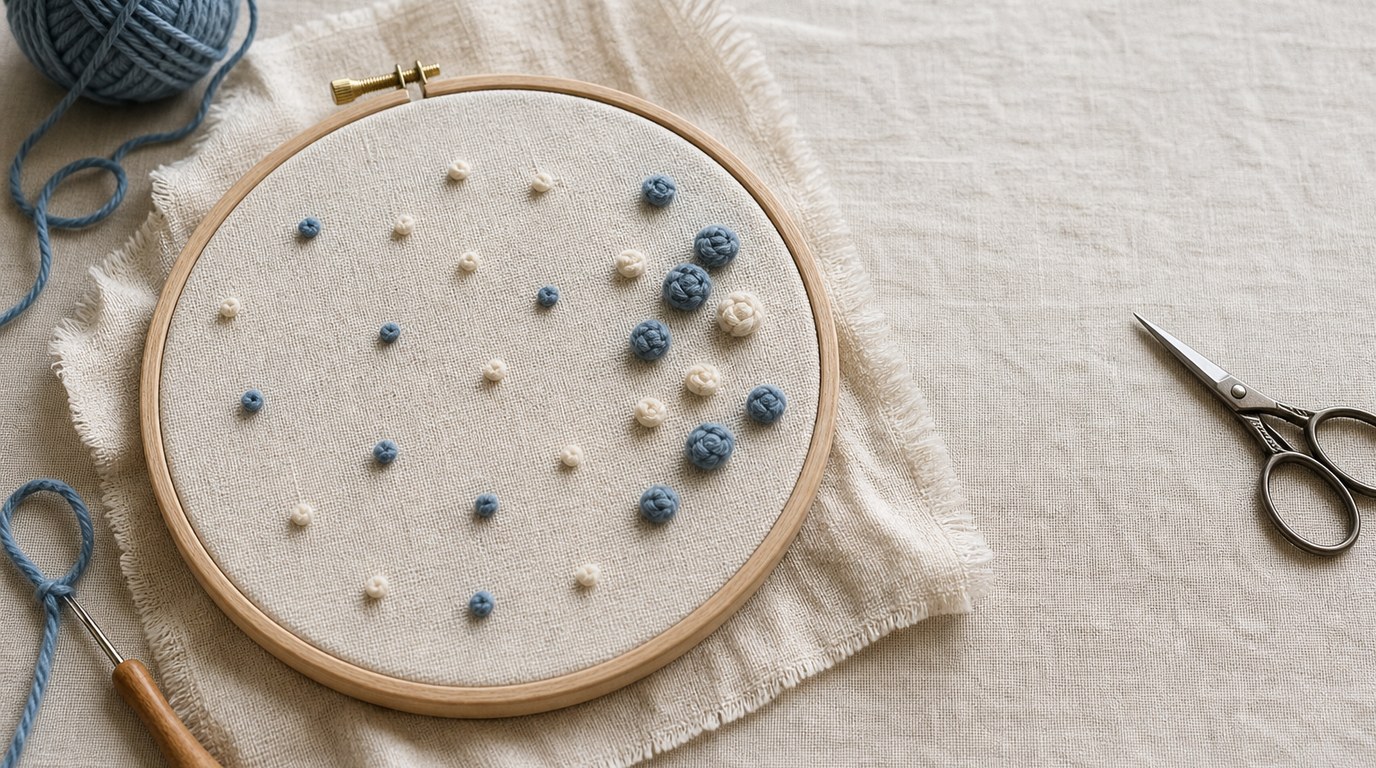
For chunky yarn French knots, start with one wrap. Because yarn is thick, one wrap often creates a full, rounded knot. Use two wraps for a larger bobble or when working with thinner yarn.
Avoid three or more wraps until you are comfortable. Extra wraps can become bulky, uneven, or difficult to pull through the fabric. If you want a bigger effect, it is often neater to use thicker yarn or stitch several knots close together.
Tips for Neat, Chunky French Knots
Keep your needle perpendicular to the fabric as you begin pulling through. This helps the knot sit upright instead of leaning.
Use steady, gentle tension. The yarn should be controlled, but not stretched. If the knot looks pinched, you are probably pulling too tightly.
Place the return hole close to the starting hole, about one yarn-width away. This gives the knot something to grip.
If your yarn twists, let the needle dangle for a moment so it can unwind before making the next knot.
Common Problems and How to Fix Them
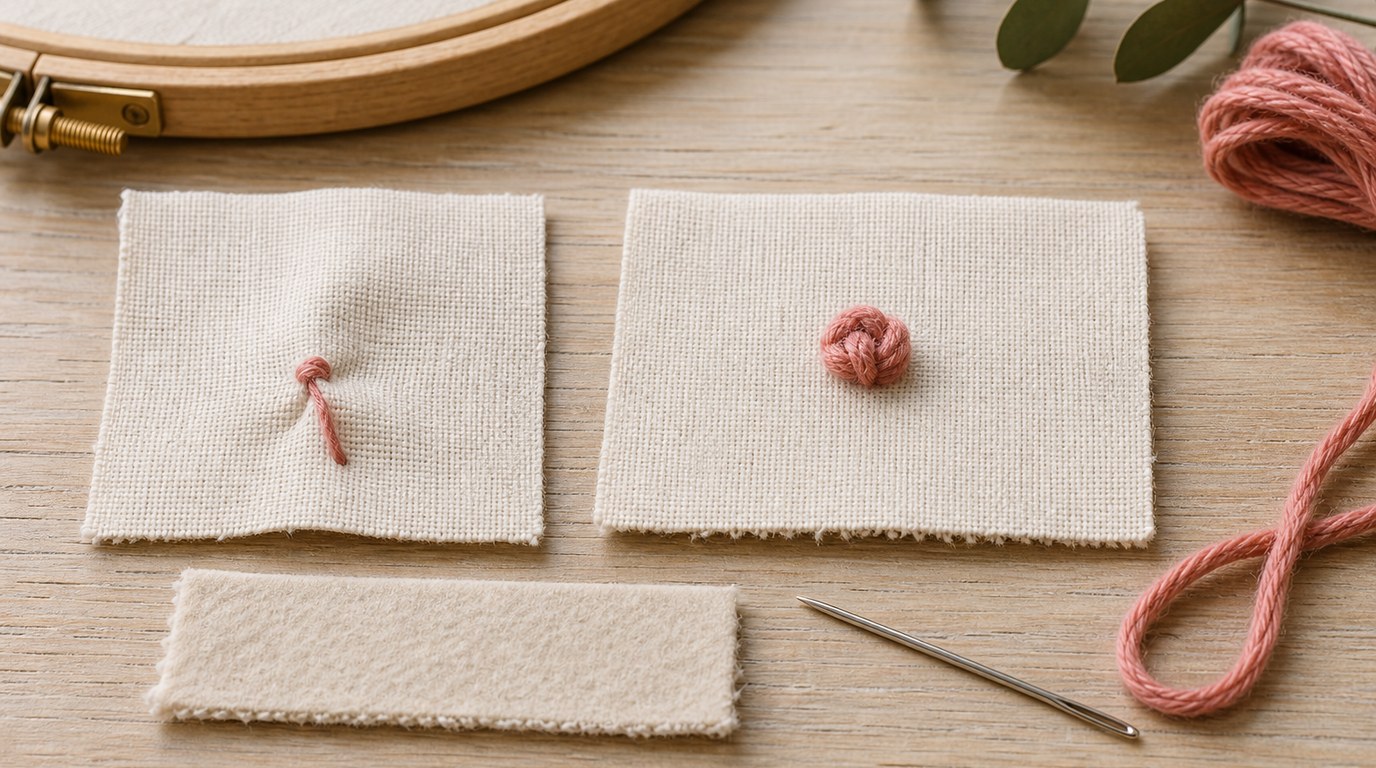
If the knot pulls through to the back, your return hole may be too close or the fabric weave may be too open. Try inserting the needle slightly farther away or use a backing fabric.
If the knot is loose, hold the wraps more securely while pulling the needle through. Keep the wraps near the fabric surface.
If the yarn snags, switch to a larger needle or a fabric with a looser weave.
If the knot looks messy, reduce the number of wraps. With chunky yarn, fewer wraps usually look cleaner.
Simple Ways to Use Chunky Yarn French Knots
Chunky French knots are ideal when you want raised texture. Use them as flower centers, berry clusters, seed heads, sheep fleece, curly hair, snowflakes, stars, or decorative dots on clothing patches.
They also work well in mixed-media embroidery. Combine them with satin stitch leaves, backstitched stems, couching, or simple woven areas. Their height makes them a natural focal point, so a few knots can add a lot of visual interest.
Practice Exercise: Make a Small Cluster
Draw a small circle on scrap fabric, about the size of a coin. Stitch five chunky French knots inside the circle using one wrap each. Keep them slightly spaced.
Next, stitch five more knots using two wraps. Compare the height, shape, and ease of stitching. This quick sample teaches you how your yarn behaves before you use it in a finished project. Save the sample as a reference for future embroidery work.
FAQ
Can You Make French Knots with Any Yarn?
You can use many yarns, but smooth, medium-weight yarn is easiest. Very fuzzy, fragile, or loosely spun yarn may snag, split, or shed as it passes through fabric. For beginners, tapestry yarn, cotton yarn, acrylic, or smooth wool are good choices.
What Needle Is Best for Chunky Yarn French Knots?
A chenille needle is often best because it has a sharp point and a large eye. The sharp point pierces fabric easily, while the large eye holds yarn without shredding it. For open-weave fabric or canvas, a tapestry needle can also work well.
Why Does My French Knot Pull Through the Fabric?
This usually happens when you put the needle back into the exact same hole or when the fabric weave is too open. Reinsert the needle a tiny distance away from the starting point. If needed, add backing fabric to give the knot more support.
How Do I Make Bigger Chunky French Knots?
Use thicker yarn, two wraps, or stitch several knots close together. Avoid adding too many wraps, because bulky yarn can become hard to pull through and may form an uneven lump. A cluster of neat knots often looks better than one oversized knot.
Are Chunky French Knots Good for Beginners?
Yes, if you start with the right materials. Chunky yarn is easier to see and creates quick results, but it also requires gentle tension. Practice on sturdy fabric first, use one wrap, and pull the yarn through slowly until the motion feels natural.