
The designs of the Wiener Werkstätte are best understood as a disciplined blend of art, craft, geometry, and ornament. Founded in Vienna in the early 20th century, the workshop produced furniture, metalwork, ceramics, graphics, fashion, and textiles with a shared visual language: clean structure, stylized natural forms, strong repeats, checks, grids, and carefully chosen color.
For embroidery, cross stitch, and needlework readers, the Wiener Werkstätte is especially useful because its patterns often translate well into stitched form. Its designers favored simplified shapes, rhythmic borders, balanced motifs, and decorative surfaces that can be adapted into samplers, cushions, bands, counted-thread designs, and modern geometric florals.
What Was the Wiener Werkstätte?
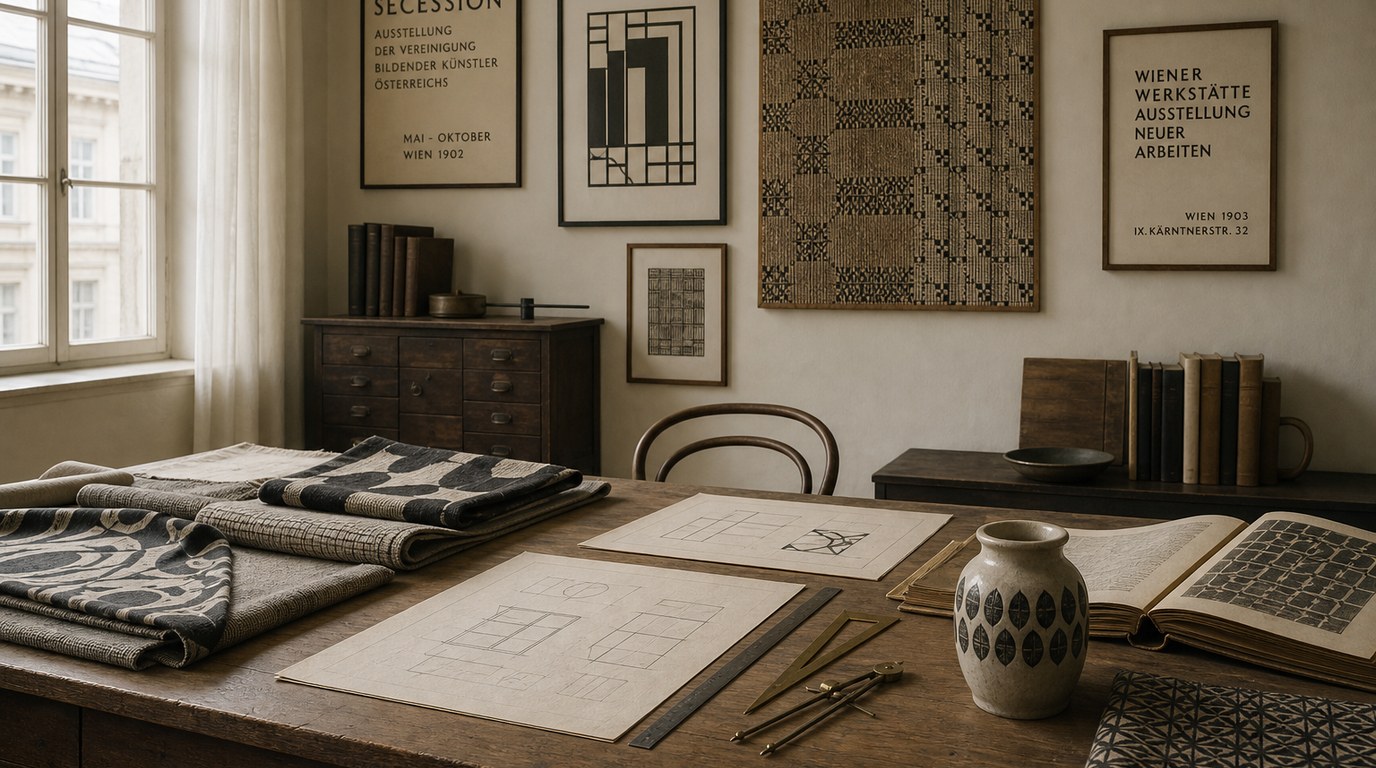
The Wiener Werkstätte, or “Vienna Workshop,” was founded in 1903 by Josef Hoffmann, Koloman Moser, and the patron Fritz Waerndorfer. It grew out of the reform-minded design culture of Vienna around 1900, especially the Vienna Secession, which argued that modern life needed modern art and design.
The workshop aimed to produce well-designed objects for daily living. Instead of treating craft as secondary to fine art, it placed furniture, textiles, jewelry, printed matter, and interior decoration on a serious artistic level. Its work was often expensive and elite, but its influence spread widely through exhibitions, publications, and the later development of modern decorative design.
The Design Philosophy: Art, Craft, and the Total Interior
A useful mental model for the Wiener Werkstätte is the idea of the “total work of art,” or a coordinated interior where every element belongs together. A room might include matching furniture, wall coverings, textiles, tableware, lighting, and clothing, all designed with a unified eye.
This matters for textile history because patterns were not treated as afterthoughts. A fabric design might echo a chair’s grid, a wallpaper’s rhythm, or a dress’s silhouette. The goal was not random decoration but controlled harmony.
For stitchers, this philosophy suggests a practical approach: think beyond one isolated motif. A border, corner, central panel, color palette, and finishing fabric can all speak the same design language. Wiener Werkstätte design rewards planning, repetition, and visual consistency.
Key Visual Features of Wiener Werkstätte Designs
Wiener Werkstätte designs are recognizable because they balance order with ornament. Many patterns use strong geometry: squares, checkerboards, circles, diamonds, stripes, and gridded layouts. These features make the designs especially friendly to counted techniques such as cross stitch, blackwork, needlepoint, and canvaswork.
Stylized nature is another major feature. Flowers, leaves, vines, birds, and garden forms appear often, but they are simplified rather than realistic. A flower may become a circle with radiating petals; a leaf may become a flat repeated shape; a garden may become a field of patterned units.
Color also plays a major role. Some designs use restrained black, white, and muted tones. Others use lively contrasts: pinks, greens, blues, yellows, oranges, and deep accents. The effect can be playful, elegant, or theatrical, depending on the designer and period.
Look also for borders, repeated small motifs, allover patterning, and a sense that every space has been considered. Even when the design is lively, it usually feels deliberate.
Table: Wiener Werkstätte Design Features and Needlework Applications
| Design feature | What it looks like | Needlework application |
|---|---|---|
| Grids and checks | Squares, checkerboards, tiled repeats | Cross stitch borders, samplers, cushion panels |
| Stylized florals | Simplified flowers, leaves, vines | Surface embroidery motifs, appliqué, counted florals |
| Limited palettes | Few colors used with control | Modern hoop art, monochrome or two-color stitching |
| Repeated motifs | Small units arranged rhythmically | Bands, bookmarks, hems, table linens |
| Bold outlines | Clear edges and graphic shapes | Backstitch, stem stitch, blackwork-inspired details |
| Coordinated patterns | Motifs echo across objects | Matching needle case, pincushion, and framed piece |
Textiles in the Wiener Werkstätte
Textiles were central to the Wiener Werkstätte’s identity. The workshop produced and designed fabrics for interiors, fashion, wall coverings, and accessories. These textiles were not merely background materials; they helped define the entire mood of a room or garment.
Wiener Werkstätte textile patterns often used flat, repeatable motifs suitable for printing and weaving. Some were crisp and geometric, while others were whimsical, floral, or almost storybook-like. This range is important: the movement was not only black-and-white squares, although that look is strongly associated with Josef Hoffmann. It also included expressive, colorful surfaces.
For needleworkers, these textiles offer a rich source of pattern thinking. A printed repeat can become a stitched border. A fabric flower can become a satin stitch motif. A checked ground can become a counted-thread framework. The key is to preserve the design’s clarity: simplified shapes, rhythmic spacing, and intentional color.
Important Designers and Their Contributions
Josef Hoffmann is one of the central figures of the Wiener Werkstätte. His work is often associated with grids, squares, refined proportions, and architectural order. For stitchers, Hoffmann’s influence can be seen as a love of structure: borders, panels, repeated blocks, and disciplined spacing.
Koloman Moser brought strong graphic skill to the movement. His designs often show bold composition, stylized forms, and a clear relationship between image and surface. His work is helpful for understanding how a motif can be decorative without becoming fussy.
Dagobert Peche, who joined later, pushed the style toward more playful, ornate, and fantastical forms. His influence is useful for stitchers who enjoy curling leaves, lively florals, and decorative abundance, but still want a designed rather than naturalistic look.
Women designers also played important roles, especially in textiles, fashion, and decorative surfaces. Maria Likarz, for example, contributed vivid textile and graphic designs with strong pattern sense. These designers helped expand the workshop’s visual vocabulary beyond strict geometry into color, fashion, and expressive surface design.
How Wiener Werkstätte Designs Influenced Later Textile and Craft Design
The Wiener Werkstätte helped shape modern ideas about pattern as a serious design language. Its work connected the handcraft ideals of the Arts and Crafts movement with the cleaner geometry that would later feed into modernism and Art Deco.
In textile and craft design, its legacy appears in coordinated interiors, designer fabrics, geometric repeats, stylized florals, and the idea that everyday objects deserve thoughtful decoration. Many later fabric designers and craft movements borrowed similar principles: reduce natural forms, organize them into repeat, and use color with confidence.
For contemporary needlework, the influence feels surprisingly current. A simple grid with a stylized flower, a limited palette sampler, or a bold repeated border can look both historical and modern because the Wiener Werkstätte itself stood between tradition and modern design.
Using Wiener Werkstätte Ideas in Embroidery and Cross Stitch
To use Wiener Werkstätte ideas in your own stitching, start with structure. Choose a grid, border, or repeated block before choosing the motif. This reflects the workshop’s habit of designing the whole surface, not just placing decoration in the center.
Next, simplify natural forms. Instead of stitching a realistic rose, reduce it to circles, petals, dots, and leaves. Instead of a detailed vine, create a rhythmic line with repeated leaf shapes. This makes the design easier to stitch and closer to the Wiener Werkstätte spirit.
Limit your palette. Try black, cream, and one accent color; or choose three strong colors and repeat them consistently. Counted cross stitch works well for checks, squares, and tiled repeats. Surface embroidery works well for bold outlines, filled florals, and decorative borders.
Good project formats include bookmarks, biscornu, needle books, cushion fronts, framed samplers, table runners, and bands for clothing. Aim for coordination: repeat one motif across several small pieces, or use the same border on a matching set.
What to Look for When Studying Wiener Werkstätte Patterns
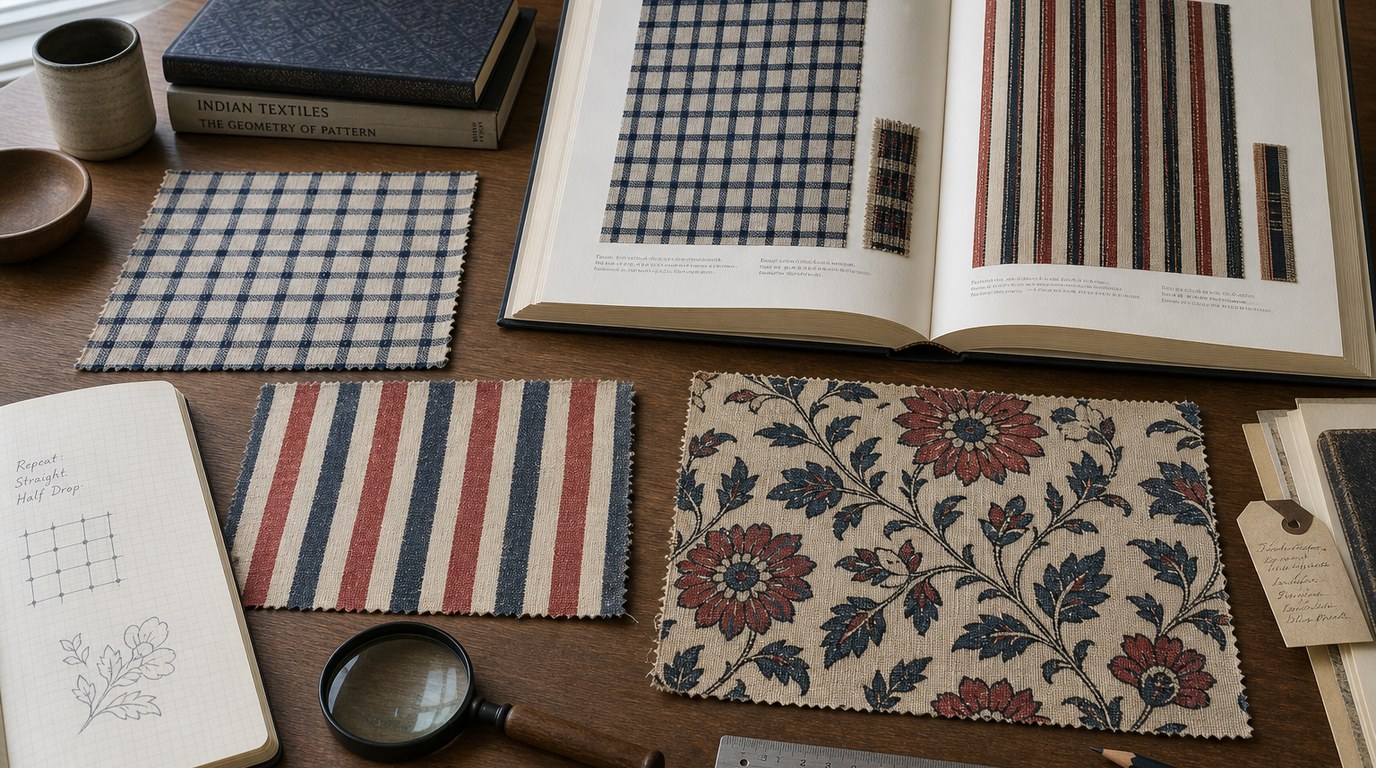
When studying museum images, books, or textile archives, look first at the underlying structure. Is the pattern based on a grid, a stripe, a diagonal, or an allover repeat?
Then study the motif style. Are flowers realistic or reduced to symbols? Are leaves flat and decorative? Are outlines bold?
Finally, notice color and spacing. Wiener Werkstätte designs often depend on controlled contrast and rhythm. Ask how the pattern would change if stitched: which lines become backstitch, which shapes become cross stitch, and which areas need open fabric.
FAQ
What Is the Wiener Werkstätte Best Known for?
The Wiener Werkstätte is best known for uniting art, craft, and design across interiors, furniture, graphics, fashion, and textiles. Its most recognizable designs use grids, checks, stylized florals, refined geometry, and coordinated decorative schemes.
Are Wiener Werkstätte Designs Art Nouveau or Art Deco?
They sit between movements. The Wiener Werkstätte grew from the Art Nouveau and Vienna Secession environment, but its geometry, stylization, and luxury surfaces helped anticipate Art Deco. Some designs feel floral and flowing; others look strikingly modern and geometric.
Why Are Wiener Werkstätte Patterns Useful for Embroidery and Cross Stitch?
They translate well because many patterns use clear outlines, repeated motifs, grids, borders, and limited palettes. These features suit counted stitches, surface embroidery, blackwork-inspired details, needlepoint, and decorative bands without requiring realistic shading.
Can I Copy Wiener Werkstätte Designs for My Own Craft Projects?
For personal study and practice, historical designs are often useful references, especially when you adapt motifs rather than reproduce them exactly. For selling patterns or finished goods, check image rights, museum terms, and copyright status, and create your own clearly original interpretation.