Quick Answer
The best way to choose your next stitching project is to match the project to four things: your available time, your current skill level, the materials you already have, and what you want the finished piece to do. A relaxing weekend stitch, a detailed gift, a stash-busting sampler, and a framed wall piece are all good projects—but they are good for different reasons.
If you feel stuck, start by asking: “Do I want something quick, useful, decorative, skill-building, or meaningful?” That single question narrows your choices faster than scrolling through endless patterns.
For embroidery, your next project might be a floral hoop, monogrammed napkins, a stitched patch, or a small landscape. For cross stitch, it might be a bookmark, ornament, quote pattern, mini sampler, or seasonal design. For general needlework, you could try visible mending, a pincushion, a needle book, or a simple stitched pouch.
A good project should feel inviting, not intimidating. Choose something with one clear reason behind it: to finish quickly, learn a stitch, use favorite colors, make a gift, decorate a space, or enjoy slow stitching without pressure.
Here is a simple picker:
| If you want… | Try this project type |
|---|---|
| A fast finish | Mini hoop, bookmark, ornament, patch |
| Skill practice | Sampler, stitch study, small motif set |
| A gift | Monogram, framed quote, baby keepsake |
| Practical use | Pouch, napkin, towel, needle book |
| Home decor | Hoop art, seasonal cross stitch, wall hanging |
| Stash-busting | Scrappy sampler, color-block motif, mixed-thread piece |
How to Think About This Topic
Choosing your next stitching project becomes easier when you stop looking for the “perfect” idea and start looking for the right fit. Stitching is slow by nature, so the best project is one you will actually want to return to after the first burst of excitement.
Think of every possible project through five filters: purpose, scale, skill, materials, and mood.
Purpose is the reason the project exists. Are you making something to display, wear, gift, use, or simply enjoy while stitching? A framed cross stitch quote and an embroidered tea towel may take similar effort, but they serve different purposes. If your home needs a small seasonal accent, choose decor. If a friend’s birthday is approaching, choose a personalized gift. If your hands just need something calming, choose a low-pressure repeat pattern.
Scale is the size of the commitment. Beginners often choose patterns because they like the final picture, not because they understand the time involved. A full-coverage cross stitch design or dense embroidery hoop can become discouraging if you only have short evening sessions. Small projects are not lesser projects; they are often the best way to build consistency.
Skill is about what the project asks you to do repeatedly. A design with one or two stitches may be relaxing. A design with French knots, satin stitch, backstitch, color changes, blending, or specialty threads may be better when you want to learn. Your next stitching project should stretch you just enough, not so much that every session feels like troubleshooting.
Materials matter because the easiest project to begin is often the one your stash can already support. Check fabric count, hoop size, thread colors, needles, stabilizer, backing fabric, and finishing supplies before committing. A beautiful pattern can stall quickly if it requires ten missing items.
Mood is the most overlooked filter. Sometimes you want clean counted stitches and a chart to follow. Sometimes you want free-form embroidery and room to improvise. Sometimes you want bright colors; sometimes neutrals feel better. Matching the project to your current creative mood helps prevent half-finished work.
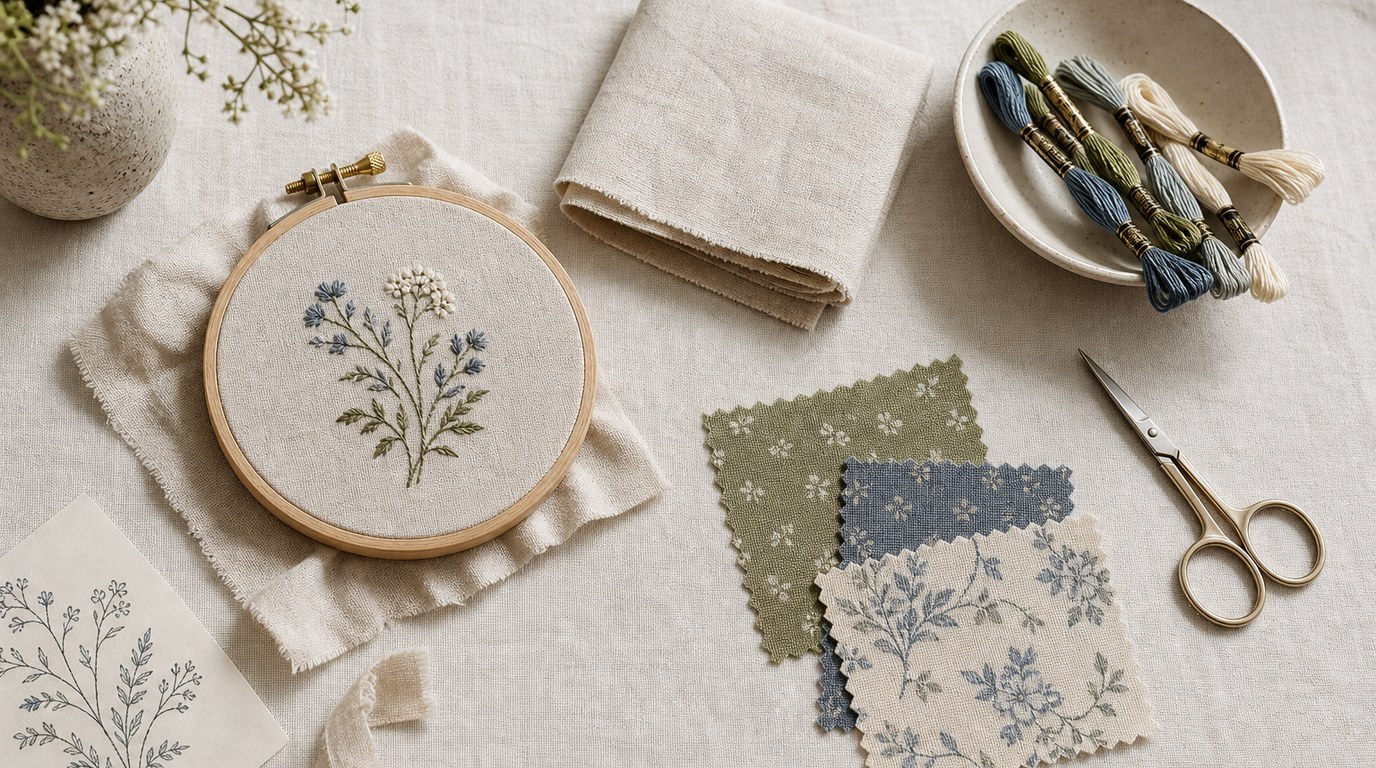
Use these filters together. For example, if you want a relaxing project, have limited time, and already own linen scraps, choose a small floral embroidery hoop or visible mending detail. If you want to improve accuracy, choose a cross stitch sampler with borders and repeated motifs. If you want a heartfelt gift, choose a monogram, birth flower, pet portrait outline, or stitched initial.
The goal is not to choose the most impressive project. The goal is to choose a project with a clear job, realistic scope, and enough charm to keep you stitching.
Practical Guidance
Start with the kind of stitching experience you want, then choose the project category that supports it.
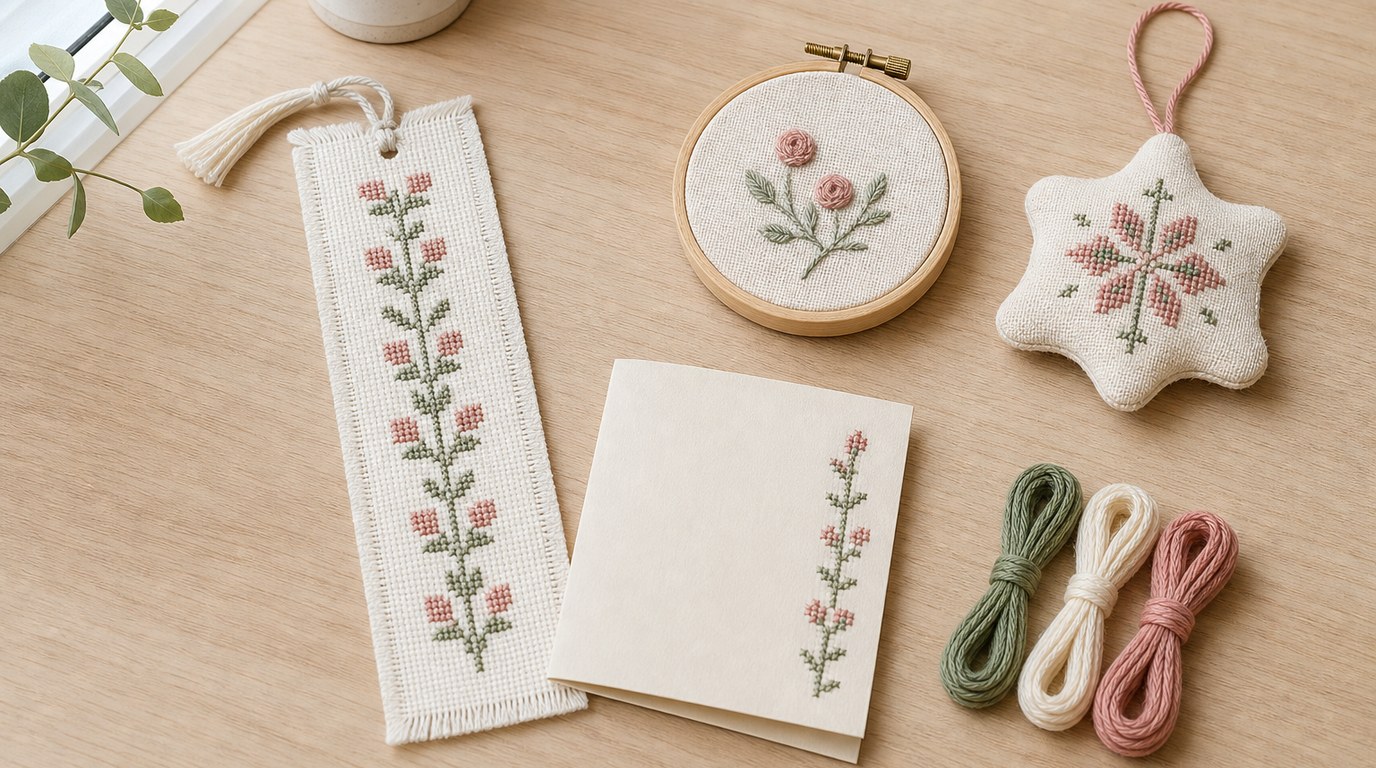
For a quick finish, look for small designs with limited colors and simple finishing. Good choices include cross stitch bookmarks, mini hoops, ornaments, greeting card inserts, key fob panels, and embroidered patches. These work well when you need momentum, a portable project, or a satisfying finish between larger pieces. Keep the design area small and avoid complex backgrounds.
For skill building, choose a project that focuses on one technique at a time. If you are learning embroidery, try a sampler with backstitch, stem stitch, chain stitch, satin stitch, and French knots in separate sections. If you are learning cross stitch, try a small design with backstitch outlines, a few fractional stitches, or a neat border. The best learning project has visible progress and a limited challenge, rather than ten new techniques at once.
For meaningful gifts, choose personalization over size. A stitched initial, wedding date, house number, birth flower, favorite quote, pet silhouette, or small family motif can feel more thoughtful than a large generic design. Embroidered handkerchiefs, baby name hoops, cross stitch ornaments, and monogrammed towels are practical gift projects because they are personal but still manageable.
For practical use, choose items that can handle finishing and wear. Napkins, tote pockets, denim jackets, tea towels, needle books, pincushions, project bags, and small pouches are excellent options. Use washable threads when needed, secure your stitches carefully, and consider how the item will be cleaned. Practical stitching is especially rewarding because the finished piece becomes part of daily life.
For home decor, think about where the finished piece will live before you stitch it. A small hoop may suit a shelf, gallery wall, nursery, craft room, or seasonal display. Cross stitch cottages, botanicals, alphabet samplers, holiday motifs, and simple landscapes all work well as decor. Match the color palette to the room so the finished project feels intentional.
For stash-busting, let your materials lead. Gather leftover floss, fabric scraps, odd Aida pieces, small linen cuts, beads, buttons, or specialty threads. Then choose a flexible design: a small sampler, abstract motif, patchwork-style hoop, scrappy border, or set of tiny motifs. Stash-busting projects are best when color accuracy is not essential.
For low-energy stitching, choose repetition. Borders, simple alphabets, rows of tiny flowers, blackwork-style patterns, and single-color cross stitch designs can be soothing because you are not making constant decisions. This is a good option for travel, evenings, or times when you want stitching to feel meditative.
Before you commit, run the idea through a final checklist:
- Can I explain the purpose of this project in one sentence?
- Do I have most of the materials already?
- Is the size realistic for my available time?
- Does it match my current mood: relaxing, challenging, useful, or decorative?
- Is the finishing method clear?
- Will I still like the colors and theme next month?
Also avoid a few common traps. Do not choose a very large project only because it looks impressive online. Do not buy a pattern without checking fabric count, finished size, or thread requirements. Do not start a gift too close to the deadline unless the design is genuinely small. Do not assume every project needs to be framed; many stitched pieces are more useful as patches, bags, towels, cards, or ornaments.
If you still cannot decide, pick the smallest project from your shortlist. Small projects teach quickly, clear creative hesitation, and often lead naturally to the next idea.
FAQ
What Should a Beginner Know First About Your Next Stitching Project?
A beginner should choose a small, clear project with limited colors and simple stitches. Good first options include a mini cross stitch motif, simple floral hoop, bookmark, or ornament. The goal is to finish confidently while learning fabric handling, thread tension, and basic finishing.
What Matters Most When Evaluating Your Next Stitching Project?
The most important factors are time, skill level, materials, and purpose. A project is a good choice when it fits your real schedule, uses techniques you can manage or want to learn, and has a clear reason for being stitched.
What Mistakes Should Readers Avoid with Your Next Stitching Project?
Avoid choosing only by appearance. Check the finished size, thread list, fabric type, stitch difficulty, and finishing method first. Many projects stall because they are too large, require missing supplies, or do not match the stitcher’s current energy and experience.
What Is the Next Logical Step After Learning About Your Next Stitching Project?
Make a shortlist of three ideas: one quick finish, one skill-building project, and one meaningful or practical project. Then choose the one you can start with supplies you already own. Preparing the fabric, threads, and needle today makes follow-through much easier.