Quick Answer
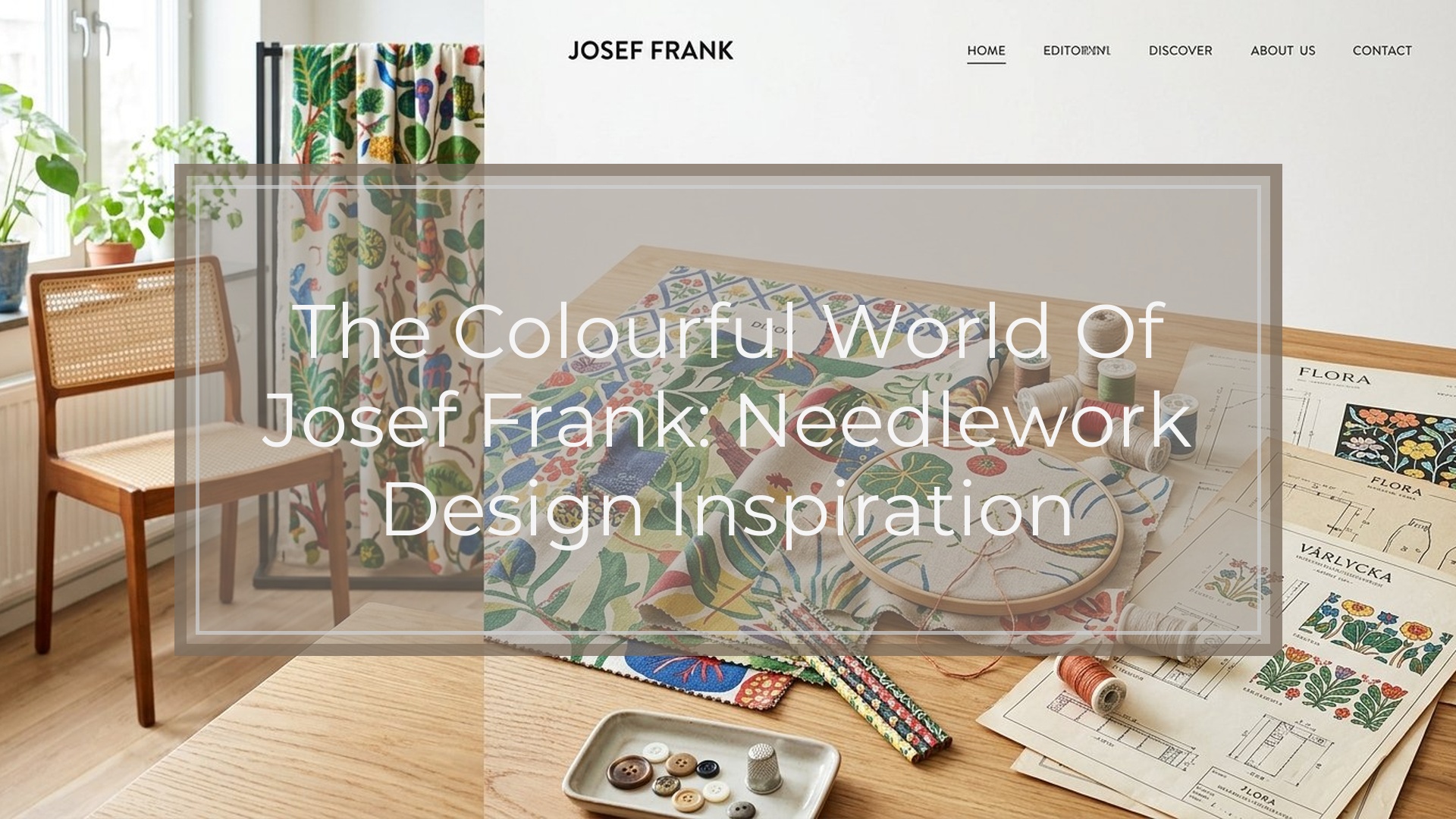
The main lesson needleworkers can take from the colourful world of Josef Frank is this: pattern can feel abundant, lively, and free without becoming chaotic. Frank’s textiles are known for generous botanical forms, unexpected colour pairings, winding stems, scattered motifs, and imaginative movement. For embroidery, cross stitch, and needlework, that translates into designs that do not need to be perfectly symmetrical, overly restrained, or limited to “safe” palettes.
Josef Frank’s work is useful as inspiration because it sits between nature and fantasy. His flowers, leaves, fruits, and vines often feel recognisable, but not copied directly from a botanical textbook. That gives stitchers permission to simplify shapes, exaggerate scale, and use colour emotionally rather than literally.
For a needleworker, this might mean a cross stitch border with oversized leaves in coral, teal, and ochre; a crewel-style cushion with curling stems and mismatched blooms; or a small hoop design where one bright motif becomes the focal point. The goal is not to reproduce Frank’s patterns directly, but to learn from his design habits: movement, contrast, rhythm, and joyful colour.
Think of Josef Frank as a reminder that needlework can be decorative, sophisticated, and playful at the same time. His visual world encourages stitchers to move beyond neat little motifs and try bolder compositions: larger flowers, denser borders, lively backgrounds, and palettes that mix warm, cool, dark, and bright shades with confidence.
How to Think About This Topic
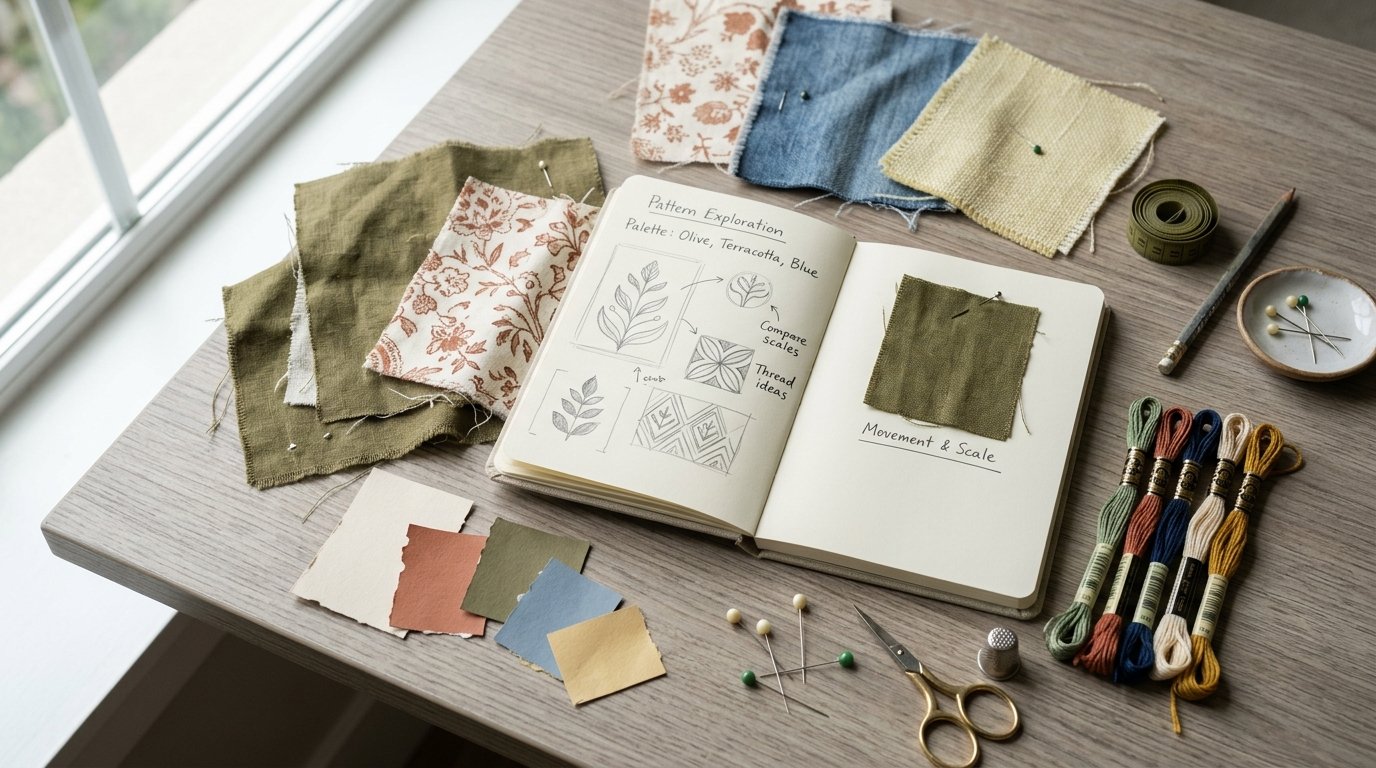
To use the colourful world of Josef Frank well, think less like a copier and more like a designer. Instead of asking, “How do I stitch a Josef Frank pattern?” ask, “What design choices make his work feel so alive, and how can I apply those choices in my own needlework?”
A practical mental model is to break his style into four stitch-friendly ideas: abundance, movement, contrast, and breathing space.
Abundance means the design feels full of life. In stitch terms, this might be a hoop with several types of leaves rather than one repeated sprig, or a sampler band where each flower has a different shape. Abundance does not mean filling every inch. It means giving the eye plenty to discover.
Movement comes from curving stems, angled leaves, climbing vines, and motifs that seem to grow across the surface. This is especially useful in embroidery, where stem stitch, chain stitch, couching, and satin stitch can all follow flowing lines. In cross stitch, movement can come from staggered motifs, diagonal branches, or a border that turns corners with a natural vine rather than a rigid square repeat.
Contrast is one of the most important lessons. Frank’s work often combines colours that might seem surprising at first: deep green with pink, mustard with blue, red with soft neutrals, or dark outlines against clear bright shapes. For stitchers, contrast helps motifs read clearly on fabric. A pale pink flower may need a wine, brown, or navy accent. A bright green leaf may need a darker vein or outline.
Breathing space keeps abundance from becoming clutter. Many Josef Frank designs are busy, but the shapes are usually distinct. Leaves have recognisable silhouettes. Flowers stand apart. Background colour plays an active role. In needlework, this means leaving enough fabric visible between motifs, limiting tiny details, or choosing one area of dense stitching and one calmer area.
This topic matters to readers looking for “the colourful world of Josef Frank” because his appeal is not only in the finished textiles. It is in the way he handled decoration. For craft readers, that makes him a strong source of design thinking. You can study his approach, then make a project that feels lively and personal without becoming an imitation.
A good way to start is to look at one visual trait at a time. Notice the size of a flower compared with a leaf. Notice whether the stems are straight or wandering. Notice how many colours appear in one small area. Then translate that observation into a stitching decision: larger motif, curved outline, brighter accent, darker border, or more open spacing.
Practical Guidance
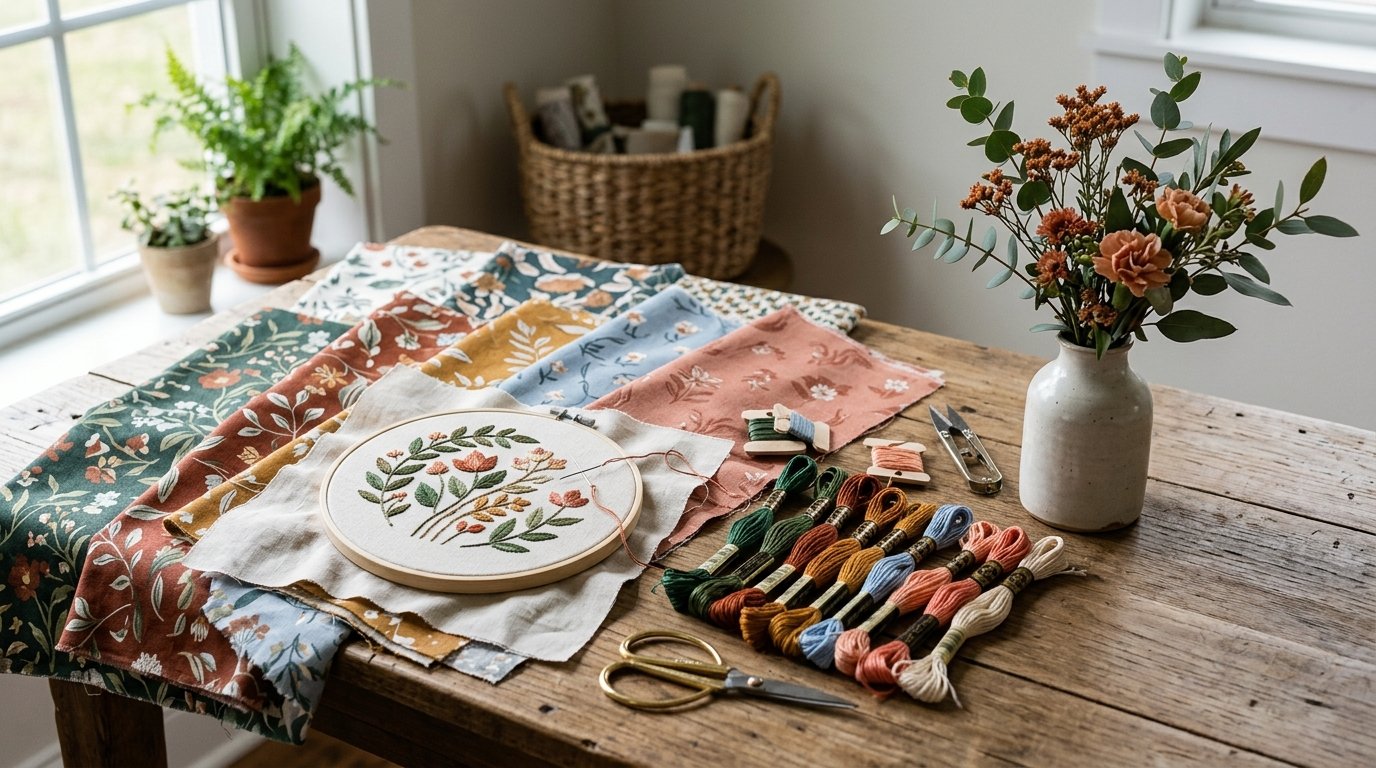
Start with colour, because colour is often the first thing people notice in Josef Frank’s work. Choose a palette that has energy but still has structure. One simple method is to pick five thread groups: one dark anchor, two strong mid-tones, one bright accent, and one soft resting colour. For example, a needlework palette might include forest green, coral, sky blue, golden yellow, and cream. Another could use navy, rose, olive, orange, and pale linen.
The dark anchor is important. It keeps brighter colours from floating away visually. In embroidery, it might appear as a stem, outline, seed stitch shadow, or small detail. In cross stitch, it might define a leaf edge or separate two similar colours. If your design feels too sweet or scattered, add a deeper thread before adding more bright colours.
Next, think about motif scale. Josef Frank-inspired stitching often works best when at least one element is larger than expected. A single oversized flower on a cushion can feel more modern than a dozen tiny identical blooms. A border with large leaves at the corners can feel more dynamic than a narrow repeated vine. In cross stitch, try enlarging one motif and letting smaller berries, dots, or leaves orbit around it.
Use nature as a starting point, not a rulebook. A flower does not have to be botanically accurate. You might stitch a blue flower with orange stamens, a pink leaf vein, or a yellow fruit on a navy branch. This is where Frank’s influence is especially freeing: the design can feel organic without being realistic.
Here is a useful way to translate visual inspiration into stitching choices:
| Josef Frank-inspired trait | Needlework decision |
|---|---|
| Winding botanical movement | Use curved stems, trailing vines, or diagonal branches |
| Bold, unexpected colour | Pair one bright accent with a darker grounding shade |
| Large flowers and leaves | Enlarge one motif instead of repeating many small ones |
| Dense but readable pattern | Leave clear gaps between shapes or simplify details |
| Fantasy-like nature | Change natural colours and exaggerate petal or leaf shapes |
For embroidery, line quality matters. Stem stitch is ideal for curling branches. Satin stitch can make bold petals feel lush. Long and short stitch works well for soft colour changes, but use it selectively; too much shading may make the design feel fussy. French knots, seed stitch, and detached chain stitches are excellent for small accents that add sparkle without overcrowding the piece.
For cross stitch, focus on silhouette and chart clarity. Frank’s designs often contain curves, but cross stitch is built on a grid. Rather than forcing every curve to be smooth, simplify the shape so it reads clearly from a normal viewing distance. A leaf can be stepped and still feel graceful. A flower can be stylised into blocks of colour. Use backstitch sparingly to sharpen stems, veins, or outlines.
Project choice also affects how bold you can be. A hoop can handle one dramatic motif with a few supporting details. A sampler can explore several small colour experiments in bands. A cushion allows larger leaves, denser stitching, and stronger contrast. A border for a towel or cloth may work best with a repeating vine, but vary the flowers or berries so it does not feel too mechanical.
If you want a beginner-friendly exercise, stitch a small fantasy sprig. Draw one curved stem, add three leaves of different sizes, one oversized flower, and two small berries. Choose five thread colours using the dark-anchor method. Keep the stitches simple: stem stitch for the line, satin stitch or cross stitch blocks for the leaves, and French knots or small crosses for the berries. This gives you the feeling of a Frank-inspired composition without needing a complex pattern.
The main mistake to avoid is direct copying. Josef Frank’s textile designs are distinctive works, and many are protected or commercially licensed. Use them as study material for colour, rhythm, scale, and mood, then create your own motifs and layouts.
When evaluating your design, step back from it. Does the eye travel through the piece? Is there one strong focal point? Do the colours feel lively but not muddy? Are the shapes clear enough to stitch? If the answer is mostly yes, you are applying the best lessons from the colourful world of Josef Frank in a practical, craft-focused way.
FAQ
What Should a Beginner Know First About the Colourful World of Josef Frank?
Beginners should know that Josef Frank’s style is not about copying complicated prints. It is about learning from lively colour, botanical shapes, movement, and playful scale. Start with one curved stem, a few bold leaves, and a limited but cheerful thread palette.
What Matters Most When Evaluating the Colourful World of Josef Frank?
Look at how the design balances energy and clarity. The colours may be bold and the motifs abundant, but the shapes still read well. For stitchers, that means strong silhouettes, enough contrast, and spacing that keeps the needlework from looking crowded.
What Mistakes Should Readers Avoid with the Colourful World of Josef Frank?
Avoid using too many colours at once, making every motif the same size, or filling all the fabric with detail. Also avoid directly copying existing textile patterns. Study the design principles, then create your own flowers, leaves, borders, or stitched compositions.
What Is the Next Logical Step After Learning About the Colourful World of Josef Frank?
Choose a small project and test the ideas immediately. Try a hoop, sampler band, or cushion corner with a curved vine, oversized flower, dark outline, and bright accent colours. A small stitched sample will teach more than planning a large project too soon.