
To keep sashiko thread from tangling, use a shorter working length, pull it through the fabric smoothly, and pause often to let the needle dangle so built-up twist can unwind. Most knots come from thread that is too long, twisted, dragged sharply, or squeezed through a tight needle hole. If you are mid-stitch, stop, let the needle hang, smooth the thread lightly, then continue with slower pulls.
Why Sashiko Thread Tangles so Easily
Sashiko thread is usually thicker and less tightly spun than many embroidery flosses, so it reacts strongly to twist and friction. Each time the needle passes through the fabric, it can turn slightly. That twist travels down the thread until it becomes loops, snarls, or knots.
Long thread makes this worse because more thread rubs against the fabric, your fingers, and itself. A sharp tug can then tighten a loose loop before you notice it.
The Fastest Fix: Use a Shorter Thread Length
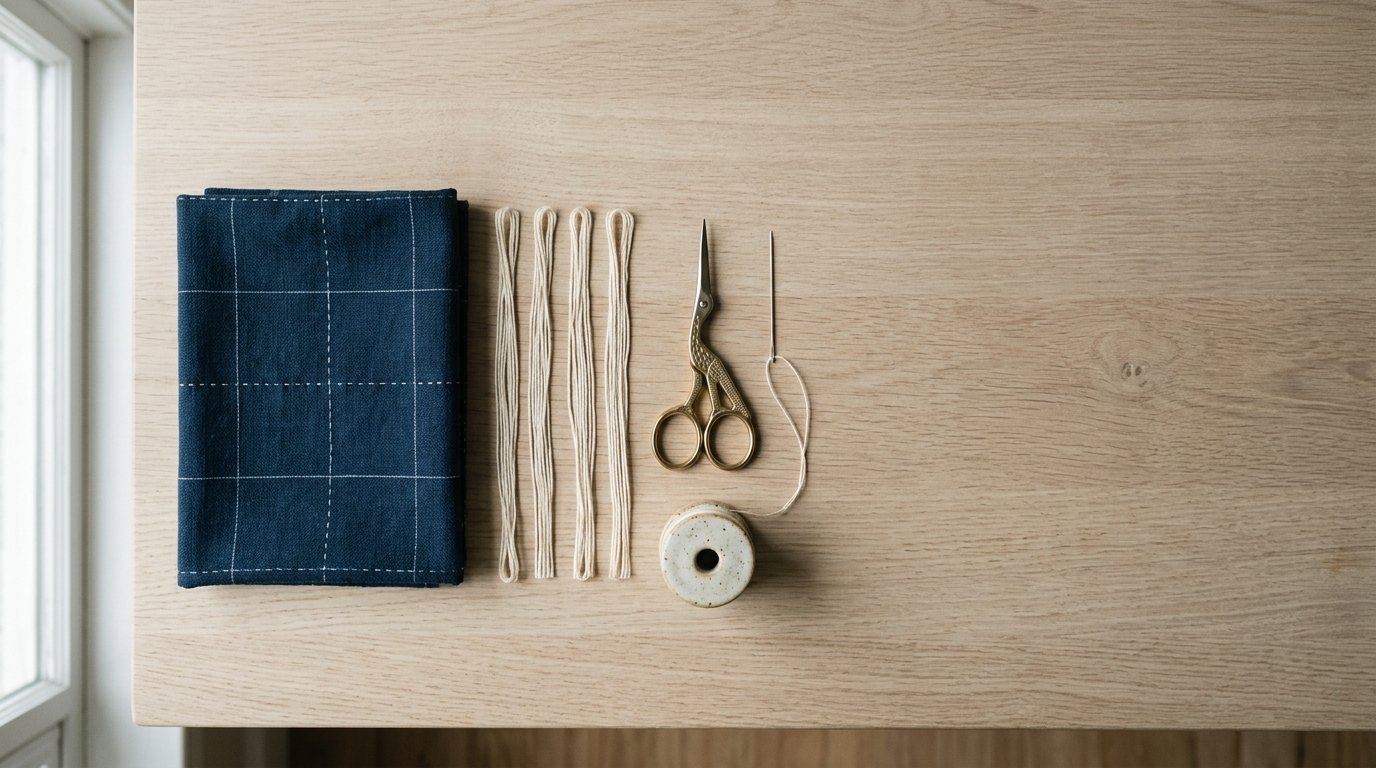
The quickest fix is to cut a shorter working length. For most sashiko stitching, start with a length from your fingertips to your elbow. Go slightly shorter if your thread is thick, your fabric is dense, or you are seeing frequent loops.
Long thread feels efficient because you rethread less often, but it often wastes time through tangles and fraying. Shorter thread passes through fabric with less drag and has less chance to twist around itself.
Let the Needle Dangle to Remove Twist
When the thread starts to coil, stop before it knots. Hold the fabric up and let the needle hang freely for a few seconds. The needle will spin and release twist on its own.
Build this into your stitching rhythm: do it after a long pull, after several rows, or whenever loops begin forming near the fabric. You can lightly smooth the thread with your fingers afterward, but avoid scraping or tugging hard because that can roughen the fibers.
Pull the Thread Smoothly, Not Sharply
A steady pull helps sashiko thread lie flat. After loading stitches on the needle, draw the thread through in one controlled motion. Watch the thread as it moves; if a loop appears, stop and loosen it before pulling farther.
Avoid yanking, especially through multiple layers or tightly woven fabric. Sudden tension turns small twists into hard knots. Think of guiding the thread through the cloth rather than forcing it.
Check Your Needle, Fabric, and Thread Setup
If shorter thread and smoother pulling do not solve the problem, check the setup. A needle that is too small can scrape or compress the thread. The eye should hold the thread without crushing it, and the shaft should open a clean path through the fabric.
Dense fabric also adds resistance. If the thread feels hard to pull, try a slightly larger sashiko needle or load fewer stitches at a time. Also check that the thread is not catching on dry skin, rings, rough fingernails, or the edge of your work.
Quick Troubleshooting Table
Use this table to match the problem to the most likely fix. Start with the simplest changes first: shorten the thread, release twist, and slow your pull. If the problem keeps coming back, check needle size and fabric resistance.
| Problem you see | Likely cause | Quick fix |
|---|---|---|
| Thread forms loops | Built-up twist | Let the needle dangle and spin |
| Knots appear near the fabric | Pulling too sharply | Pull slowly and stop when loops appear |
| Thread frays quickly | Too much friction or excess length | Use shorter thread and check needle size |
| Thread is hard to pull through | Needle too small or fabric too tight | Use a larger needle or load fewer stitches |
| Tangles happen near the end | Working length is too long | Cut a shorter piece next time |
FAQ
Should I Wax Sashiko Thread to Stop Tangling?
Usually, no. Traditional sashiko thread is generally used without wax, and wax can change its feel and finish. First try shorter thread, regular untwisting, and a needle eye that does not pinch the thread.
How Long Should Sashiko Thread Be?
A good starting length is fingertip to elbow. If the thread is thick, the fabric is dense, or tangles keep forming, go shorter. Rethreading more often is usually easier than fighting knots.
Why Does My Sashiko Thread Knot Underneath the Fabric?
A loop may be forming on the back and tightening as you pull. Check the back occasionally, pull with steady tension, and stop when you feel resistance. Letting the needle dangle often also reduces hidden twist.