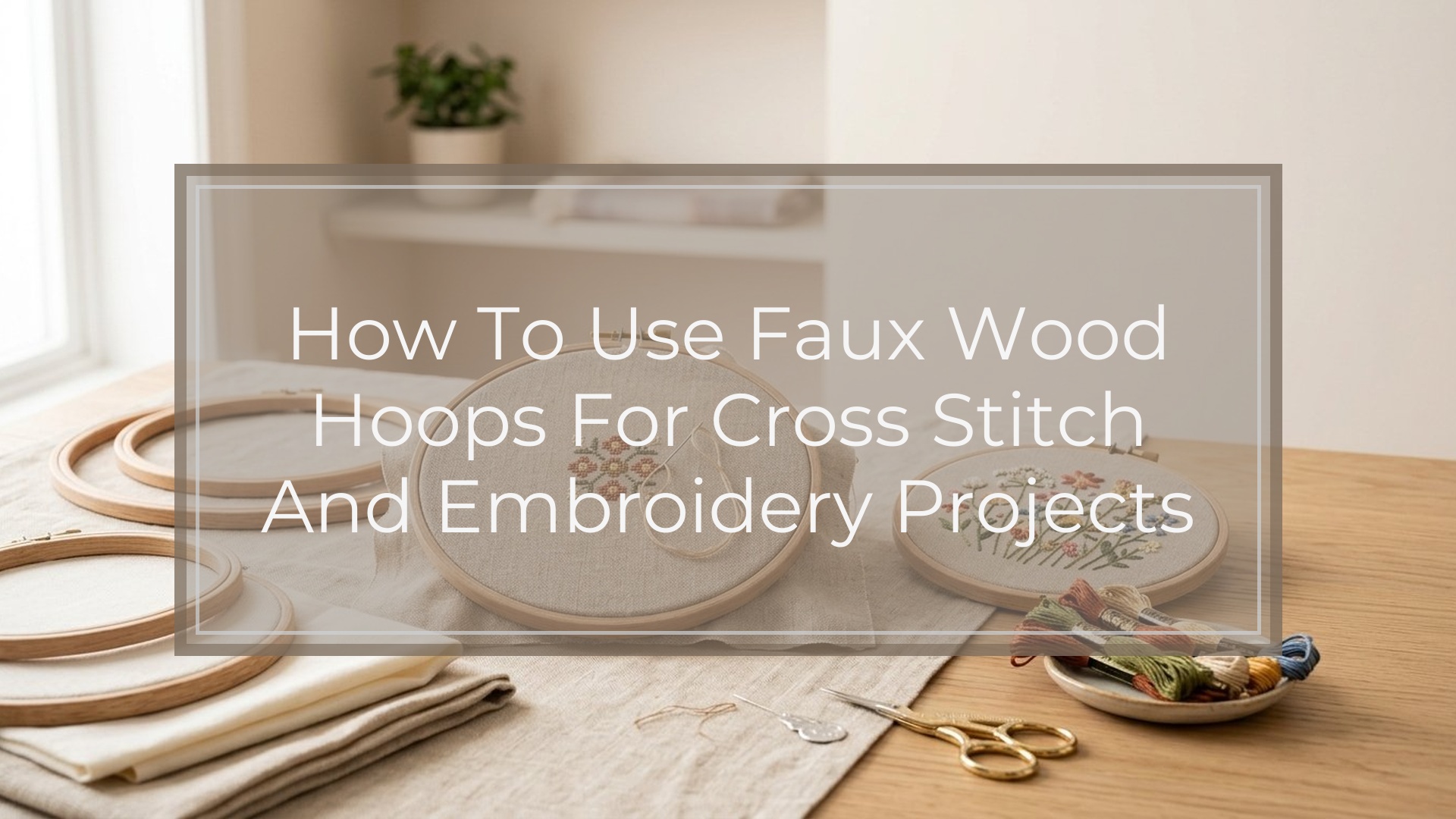
Faux wood hoops are embroidery hoops made from plastic, rubber, flexi material, or composite finishes designed to look like wood. You can use them for cross stitch and embroidery much like regular hoops: place fabric over the inner ring, fit the outer ring around it, pull the fabric evenly taut, stitch, and then use the hoop as a display frame if you like.
The key difference is purpose. Traditional wooden hoops are often best for active stitching because they grip fabric well and adjust easily. Faux wood hoops are especially useful for finishing and displaying small projects, ornaments, monograms, florals, samplers, and hoop art because they give a wood-look frame without splintering, staining, or warping.
Quick Answer
To use faux wood hoops for cross stitch and embroidery, choose a hoop slightly larger than your design, center the fabric, secure it between the inner and outer hoop pieces, and tighten or press the hoop until the fabric is smooth and firm. Stitch with even tension, adjust the fabric if it loosens, then finish the back for display.
For cross stitch, faux wood hoops work best when the fabric stays evenly stretched and the grid remains square. Aida, evenweave, and linen can all work, but avoid forcing thick seams, heavy stabilizer, or bulky layered fabric into a tight hoop.
For embroidery, faux wood hoops suit simple florals, lettering, small motifs, and decorative hoop art. If your design uses beads, padding, heavy fill stitches, or raised textures, stitch in a regular working hoop first and move the finished piece into the faux wood hoop afterward.
Think of faux wood hoops as part tool, part frame. They can hold fabric while you work, but their biggest strength is often the polished finished look.
How to Think About This Topic
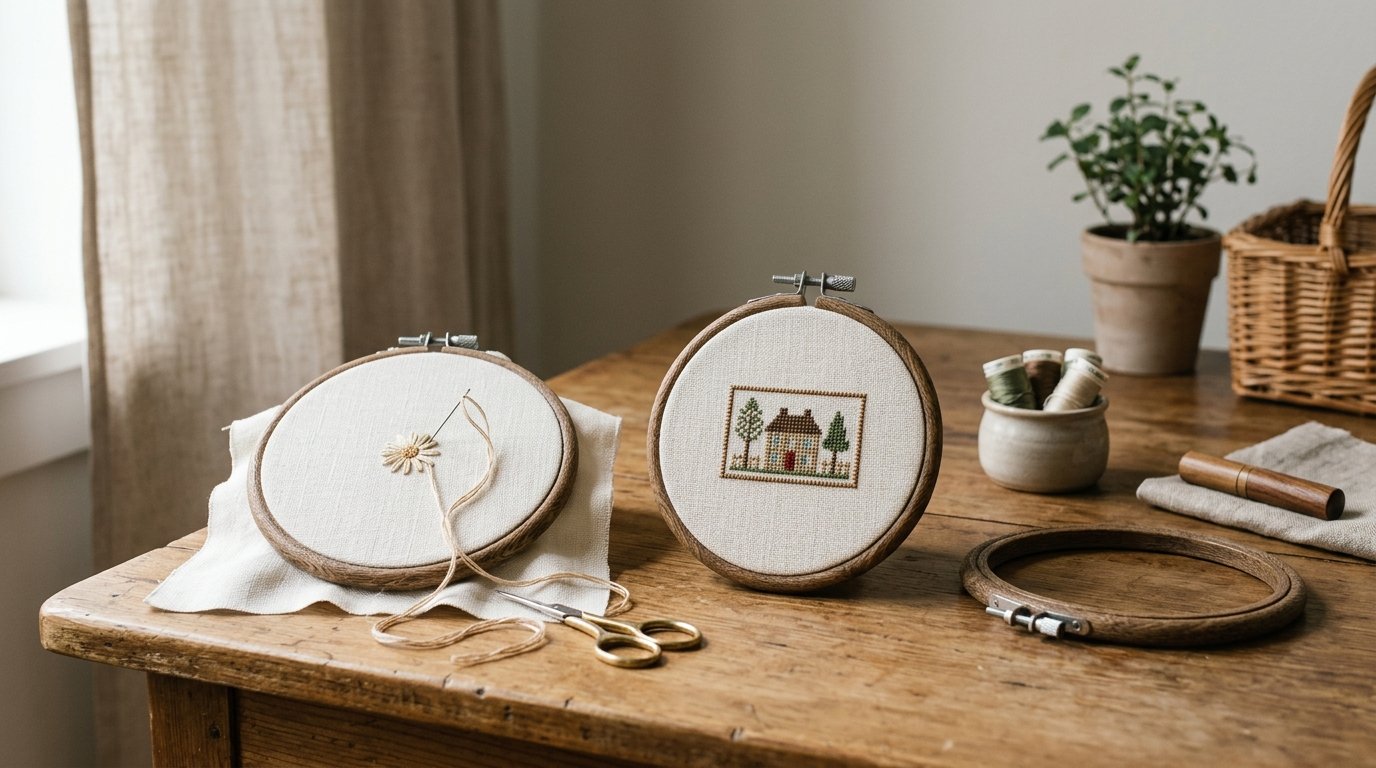
The easiest way to understand faux wood hoops is to separate three jobs: holding, stitching, and displaying. A hoop must hold fabric under tension, support your needlework while you stitch, and, if left on the project, present the finished piece neatly.
A regular wooden hoop is usually chosen for grip and adjustability. You can loosen the screw, reposition fabric, tighten it again, and keep working. Faux wood hoops vary more. Some have a screw like a standard hoop. Others are flexi hoops with a rigid inner ring and a flexible outer ring that stretches over the fabric. Some are mainly decorative frames and are better for finishing than for long stitching sessions.
That distinction matters because cross stitch and embroidery put different demands on a hoop. Cross stitch needs even fabric tension so the grid stays square and stitches sit consistently. If the hoop pulls harder in one direction, the design can look slightly distorted. Embroidery needs enough tension for smooth stitches, especially satin stitch, stem stitch, backstitch, and lettering. Loose fabric can cause puckering or uneven loops.
Faux wood hoops are ideal when you want a warm, natural-looking frame without using actual wood. They work well for craft fair pieces, nursery name hoops, seasonal ornaments, kitchen samplers, and small gifts. They are also useful in humid spaces because many faux materials do not warp like unfinished wood can.
The tradeoff is that some faux hoops do not grip fabric as strongly as good wooden hoops. The surface may be smoother, the outer ring may be less adjustable, or the flexi edge may be awkward to remove repeatedly. That does not make them poor supplies; it just means you should match the hoop to the stage of the project.
A practical rule is: use the hoop that gives you the best tension while stitching, then use the hoop that gives you the best look for finishing. Sometimes that is the same faux wood hoop. Sometimes it is two different hoops.
Practical Guidance
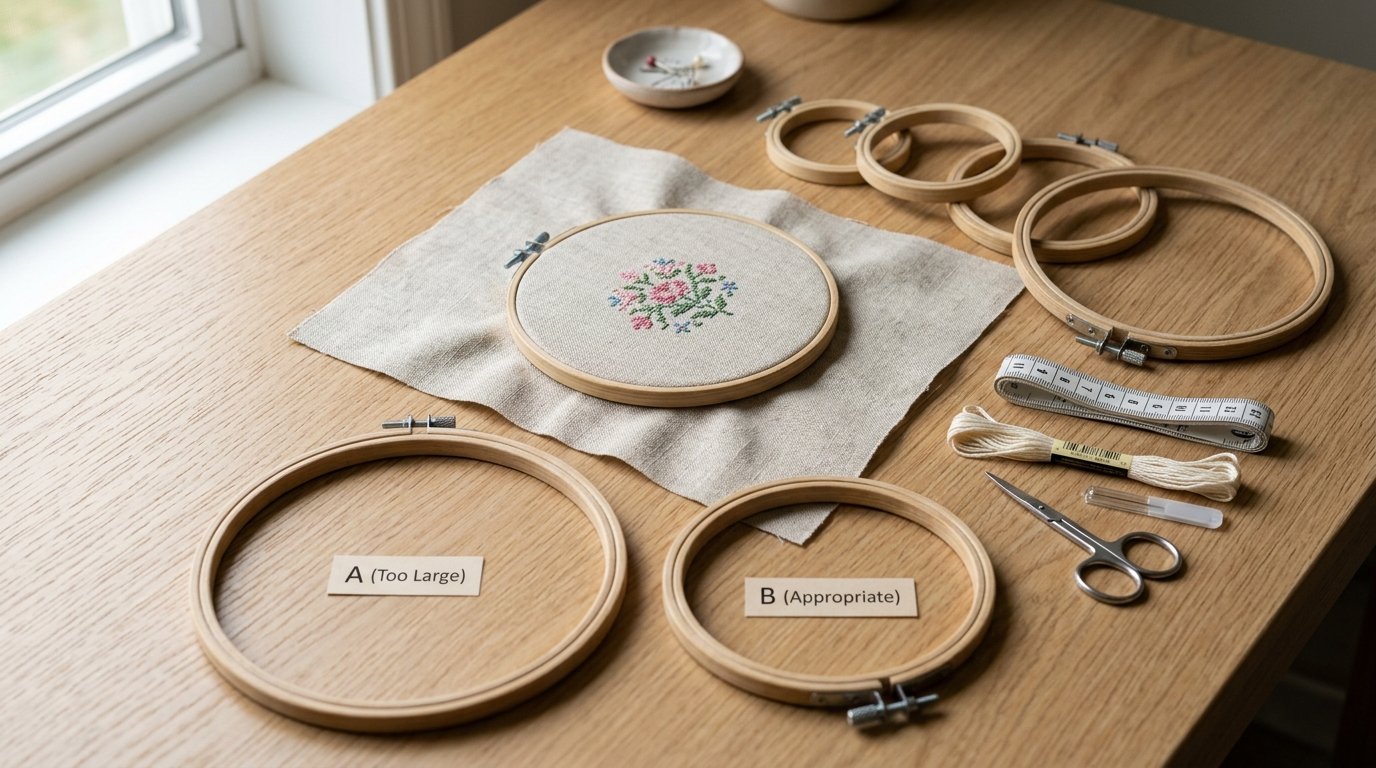
Start by choosing the right size. Your hoop should leave breathing room around the design so the stitching does not sit too close to the edge. For a small monogram, a 4-inch hoop may be enough. For a floral wreath or cross stitch sampler, choose a hoop that gives at least half an inch to one inch of open fabric around the design.
Prepare the fabric before hooping. Press out creases, and make sure Aida, evenweave, or linen sits straight so the finished design does not look tilted. For embroidery on thin cotton or linen, add stabilizer if needed, but avoid creating a bulky sandwich the faux hoop cannot close around.
Use this basic process:
- Separate the inner and outer hoop pieces.
- Lay the inner ring on a flat surface.
- Place the fabric over the inner ring, with the design area centered.
- Fit the outer ring over the fabric.
- Tighten the screw or press the flexi ring into place.
- Pull the fabric gently around the edges until it is smooth and firm.
- Check that the grain is straight before stitching.
For a screw-style faux wood hoop, tighten gradually rather than forcing the screw closed at once. Pull the fabric evenly around the circle instead of yanking one side. The fabric should feel firm, not stretched out of shape.
For a flexi faux wood hoop, place the fabric over the solid inner ring, then stretch the flexible outer ring around it. Work slowly around the edge until it seats evenly. Flexi hoops often look beautiful for display, but they can be less convenient if you need to remove and replace the fabric many times.
While stitching, check tension regularly. If the fabric loosens, pause and adjust it before continuing. For cross stitch, avoid pulling thread so tightly that the fabric dimples. For embroidery, keep long stitches and satin stitches smooth with firm but not drum-tight tension.
If your faux hoop leaves marks, slips, or feels awkward, use it mainly as a finishing hoop. Stitch the project in a regular working hoop, remove it, press the fabric from the back on a soft towel, then frame it in the faux wood hoop.
To finish for display, center the completed design in the hoop and secure it. Trim the excess fabric at the back, leaving enough to gather. Run a basting stitch around the fabric edge, pull it snug, and knot it. For a cleaner back, add felt, cardstock, or a fabric circle. This is a good finish for ornaments, baby name hoops, holiday designs, and small wall art.
Before calling the project done, check the front from a distance. Make sure the design is centered, the fabric grain is straight, and the hoop color suits the thread palette. A warm faux oak finish suits florals and samplers, while a darker faux walnut look can make pale linen or white Aida stand out.
Common problems are usually easy to fix. If the fabric slips, add a thin strip of cotton tape around the inner ring for extra grip. If the hoop is too tight, remove bulky backing or use a larger size. If the frame looks uneven, reseat the fabric and check that the outer ring is fully in place.
FAQ
What Should a Beginner Know First About How to Use Faux Wood Hoops for Cross Stitch and Embroidery?
A beginner should know that faux wood hoops can be used like regular hoops, but they are often best as display frames. Focus on choosing the right size, keeping the fabric evenly taut, and centering the design before tightening the hoop fully.
What Matters Most When Evaluating How to Use Faux Wood Hoops for Cross Stitch and Embroidery?
The most important factors are grip, tension, size, and finish. A good faux wood hoop should hold the fabric securely without slipping, leave enough space around the design, and complement the colors and style of the finished needlework.
What Mistakes Should Readers Avoid with How to Use Faux Wood Hoops for Cross Stitch and Embroidery?
Avoid forcing bulky fabric into a tight hoop, pulling the fabric unevenly, or stitching for hours in a hoop that does not hold tension. Also avoid placing finished stitches too close to the hoop edge, where they can look crowded or distorted.
What Is the Next Logical Step After Learning About How to Use Faux Wood Hoops for Cross Stitch and Embroidery?
Try one small project, such as a monogram, mini floral, ornament, or small cross stitch motif. Stitch it, frame it in a faux wood hoop, and practice finishing the back neatly for display or gifting.