To choose fabric for cross stitch, start with the pattern, then match the fabric count, type, color, and size to the design and your comfort level. For most beginners, 14-count Aida is the safest first choice: the holes are easy to see, the grid is simple to follow, and most standard patterns work well on it. If you want a finer look, try 16-count Aida, evenweave, or linen after you are comfortable reading charts and counting stitches.
Before buying, check the stitch count of the pattern, calculate the finished size, add extra border fabric, and choose a color that helps the design stand out. Good fabric should feel stable, evenly woven, and suitable for the way you like to stitch.
Start with the Pattern Requirements
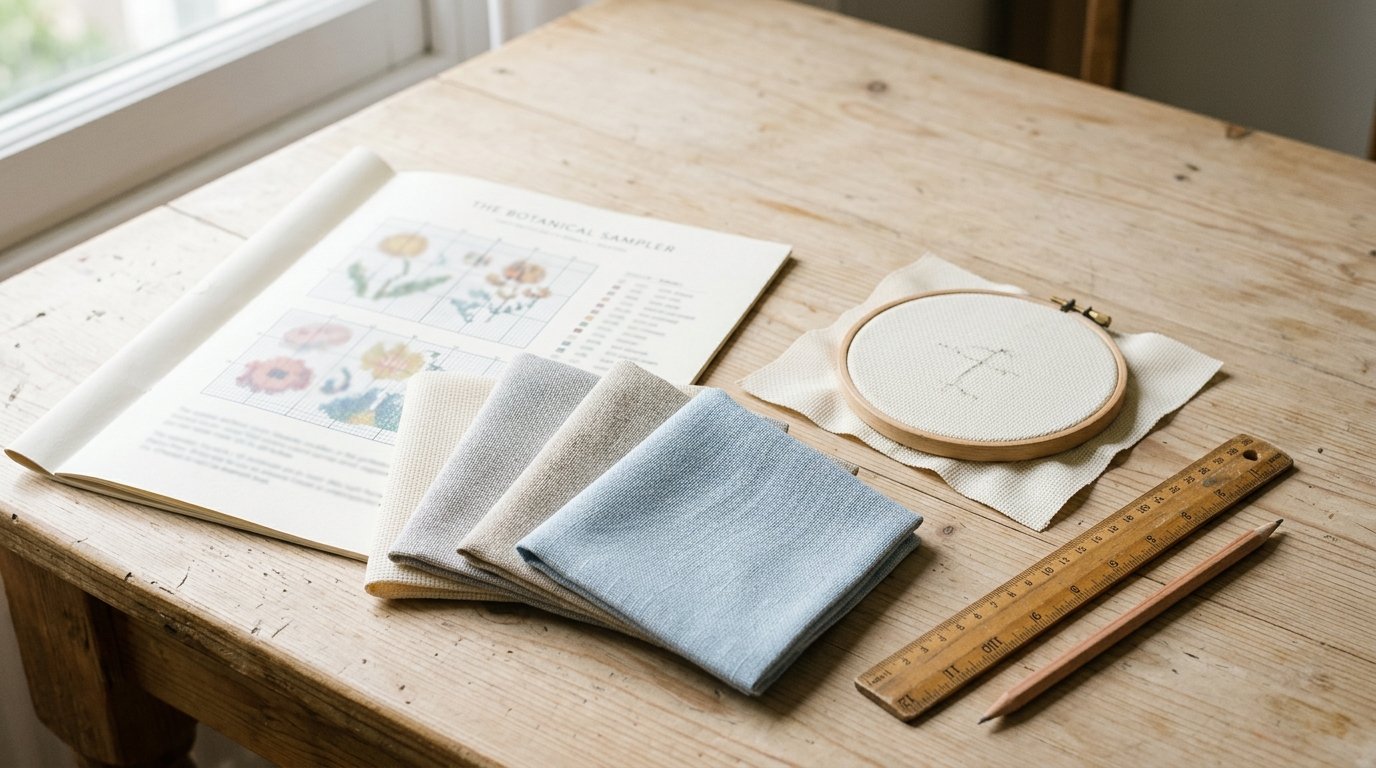
The best answer to how to choose fabric for cross stitch usually begins with the chart, not the fabric display. Most patterns list a recommended fabric count, fabric type, finished design size, and sometimes a suggested color. Treat these details as your starting point.
Look for the design’s stitch count, such as 80 stitches wide by 100 stitches high. This tells you how large the stitched area will become on different fabric counts. Also check whether the pattern uses full cross stitches only, or includes fractional stitches, backstitching, beads, or specialty stitches. Detailed designs may be easier on evenweave or linen, while simple beginner charts often suit Aida.
Understand Fabric Count and Finished Size
Fabric count means the number of squares or threads per inch. On 14-count Aida, there are 14 stitch spaces per inch, so each cross stitch is larger than it would be on 18-count fabric. The higher the count, the smaller and denser the finished design becomes.
A quick way to estimate finished size is:
Design stitch count ÷ fabric count = stitched size in inches
For example, a pattern that is 140 stitches wide will be 10 inches wide on 14-count fabric, about 8.75 inches wide on 16-count, and about 7.8 inches wide on 18-count.
This matters when buying fabric because count affects three things at once: how easy the fabric is to see, how large the finished piece will be, and how delicate the stitching looks.
Choose the Right Fabric Type
The main cross stitch fabric choices are Aida, evenweave, and linen. Each has a different feel and learning curve.
| Fabric type | Best for | What to know before buying |
|---|---|---|
| Aida | Beginners, clear grids, simple charts | Easy-to-see holes; commonly sold in 11, 14, 16, and 18 count |
| Evenweave | Intermediate stitchers, refined projects | Usually stitched over two threads; smoother look than Aida |
| Linen | Traditional, heirloom-style pieces | Natural slubs and thread variations; less uniform than Aida |
| Waste canvas | Stitching onto clothing or bags | Temporary guide fabric removed after stitching |
Aida is the easiest choice if you want a straightforward fabric with obvious squares. Evenweave gives a softer, more polished surface and is useful when a pattern includes fractional stitches. Linen has a beautiful traditional texture, but its uneven threads can challenge newer stitchers. If you are buying for a first project, choose Aida unless the pattern clearly recommends otherwise.
Match Fabric to Your Skill Level and Comfort
Your fabric should suit your hands and eyes, not just the pattern photo. If you are new to cross stitch, have trouble seeing small holes, or prefer relaxed stitching, choose 11-count or 14-count Aida. These counts are easier to handle and more forgiving.
If you are comfortable counting carefully, 16-count Aida offers a neater look without becoming too difficult. For very fine work, 18-count Aida, evenweave, or linen can be beautiful, but they require better lighting, more patience, and often a sharper eye for counting threads accurately.
Consider Thread Coverage and Finished Look
Fabric count changes how much of the fabric shows between stitches. On lower-count fabric, each stitch is larger, so standard embroidery floss usually gives fuller coverage. On higher-count fabric, stitches are smaller and the design can look more detailed, but the amount of floss used may need adjusting.
Most common cross stitch patterns use two strands of stranded cotton on 14-count or 16-count Aida. On 18-count fabric, some stitchers still use two strands for strong coverage, while others prefer one strand for a lighter look. If the background fabric is dark, fuller coverage becomes more important.
Pick a Fabric Color That Supports the Design
White and antique white are popular because they work with many patterns, but they are not always the best choice. Fabric color should support the mood of the design and help the thread colors show clearly.
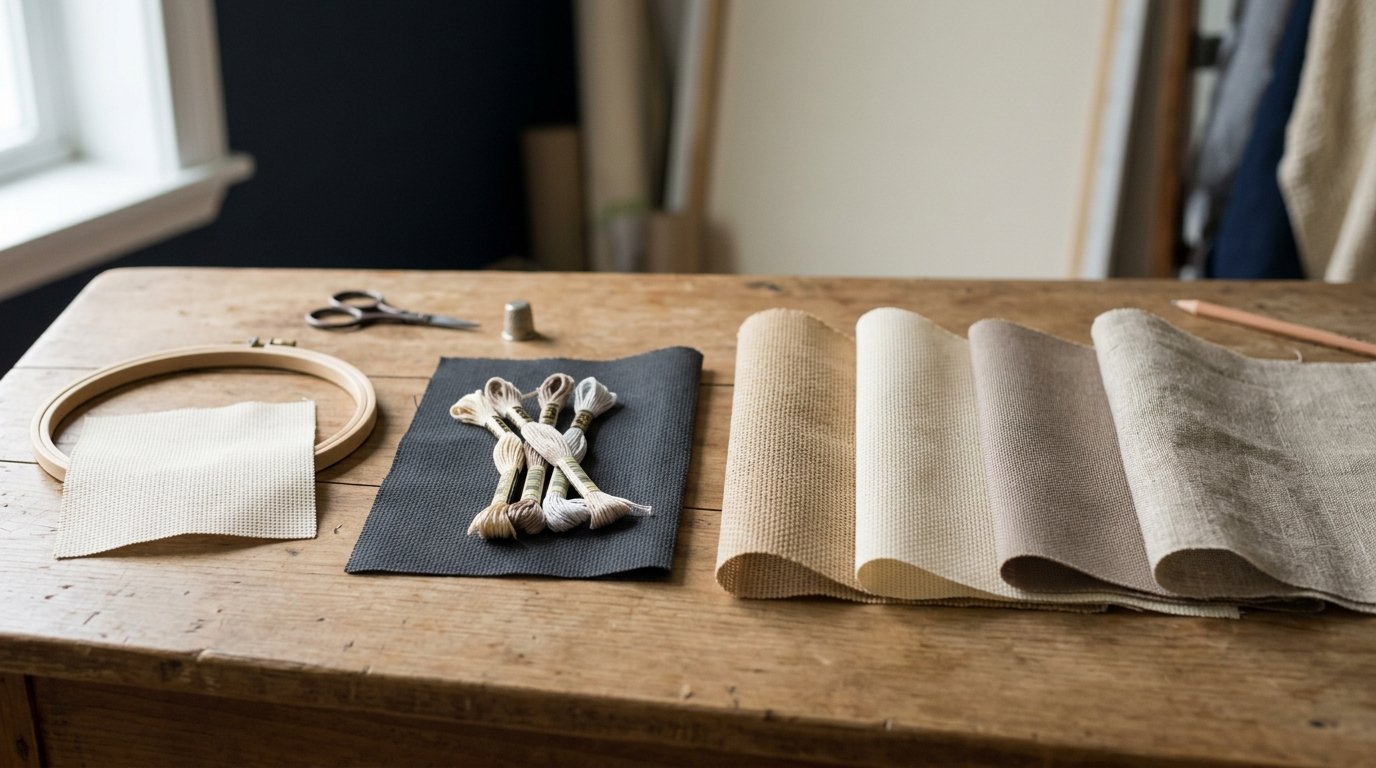
Choose light fabric for colorful samplers, florals, and designs with many dark outlines. Consider cream, oatmeal, pale blue, grey, or hand-dyed fabric for softer or atmospheric pieces. Avoid fabric that is too close to the main thread colors, unless the pattern is designed for a subtle effect.
For designs with unstitched background areas, the fabric color becomes part of the finished artwork, so choose it deliberately.
Buy the Right Fabric Size
Never buy fabric based only on the finished stitched size. You need extra fabric around the design for framing, hooping, finishing, or handling while you stitch.
First, calculate the stitched size using the stitch count and fabric count. Then add a border on all sides. A common rule is to add at least 3 inches per side for framed pieces. That means adding 6 inches to the width and 6 inches to the height.
For example, if the stitched area will be 8 by 10 inches, buy fabric at least 14 by 16 inches. Add more if you plan to use a large hoop, scroll frame, or decorative finishing method.
Check Fabric Quality Before You Buy
Good cross stitch fabric should be evenly woven, clean, and stable. Check that the holes or threads look consistent across the piece. Avoid fabric with stains, strong creases, warped edges, or uneven dye unless those effects are intentional.
If buying packaged fabric, check the label for count, fiber content, and size. If buying cut fabric, confirm the measurements before leaving the shop or placing the order. For hand-dyed fabric, expect some variation, but make sure the color works with your thread palette and project style.
Quick Recommendations by Project Type
For a first cross stitch kit or simple chart, choose 14-count Aida in white, cream, or another light neutral. It is easy to count and widely compatible with beginner patterns.
For a small ornament, 16-count Aida can give a neat finish without making the project too tiny. For a detailed sampler, evenweave or linen can create a more refined look, especially if the pattern uses specialty stitches. For children’s projects or quick practice pieces, 11-count Aida is easy to see and handle.
For clothing, tote bags, or non-even fabrics, use waste canvas or soluble canvas rather than trying to count directly on the item.
Common Mistakes to Avoid When Choosing Cross Stitch Fabric
The biggest mistake is buying fabric before checking the pattern’s stitch count. This can leave you with a piece that is too small or the wrong scale.
Other common errors include choosing fabric that is too dark for the thread colors, picking a high count before you are comfortable stitching, forgetting to add border space, or assuming all fabrics are stitched the same way. Aida, evenweave, and linen each require slightly different counting habits, so buy for the project and your current skill level.
FAQ
What Should a Beginner Know First About How to Choose Fabric for Cross Stitch?
Beginners should know that 14-count Aida is usually the easiest starting fabric. It has clear holes, works with many patterns, and is comfortable to count. Start with the pattern requirements, then choose a fabric count and color that make the design easy to stitch.
What Matters Most When Evaluating How to Choose Fabric for Cross Stitch?
The most important factors are fabric count, fabric type, finished size, and color. Count affects the project’s size and stitch density. Fabric type affects ease of stitching. Color affects visibility and the final look. Always check these details against the pattern before buying.
What Mistakes Should Readers Avoid with How to Choose Fabric for Cross Stitch?
Avoid buying fabric without calculating the finished size, forgetting extra border space, or choosing a fabric count that feels too small to see comfortably. Also avoid fabric colors that hide important thread colors. A beautiful fabric is only useful if it supports the design.
What Is the Next Logical Step After Learning About How to Choose Fabric for Cross Stitch?
Choose a specific pattern and calculate its stitched size on two or three fabric counts. Compare how the finished dimensions, stitch size, and fabric color will change. Then buy a fabric piece with enough border and gather the recommended floss before you start stitching.