
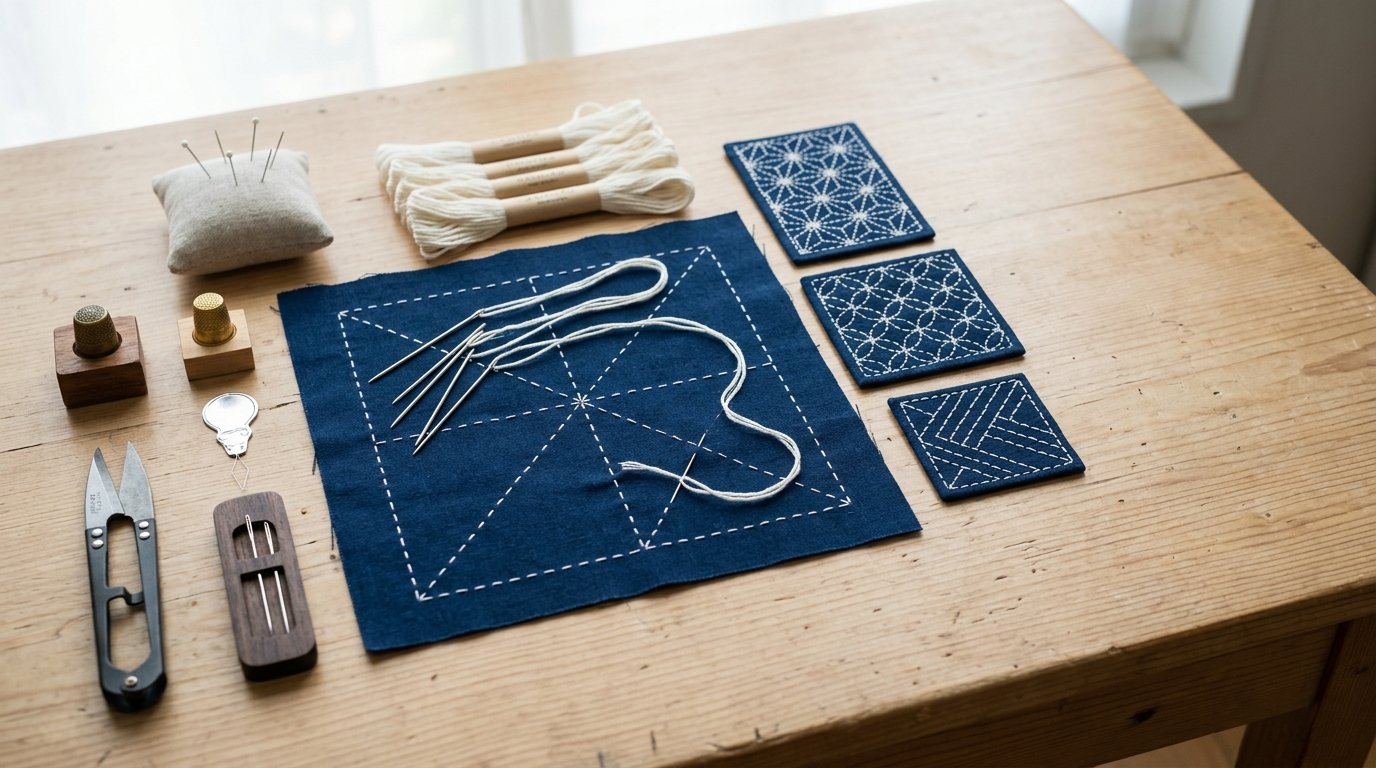
If you want the shortest practical supply list, start with five things: sashiko needles, sashiko thread, a tightly woven fabric, a marking tool, and sharp thread snips or small scissors. That is the real core kit. Add a sashiko thimble if you want more control and speed, especially on thicker fabric or repeated running stitches. Everything else is optional at first.
The key idea is simple: sashiko works best when the needle, thread, and fabric suit visible running stitches rather than general embroidery. Long needles help load multiple stitches, sashiko thread gives better definition, and medium-weight woven fabric supports clean lines without fighting the needle. Buy for comfort and consistency, not for the biggest kit. A small, well-matched set of tools will usually give better results than a drawer full of substitutes.
| Tool | Essential or Optional | What to look for |
|---|---|---|
| Sashiko needle | Essential | Long, smooth, strong, eye fits sashiko thread |
| Sashiko thread | Essential | Non-divisible, visible, durable cotton |
| Fabric | Essential | Tightly woven, medium weight, easy to mark |
| Marking tool | Essential | Removable lines or dots with clear visibility |
| Small scissors/snips | Essential | Sharp tips for clean thread cuts |
| Sashiko thimble | Helpful | Palm or ring style that feels secure |
| Hoop/frame | Optional | Useful only for certain fabrics or preferences |
| Thread conditioner/storage extras | Optional | Nice for organization, not required |
The Core Sashiko Tools Most Stitchers Actually Need
A practical sashiko starter set is smaller than many beginners expect. You need one good sashiko needle, one spool or skein of sashiko thread, a suitable fabric, a way to mark the pattern, and scissors or snips. That combination is enough to begin with mending, samplers, coasters, panels, or simple decorative stitching.
Think of the kit in two layers. The first layer is stitch-forming tools: needle, thread, and fabric. These directly affect how the stitches look and how comfortable the process feels. The second layer is support tools: marking tools, thimbles, and cutting tools. These do not create the stitch, but they make the work cleaner and easier.
For most new stitchers, the smartest budget move is to spend on the first layer first. A well-matched needle and thread matter more than buying many accessories. If your stitches feel awkward, the cause is usually poor tool pairing, not lack of extras.
How to Choose Sashiko Needles
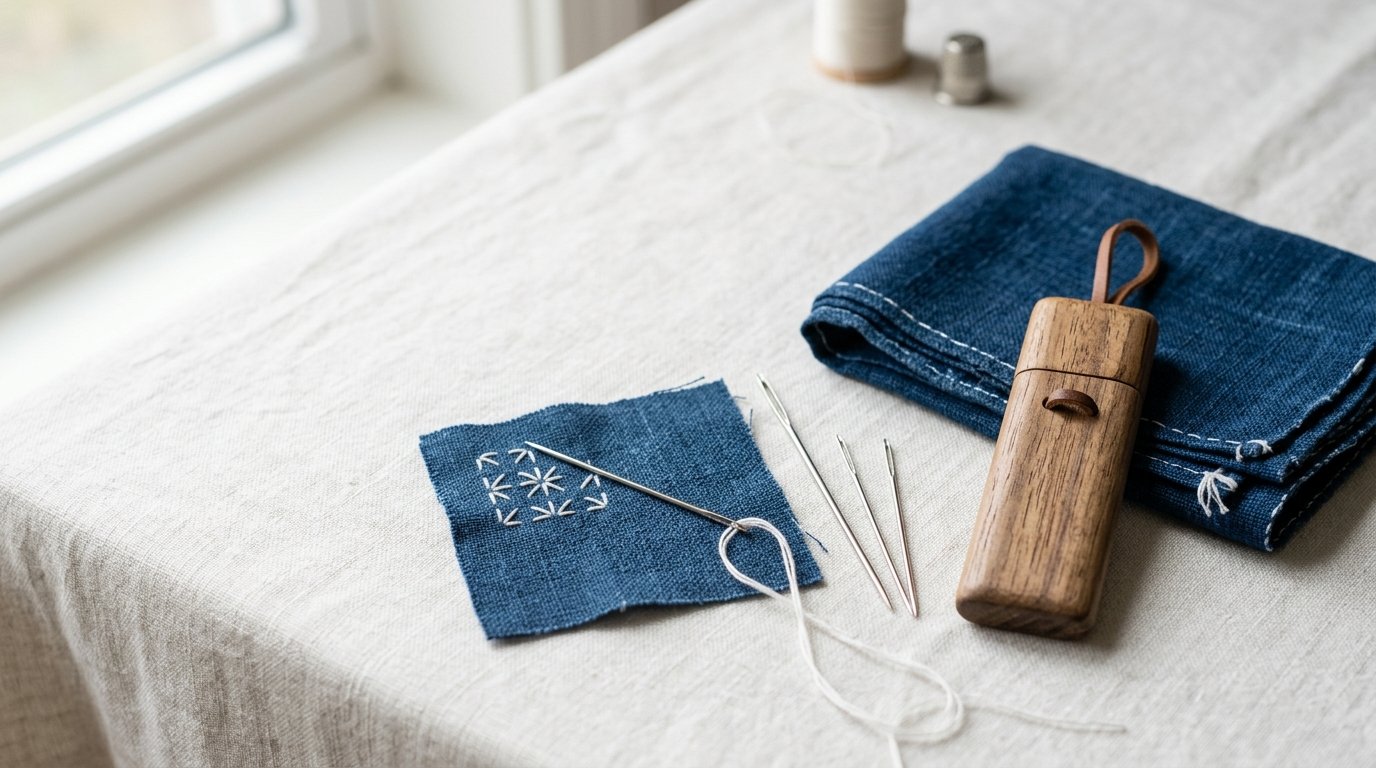
Needles are the most technique-specific sashiko supply. Sashiko needles are usually longer than standard hand-sewing needles, which lets you load several running stitches onto the needle before pulling through. That supports the smooth rhythm many stitchers want.
Look for a needle that is long, sturdy, and polished enough to pass through fabric cleanly. The eye should be large enough for sashiko thread without forcing or fraying it. If the needle is too short, stitching feels choppy. If it is too thick, it can enlarge holes. If it bends too easily, control drops.
Beginners often do well with a medium-long needle assortment rather than one size only. A slightly shorter option can feel better on small motifs, while a longer one suits straight rows and thicker cloth.
What Thread Works Best for Sashiko
Sashiko thread is designed to be seen. It is usually a soft but strong cotton thread with enough body to sit clearly on the fabric surface. That gives the classic stitched line more presence than ordinary sewing thread.
Choose thread based on finish, thickness, and project use. Traditional sashiko thread is excellent for visible pattern work because it holds its shape and produces even-looking stitches. Fine sashiko or similar cotton thread works well if you want a lighter look or are stitching denser patterns. For mending and utility pieces, durability matters as much as appearance.
Avoid very slippery thread if you want crisp stitch definition. Also avoid thread that separates too easily while stitching. If you are comparing options, ask whether the thread is meant for visible hand stitching, not just general embroidery or machine sewing.
Best Fabrics for Sashiko Projects
The easiest fabrics for sashiko are tightly woven, stable, and medium weight. Cotton is the usual starting point because it marks well, handles repeated stitches, and shows thread clearly. Good beginner choices include quilting cotton layered with backing, cotton-linen blends, lightweight denim, chambray, and sashiko cloth.
Fabric weight changes the stitching experience. Very thin fabric may pucker or distort. Very thick fabric can be tiring unless your needle, thimble, and hand strength match it. Open weaves can make stitch length harder to control because the needle may drift between threads.
Dark fabric often highlights white or cream thread beautifully, but be sure your marking method will show clearly and remove cleanly. If you are learning, choose a plain woven fabric with enough body to stay flat while you practice even rows.
Thimbles, Marking Tools, and Small Notions That Make Stitching Easier
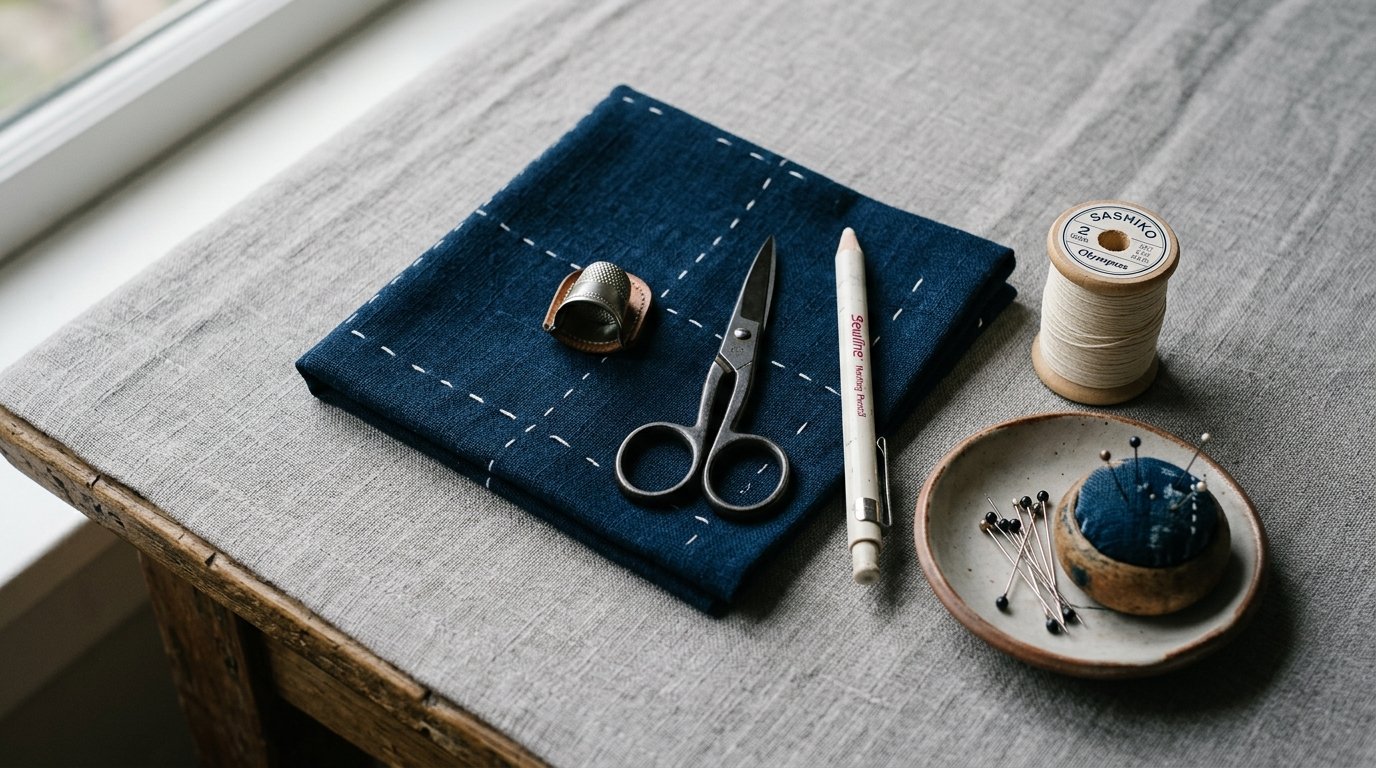
After the core materials, the most useful support tools are a thimble, a marking tool, and sharp cutting tools. These are small purchases, but they can noticeably improve comfort and accuracy.
A sashiko thimble is worth considering early, especially if you plan to stitch often. Palm-style thimbles are popular because they help push the needle through while loading multiple stitches. Some stitchers prefer ring thimbles or standard metal thimbles, but the best choice is the one that feels stable and natural in your hand.
For marking, use tools that create clear lines without damaging fabric. Water-erasable pens, air-erasable pens, chalk pencils, and transfer methods all work, but test first on a fabric scrap. You want marks that are easy to see while stitching and easy to remove afterward.
Round out the kit with sharp embroidery scissors or thread snips, pins or clips, and a small ruler or seam gauge. These will not transform your stitching, but they reduce friction in every project.
Optional Tools Worth Buying After the Basics
Once your core kit feels solid, a few upgrades can be worthwhile. Pre-printed sashiko panels save marking time and help with pattern accuracy. Needle cases and thread organizers keep supplies tidy. A small project bag is useful if you stitch away from home.
Hoops and frames are optional in sashiko. Some stitchers like them for softer fabric or precise placement, while others prefer working in hand. Buy these extras only if they solve a real problem in your process.
Starter Supply Setups for Different Sashiko Goals
If your goal is learning, buy one needle assortment, one or two sashiko threads in high-contrast colors, medium-weight cotton fabric, a removable marking pen, and snips. That gives you flexibility without overspending.
If your goal is visible mending, add sturdy fabric patches, a thimble, and thread colors that either blend or contrast with the garment. A slightly stronger fabric choice matters here.
If your goal is decorative panels or samplers, pre-printed cloth can be a smart shortcut. It lets you focus on stitch rhythm instead of layout.
If you want gift-ready projects such as coasters or small bags, choose fabric with enough body to hold shape, and buy thread colors that stand out clearly. Matching tools to the project keeps your kit focused and affordable.
Common Buying Mistakes to Avoid
The most common mistake is substituting standard sewing supplies for everything. Regular sewing needles are often too short, and basic sewing thread can disappear into the fabric instead of defining the design.
Other frequent missteps include choosing fabric that is too thin, buying marks-you-cannot-remove pens, and purchasing large kits full of extras before testing whether sashiko suits you. Start small, then upgrade based on real use.
How to Build a Practical Sashiko Kit
Build your kit in order: first needle, thread, and fabric; then marking and cutting tools; then a thimble; then optional upgrades. That sequence keeps your spending tied to results.
If you are unsure between two products, choose the one that makes stitching easier to control rather than the one with the most features. In sashiko, comfort, visibility, and compatibility matter more than quantity. A compact kit you enjoy using is the best kit to buy.
FAQ
Do I Need Special Sashiko Needles?
Not absolutely, but they help enough to be worth buying. Their longer length makes it easier to load multiple running stitches, and their eye is usually better suited to sashiko thread. A general hand-sewing needle can work, but it often feels less efficient.
Can I Use Embroidery Floss for Sashiko?
You can, especially for experimentation, but it usually gives a different look. Embroidery floss is divisible and often smoother, while sashiko thread has more body and definition. If you use floss, try full strands first and test the stitch appearance on scrap fabric.
What Fabric Is Easiest for Beginners to Use for Sashiko?
A medium-weight, tightly woven cotton is usually the easiest choice. It is stable, easy to mark, and forgiving while you practice even stitches. Quilting cotton with a backing layer or a cotton-linen blend can also work well for first projects.
Do You Use a Hoop for Sashiko Stitching?
Usually not by default, because many sashiko stitchers prefer working in hand to keep the fabric flexible while loading stitches. Still, a hoop can help on softer fabric or if you want extra control. It is a preference tool, not a basic requirement.
What Is the Most Important Tool to Spend More on?
Start with the needle and thread. A good sashiko needle improves comfort and rhythm, and good thread improves stitch definition and durability. You do not need luxury versions, but buying reliable core materials usually matters more than spending on accessories or large kits.