
DMC metallic embroidery floss adds sparkle, but it does not behave like regular stranded cotton. It is stiffer, more prone to twisting, and more likely to fray at the needle eye if you use long lengths or pull too hard. The easiest way to cross stitch with metallic floss is to use short lengths, a smooth needle, gentle tension, and frequent untwisting. Many stitchers also find that metallic works best for accents or blended with cotton rather than for large solid areas. With a few adjustments, you can get neat, shiny stitches without constant tangling or breakage.
What Makes Metallic Floss Harder to Cross Stitch Than Regular Floss
Metallic floss has a different structure from cotton. Instead of soft fibers that relax into the fabric, it often has a shiny outer layer wrapped around a core. That gives it sparkle, but also makes it less flexible.
As a result, metallic floss tends to:
- twist faster
- catch on rough spots
- kink instead of drape
- fray at the eye of the needle
- look worn if overhandled
A useful mental model is that cotton likes to bend and settle, while metallic resists bending and needs more guidance. If you stitch quickly, use very long lengths, or tighten the thread too much, metallic floss fights back. If you shorten your thread and work with steady tension, it becomes much easier to manage.
Supplies That Make Metallic Cross Stitch Easier
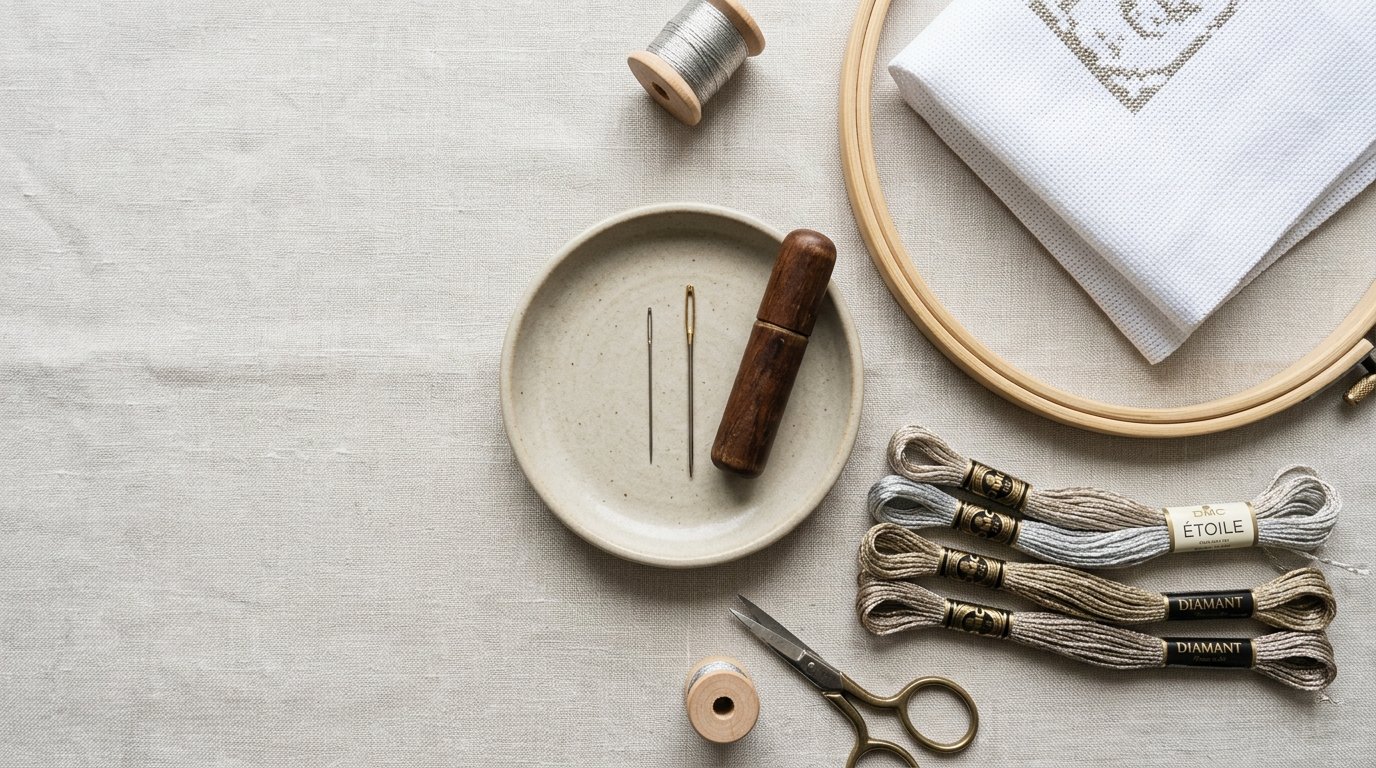
The right setup reduces frustration before you even start. Use a smooth tapestry needle, and consider going up one size if the floss drags or shreds. A slightly larger eye creates less abrasion.
Helpful supplies include:
- A smooth tapestry needle: less friction on the thread
- Aida or evenweave with clean holes: easier passage for metallic floss
- A hoop or frame: keeps fabric tension even
- Sharp scissors: for trimming frayed ends cleanly
- Good lighting: so you can spot twisting and thin coverage
Also pay attention to your hands. Dry or rough skin can snag metallic thread more than cotton. The goal is a smooth path from needle to fabric with as little scraping as possible.
How to Prepare Dmc Metallic Floss Before Stitching
Preparation matters more with metallics than with regular floss. Cut a short length, usually about 12 to 15 inches. Longer pieces may seem faster, but they often fray before you finish using them.
Thread the needle carefully without crushing the tip. If the end begins to split, trim it and rethread. Many stitchers prefer a single, non-folded strand because it often twists less than a folded one.
Before you start stitching, smooth the floss lightly between your fingers and let the needle hang so the thread can untwist. Doing that at the beginning saves time later.
Step-by-step: How to Cross Stitch with Metallic Floss
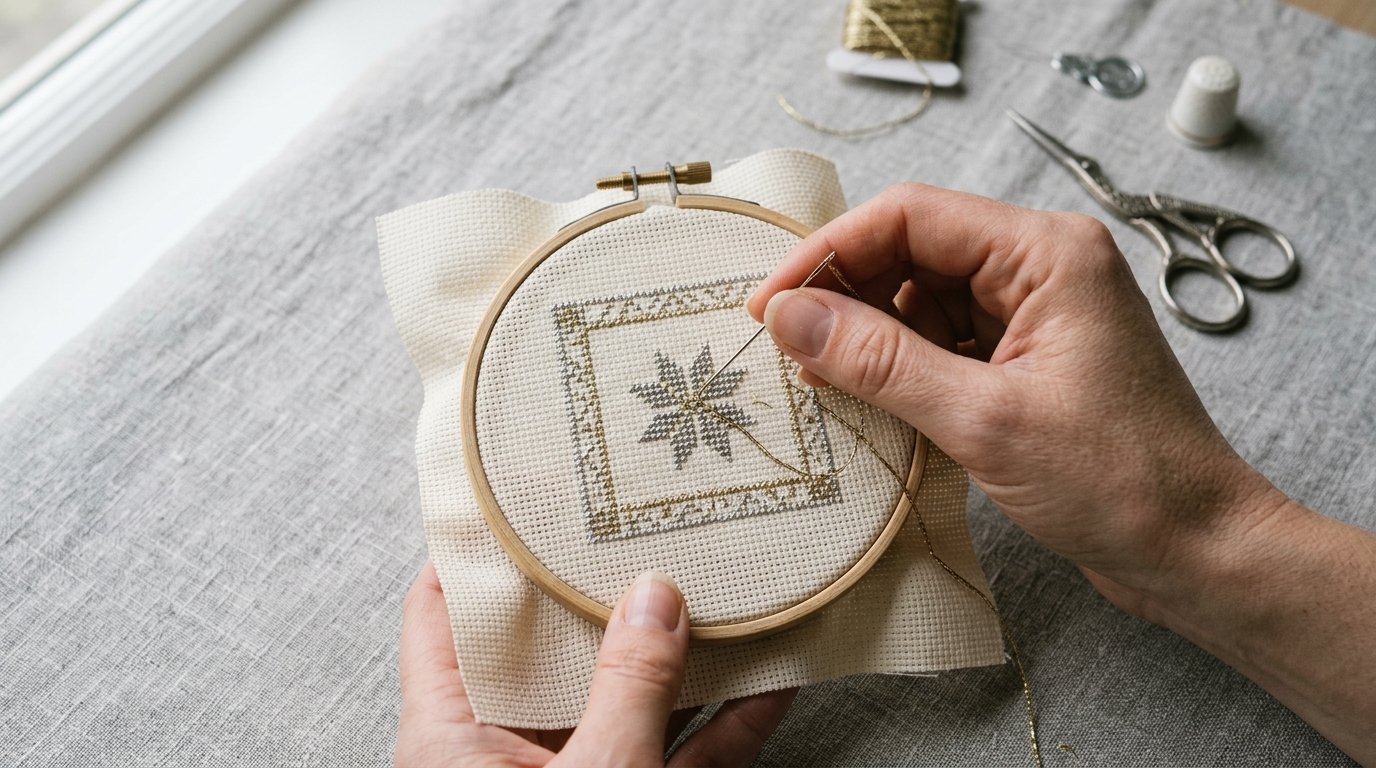
Use this sequence while stitching:
- Cut a short length of metallic floss, about 12 to 15 inches.
- Thread a smooth tapestry needle and trim the end cleanly if needed.
- Choose a low-bulk start. A pin stitch or away waste knot often causes less rubbing than bulky starts.
- Bring the needle up slowly with steady tension instead of a quick tug.
- Make the first half stitch deliberately and keep the thread lying flat.
- Complete the top leg in the same direction every time so the shine looks even.
- Use gentler tension than with cotton. Pull just enough for the stitch to sit neatly.
- Untwist often. Every few stitches, let the needle dangle so the thread can spin free.
- Replace the thread before it wears out. If the last inch looks fuzzy or kinked, start fresh.
- Check coverage as you go, especially under your stitching light.
If your pattern uses metallic floss only in small stars, borders, or ornaments, stitch those areas in short sections rather than carrying the thread long distances across the back.
Best Techniques for Neat Metallic Stitches
Metallic floss rewards control more than speed. A few habits make a big difference:
- use short working lengths
- bring the needle straight up and down
- railroad stitches if the strand needs help lying flat
- avoid repeated frogging, since metallic thread weakens faster
- keep stitch direction consistent for even shine
If coverage looks patchy, do not automatically pull tighter. Tight tension can make metallic thread look thinner. Usually, flatter stitches and less twist improve the look more than extra force.
When to Use Metallic Floss Alone, Blended, or Only for Accents
Use metallic floss alone when you want strong sparkle in small motifs like stars, snowflakes, ornaments, or lettering.
Use it blended with cotton when you want softer shimmer and easier handling. One metallic strand with one cotton strand is a common choice.
Use metallics as accents only when practicality matters most. Borders, highlights, and tiny details often give plenty of sparkle without the difficulty of stitching large metallic areas.
Troubleshooting Common Metallic Floss Issues
| Problem | Likely cause | What to do |
|---|---|---|
| Floss keeps fraying | Thread too long, rough needle eye, too much abrasion | Cut shorter lengths, change needle, trim damaged ends |
| Thread tangles or knots | Too much twist, stitching too fast | Let needle dangle often, slow down |
| Stitches look uneven | Tension too tight or thread twisting | Use gentler tension, flatten stitches |
| Shine looks dull | Thread overhandled or scraped | Replace worn thread, avoid reusing frogged lengths |
| Needle is hard to pull through | Needle too small or fabric too tight | Try a larger needle, keep fabric evenly tensioned |
| Coverage looks thin | Strand count too low or stitches pulled tight | Add a strand if appropriate, loosen tension slightly |
If a section becomes frustrating, switch to a fresh length right away. Metallic thread rarely improves once it is badly kinked or worn.
Simple Care Tips for Finished Cross Stitch with Metallic Thread
Handle finished metallic stitching gently. Avoid harsh washing, scrubbing, or wringing. If cleaning is necessary, test first and use the mildest method that suits the fabric and threads.
When pressing, work from the back over a towel so the front stitches are not crushed. For storage or framing, keep the piece dry and out of strong direct sunlight to help preserve the metallic shine.
FAQ
Can You Use Dmc Metallic Floss the Same Way as Regular Stranded Cotton?
No. The stitch itself is the same, but the handling is different. Metallic floss needs shorter lengths, lighter tension, and frequent untwisting to avoid fraying and knots.
How Many Strands of Metallic Floss Should I Use for Cross Stitch?
Start with the chart recommendation. One strand alone is common for accents, and one metallic strand blended with cotton is popular for softer shimmer. Increase only if you need more coverage and the fabric can handle it.
Why Does Metallic Embroidery Floss Keep Fraying or Breaking?
The most common reasons are thread that is too long, a rough or small needle eye, and too much pulling friction. Shorter lengths and gentler stitching usually solve the problem.
Should I Use Thread Conditioner with Metallic Floss?
Sometimes, but test first. Some stitchers find it reduces drag, while others think it changes the finish. Try it on a small piece before using it on a project.
Is Metallic Floss Better for Full Coverage or Accents?
For most stitchers, accents are easier and more effective. Full coverage is possible, but it is slower, harder on the thread, and less forgiving than using metallic floss for highlights or decorative details.