
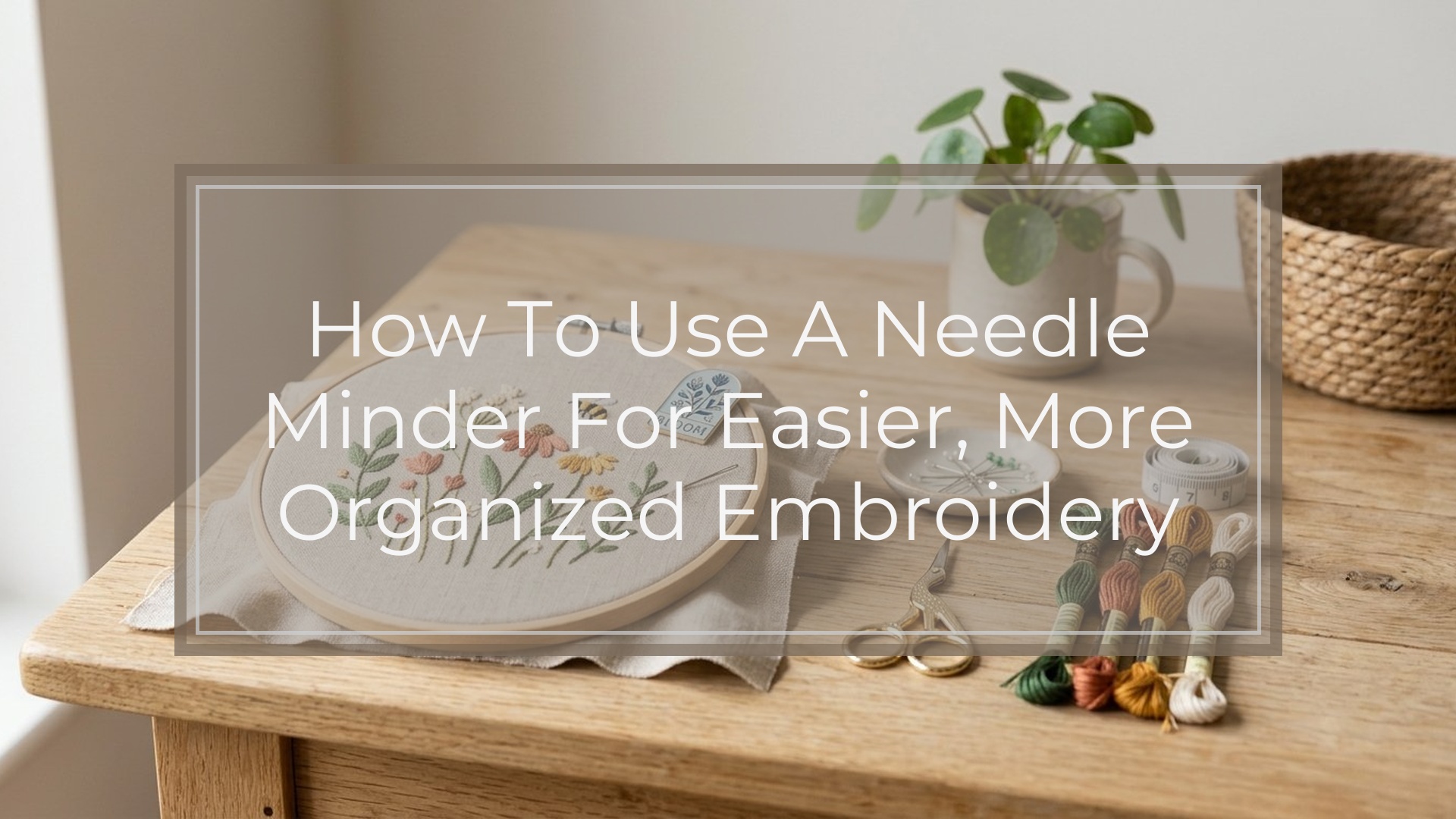
A needle minder is a small magnetic holder that keeps your hand-sewing needle in one safe, easy-to-find spot while you stitch. To use one, place the decorative magnet on the front of your fabric or hoop, put the backing magnet directly behind it, and let the fabric sit between the two pieces. Then rest your needle on the front magnet whenever you pause. The goal is simple: instead of sticking your needle into fabric, your shirt, or a cushion, you park it on the minder so it stays visible, clean, and ready to grab.
Quick Answer
A needle minder works like a magnetic parking spot for your needle. Most have two parts: a decorative front piece with a magnet attached and a loose backing magnet. To use it, put the front piece where you want it on your hooped fabric, place the backing magnet behind the fabric, and let the magnets snap together.
Once it is attached, set your needle on the front whenever you stop stitching, change thread, count stitches, or move your hoop. The magnet holds the needle in place so it does not slip into the sofa, disappear in your lap, or get pushed through your project by mistake.
The main takeaway is this: attach the needle minder to a stable spot near your working area, but not directly where your hand needs to pass often. Then use it consistently as your needle’s “home base” every time you pause.
How to Think About This Topic
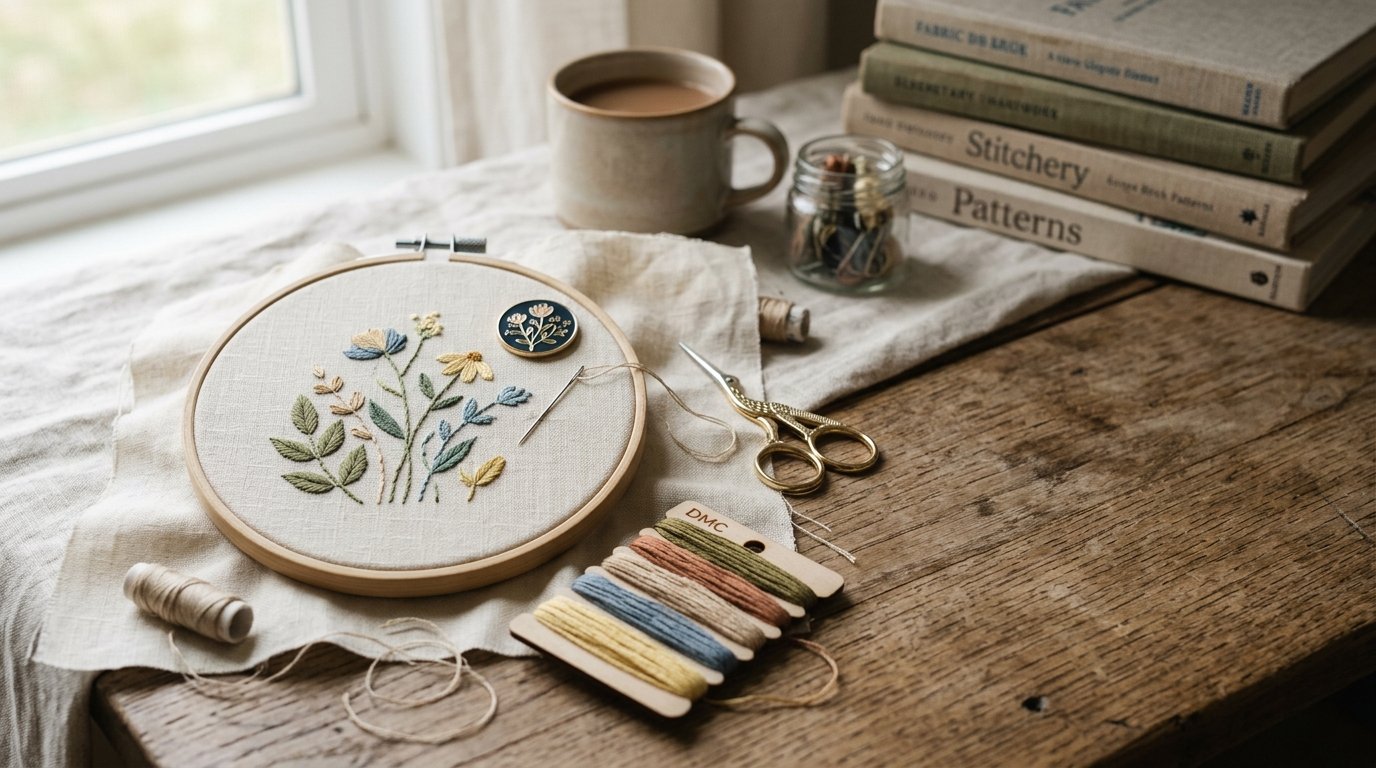
The easiest way to understand how to use a needle minder is to stop thinking of it as decoration and think of it as workflow control. It is not just a cute accessory for embroidery or cross stitch. It is a tool that reduces needle loss, keeps your project surface tidier, and helps you pause and restart without hunting around.
Here is the practical mental model: your needle is either actively stitching or safely parked. A needle minder makes that second state obvious. Instead of tucking the needle into the fabric edge, balancing it on your hoop, or laying it on a table, you give it one repeatable resting place.
That matters because stitching often involves short interruptions. You may stop to rethread, check a chart, untwist floss, answer the phone, or move a frame. Without a set place to park the needle, it can vanish fast. In cross stitch, that can mean wasting time searching through fabric folds. In embroidery, it can mean accidentally snagging thread or pulling the needle through a stitched area where you did not want it.
Placement is part of proper use. The minder should be close enough to reach without stretching, but far enough from your main stitching path that it does not bump your hand. On a round hoop, many stitchers like the upper left or upper right edge. If you stitch with your right hand, the upper left often stays out of the way; left-handed stitchers may prefer the opposite. On a Q-snap or scroll frame, place it on a side area near your dominant hand but away from where fabric is frequently rolled or tightened.
Used this way, a needle minder solves the exact problem behind the search: how to attach it, where to put it, and how to make it useful in everyday stitching.
Practical Guidance
Start with attachment. Separate the two magnets carefully, because strong minders can snap together hard. Hold the decorative front on the top side of your project. From the back, bring the loose magnet in slowly until it catches. Do not slide magnets roughly across delicate fabric if you can avoid it; lift and reposition instead.
Next, test the spot before committing to it for the session. Make a few stitches and check three things:
- Can you reach the minder without twisting your wrist?
- Does your hand bump it while stitching?
- Does the parked needle stay clear of your thread path?
If the answer to any of those is no, move it.
For everyday use, build a simple habit:
- Stitch normally.
- When you pause, place the needle flat on the minder.
- When you resume, pick it up from the same spot.
- Return it there every time.
That routine is especially useful when you are using multiple needles. For example, in cross stitch you might park one tapestry needle while frogging with another. In embroidery, you might switch between a sharp and a chenille needle for different thread types. A strong minder helps keep the active tool visible between swaps, though it is still best to keep extra needles in a case if you are juggling several.
Choose placement based on project setup:
- Small hoop, hand-held embroidery: place the minder near the hoop edge, above your stitching area.
- Cross stitch with a chart beside you: place it on the side opposite the hand that turns pages or taps a tablet.
- Scroll frame: avoid bars or spots where fabric tension changes.
- Beaded or raised embroidery: keep the minder away from bulky texture so the needle rests flat.
A few common mistakes cause most beginner frustration. One is placing the minder in the middle of the design area, where it blocks your hand and covers stitches. Another is assuming stronger is always better. An extra-strong magnet can be great on thick fabric and grime guards, but it may feel clumsy on a very small project. A third is parking the needle at an angle so only the tip touches; the needle is more likely to slide than if more of the shaft contacts the magnet.
Basic care is simple. Keep the magnets dry, store the loose backing where it will not stick to scissors or other metal items, and avoid dropping the decorative top onto hard floors. If the minder has a fragile enamel or wood face, treat it like a small tool, not a toss-in-the-bag extra.
FAQ
Can You Use a Needle Minder Without a Hoop?
Yes. You can attach it directly to fabric if the fabric is firm enough and you are comfortable with the weight. It often works better on fabric held in hand, on a Q-snap, or on a frame than on very loose fabric with no support.
Will a Needle Minder Damage Fabric?
Usually no, if you attach and remove it gently. Avoid snapping strong magnets together too hard or dragging them across delicate fabric. On most embroidery and cross stitch fabrics, normal use does not cause damage, but delicate specialty fabrics deserve extra care.
Can a Needle Minder Hold Scissors or Other Tools?
Usually not safely. Needle minders are made to hold a needle, and some can hold a small metal needle threader. Most are not meant to support embroidery scissors, hemostats, or other heavier tools, which can slip off or strain the magnet.
Why Does My Needle Keep Sliding Off the Needle Minder?
The needle may be touching the magnet with too little surface area, or the minder may be weak for the needle size and angle. Lay more of the needle shaft flat against the front, and move the minder to a steadier, less bumped location on your hoop or frame.