Stitching over two threads means each cross stitch covers two vertical fabric threads and two horizontal fabric threads instead of one. You’ll usually do this on linen or evenweave, where you can count the woven threads clearly. The chart does not change: one chart square still equals one stitch. What changes is the size of that stitch on the fabric.
In practice, you bring your needle up in one hole and go down in the hole two threads away, creating a larger X. This method is common in traditional samplers, counted-thread designs, and many patterns written for linen. Below, you’ll learn what over two means, when to use it, how to count correctly, and how to keep your stitches neat and even.
What “Over Two Threads” Means in Cross Stitch
Linen and evenweave are made from individual woven threads. Those threads create intersections where your needle can pass through. When a pattern says to stitch over two, each stitch spans a block that is two fabric threads wide and two fabric threads tall.
A simple way to picture it is to treat the fabric like graph paper. If you stitch over one, you use the next hole and make a very small X. If you stitch over two, you skip over one thread and place the stitch in the hole two threads away.
So the phrase does not mean using two strands of floss. It means the size of the stitch on the fabric. The chart symbol stays the same, but each stitched square covers more space.
When to Stitch Over Two Instead of Over One
Choose over two when your pattern is meant for linen or evenweave and you want the classic cross stitch look most designers expect on those fabrics. It is especially common for samplers, borders, ornaments, and full cross stitch areas.
Choose over one when the pattern needs fine detail, tiny faces, small lettering, or miniature accents. Some designs use both methods in the same piece.
A helpful reminder: pattern notes such as 2 over 2 usually mean two strands of floss stitched over two fabric threads. Always check the designer’s instructions before starting.
What You Need Before You Start
You do not need unusual tools, but the right setup makes over-two stitching much easier. Gather:
- linen or evenweave fabric
- your chart
- a tapestry needle suited to the fabric count
- embroidery floss in the recommended strand count
- good lighting
- a hoop or frame if you prefer extra tension
The most important skill is learning to count fabric threads, not just look for holes. If you are new to linen or evenweave, find the center of the fabric and test a few stitches in a corner before beginning the design itself.
How to Stitch Over Two Threads Step by Step
- Find your starting point.
Use the chart center or the designer’s suggested starting spot. On the fabric, locate the matching area and identify the thread intersections.
- Count the stitch area.
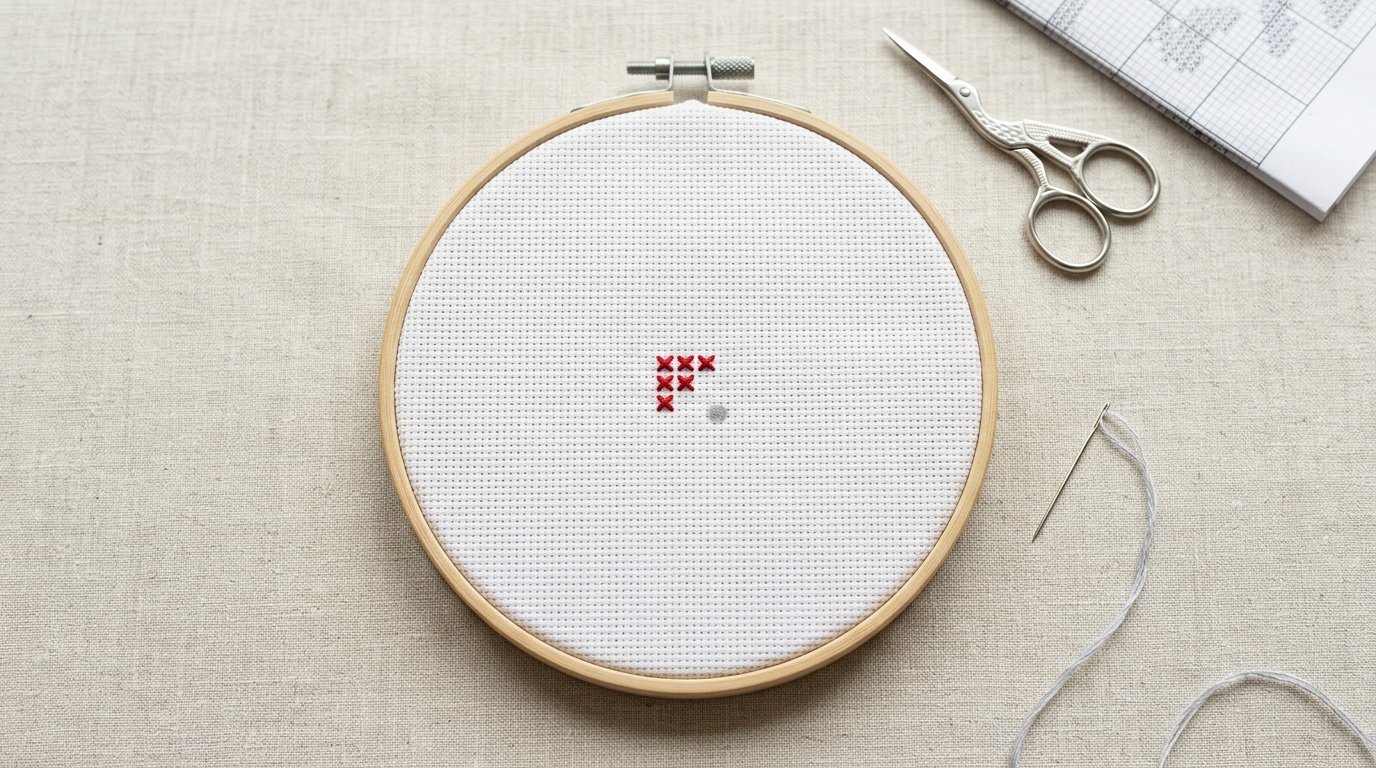
Each stitch should sit inside an invisible square of two threads by two threads. Count carefully across and up before placing the stitch.
- Make the first diagonal leg.
Bring your needle up at the bottom left corner of that two-by-two block. Go down at the top right corner of the same block. Because you are stitching over two, that top right hole is two fabric threads away in each direction.
- Complete the cross.
Bring the needle up at the bottom right corner of the block and go down at the top left corner. You now have one full X stitched over two threads.
- Keep your stitch direction consistent.
If your top leg slants one way on the first stitch, keep it the same throughout the project. Consistent top legs give a smoother finish.
- Move to the next chart square.
For the next stitch, count another two-thread block rather than moving only to the next visible opening by habit. This is where beginners most often drift off count.
- Work in short rows at first.
Many beginners find it easier to stitch a few half stitches across, then return to complete the crosses. Short rows make it easier to check spacing before errors spread.
- Pause and check often.
After every few stitches, confirm they are all the same size and that none accidentally spans one thread or three.
If a stitch looks noticeably smaller, larger, or crooked, stop and recheck the count immediately.
How to Tell If Your Stitch Is Sitting Correctly
A correct over-two stitch should look even, square, and centered on the weave. Use these checkpoints:
- each stitch covers the same amount of fabric
- the holes form tidy rows and columns
- the fabric is not puckered
- the top legs all slant the same way
- no stitch looks squeezed, stretched, or shifted
If one stitch seems off, fix it right away. It is much easier to correct one X than a whole row.
Common Mistakes When Stitching Over Two Threads
The most common mistake is counting holes instead of threads. On linen, especially, that can lead to one stitch being over one and the next over two. Slow down and count the woven threads themselves.
Another common problem is drifting across a row. If one stitch starts in the wrong hole, the rest of the motif can shift. Checking every few stitches prevents a bigger correction later.
Tension also matters. If you pull too tightly, the fabric can distort and the stitches may look pinched. Pull the floss just enough for the stitch to lie flat.
Finally, avoid mixed stitch direction. If some top legs slant one way and some the other, the finished surface will look uneven even if your counting is correct.
Example: Reading a Chart and Placing a Small Motif Over Two
Imagine a small heart on your chart that is 5 stitches wide by 5 stitches tall. The chart still contains 25 squares, and each square still equals one cross stitch.
If you stitch that heart over two on evenweave, each chart square becomes one X that spans two threads across and two threads up. You begin with the first square, place one full stitch in its two-by-two block, then move to the next chart square and the next block.
When finished, the heart covers 10 fabric threads by 10 fabric threads. That is the key idea: the chart stays the same, but the stitched area becomes larger because each stitch covers more fabric.
Tips for Cleaner, More Accurate Over-two Stitching
Use bright light so you can see the thread structure clearly. A hoop or frame can also help by keeping the weave steady while you count.
Work in small sections instead of making long jumps across the fabric. That reduces miscounts and keeps the back neater. If the weave is hard to see, rotate the fabric slightly or use a magnifier.
Most of all, build the habit of checking your stitch size often. Accuracy improves quickly with repetition.
Does Fabric Count Change the Look When You Stitch Over Two?
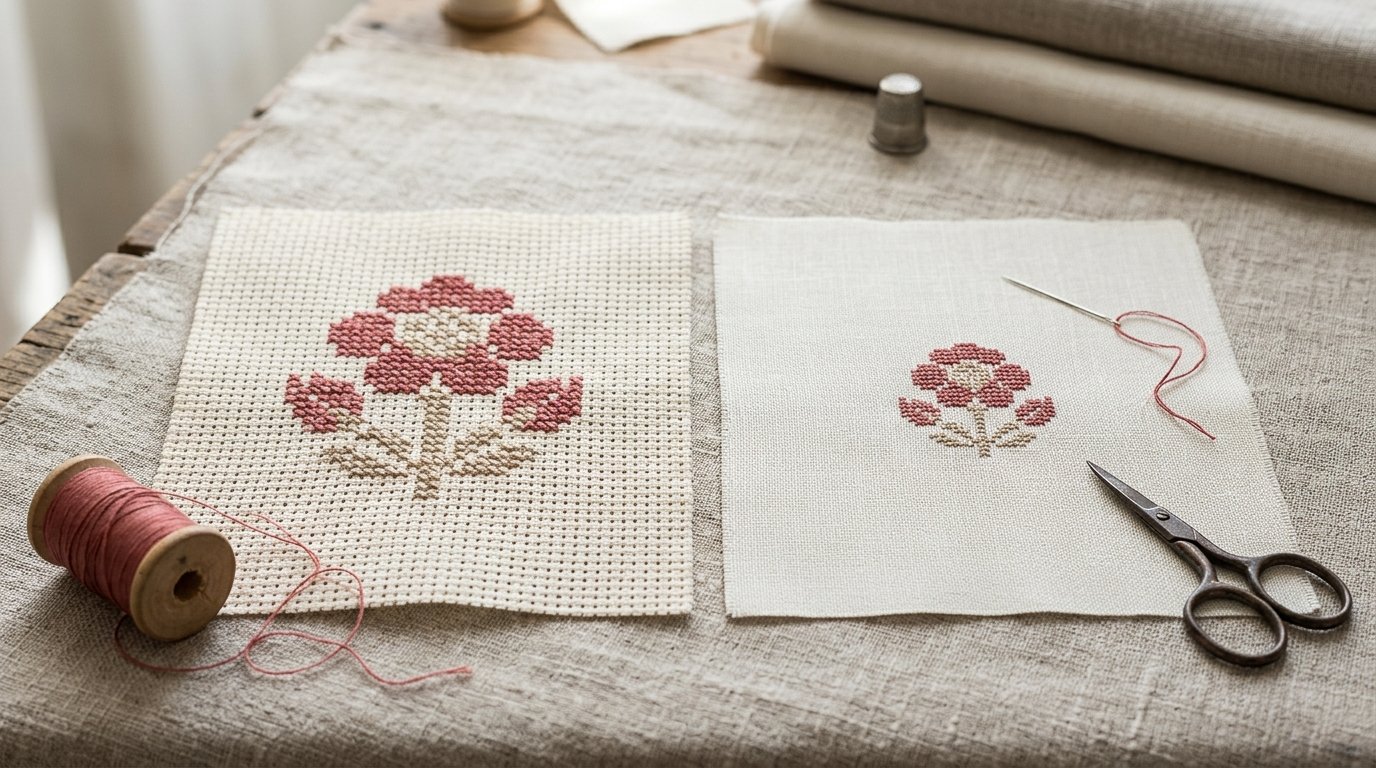
Yes. Fabric count affects both the finished size and the level of detail. On lower-count fabric, over-two stitches look larger and the design finishes bigger. On higher-count fabric, the same chart appears finer and smaller.
For example, stitching over two on 28-count evenweave gives roughly the same stitched scale as 14-count Aida. Over two on 32-count looks finer, similar to 16-count Aida.
So even though the chart is unchanged, fabric count strongly affects how bold or delicate the final piece looks.
FAQ
Do You Stitch Over Two on Aida Fabric?
Usually no. Standard cross stitch on Aida is worked over one square, since the fabric already defines each stitch clearly. “Over two” is mainly used for linen and evenweave. You can stitch over two squares on Aida if a pattern calls for it, but that is not the usual method.
How Many Strands Should I Use When Stitching Over Two?
Follow the pattern first. In many projects, two strands are common for full cross stitches over two on linen or evenweave. The best coverage depends on fabric count, thread type, and how full you want the stitches to look.
Why Do My Stitches Over Two Look Uneven?
The usual reasons are miscounted threads, uneven tension, or inconsistent stitch direction. Check that every stitch covers exactly two threads by two threads and that your top legs all slant the same way.
Is Over Two Easier Than Over One?
For many stitchers, yes. Over two creates a larger stitch, which can be easier to see and place. But it also requires careful thread counting on linen or evenweave. Over one gives finer detail, though it is often more demanding on the eyes.