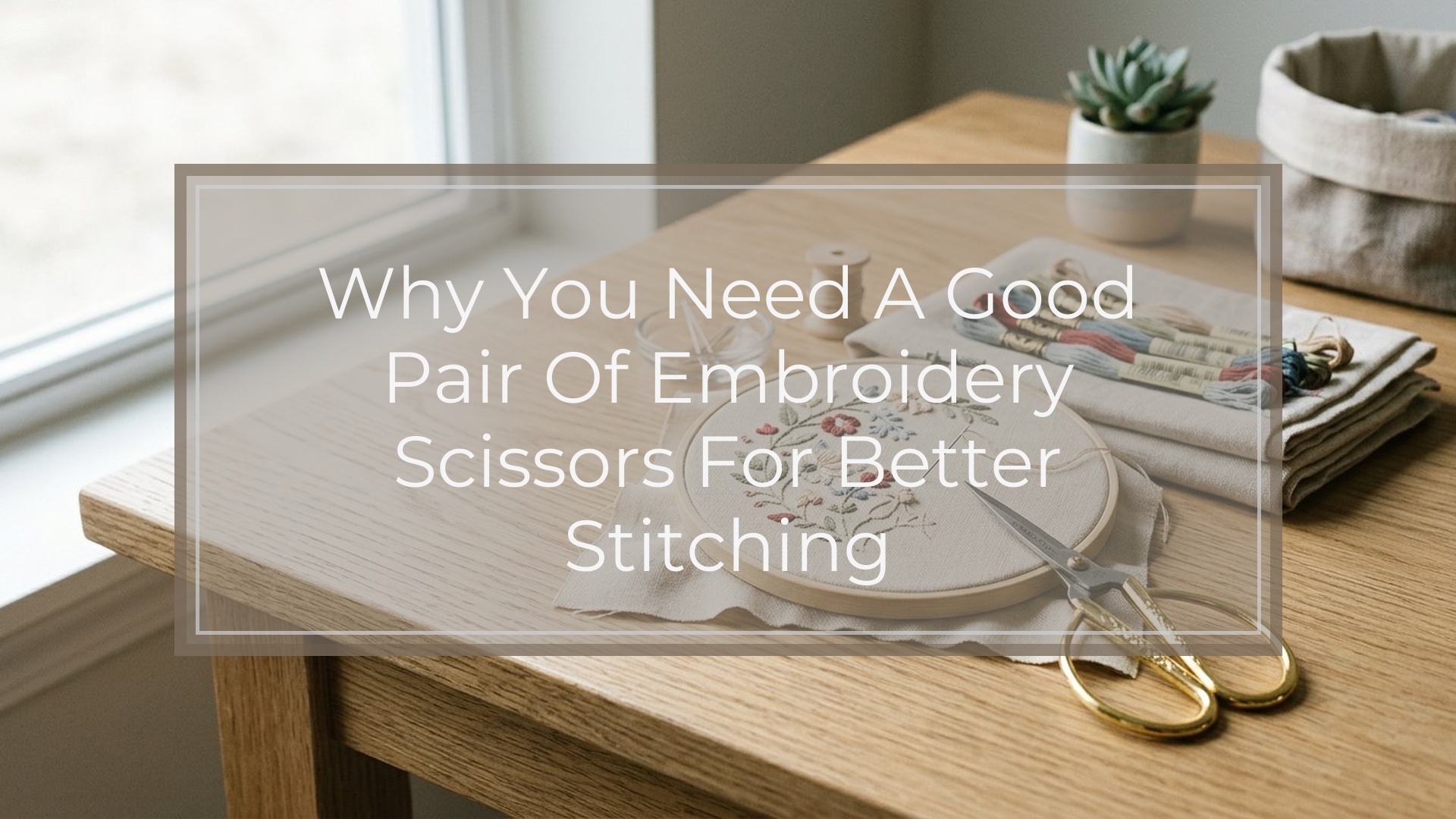
A good pair of embroidery scissors gives you control where regular scissors feel clumsy. They are made for close, precise thread trimming, which matters in embroidery, cross stitch, and other needlework where one rough snip can leave fuzzy ends, nick fabric, or disturb nearby stitches. Better scissors also make stitching sessions smoother because they open and close cleanly, reach tight spaces more easily, and feel more comfortable during repeated use. If you trim thread often, work on detailed designs, or care about neat finishing, embroidery scissors are not an extra—they are a practical core tool. The right pair should feel sharp, pointed, balanced, and easy to handle.
What Embroidery Scissors Do That Regular Scissors Do Not
Embroidery scissors are designed for precision, not general cutting. Their smaller blades and fine points let you trim one thread at a time, get close to the fabric surface, and cut in tight spots without pulling surrounding stitches out of place. That is the main difference.
Regular household or sewing scissors can still cut thread, but they are usually bulkier, heavier, and less accurate for detail work. On a small motif or crowded cross stitch area, that extra bulk matters. It can block your view, force awkward angles, and increase the chance of cutting the wrong strand.
| Tool | Best for | Limitation in embroidery |
|---|---|---|
| Embroidery scissors | Snipping floss, trimming tails, detail finishing | Not ideal for thick fabric or paper |
| Dressmaking scissors | Cutting fabric pieces | Too large for close thread work |
| Thread snips | Quick thread cuts | Less precise near dense stitching |
| Household scissors | General tasks | Blunt, bulky, and harder to control |
How a Good Pair Improves the Quality of Your Stitching
Good embroidery scissors help your work look cleaner because they cut thread neatly instead of crushing or fraying it. When you can trim close to the fabric without leaving a long tail, the front of the piece looks tidier and the back is easier to finish.
This is especially useful when changing thread colors, ending a length of floss, or cleaning up after backstitch. A blunt or oversized pair may leave fuzzy ends that peek through light fabric or catch on nearby stitches. Sharp points reduce that problem.
They also help prevent mistakes. If you need to remove one misplaced stitch, precise scissors let you clip that thread without damaging the correct stitches around it. In detailed embroidery, that accuracy protects hours of work and keeps finishing cleaner and more professional.
Why Better Scissors Are Easier on Your Hands and Workflow
Embroidery involves constant small motions: stitch, pull, trim, repeat. If your scissors are stiff, heavy, or awkward, that repetition becomes tiring faster than most beginners expect. A good pair opens smoothly, closes with little effort, and feels balanced in your fingers.
That comfort improves workflow too. You spend less time repositioning the blades, fighting a dull edge, or making a second cut because the first one did not go cleanly through the thread. Small savings add up across a long stitching session.
Better control also means less hesitation. When the tool responds predictably, trimming becomes quick and natural instead of a minor interruption every few minutes.
Key Features to Look for in a Good Pair of Embroidery Scissors
Start with blade quality. The scissors should cut cleanly to the tip, not just near the pivot. That matters because many embroidery trims happen with the last few millimeters of the blade.
Next, look at the point. Fine tips help you reach under a single thread or into tight corners, but they should still feel sturdy, not flimsy. For most stitchers, small blades in the 3.5- to 4-inch range offer the best mix of control and usefulness.
Also consider:
- Comfortable finger holes: important if you trim often or have hand fatigue
- Smooth action: the blades should open and close without grinding or wobbling
- Good balance: light enough for detail work, but not so light that they feel cheap
- Strong alignment: the blades should meet evenly for a clean cut
- Protective storage: a sheath or case helps preserve the tip
Decorative handles are fine, but performance matters more than appearance. A beautiful pair that snags thread is still the wrong tool.
Which Type of Embroidery Scissors Suits Your Stitching Style
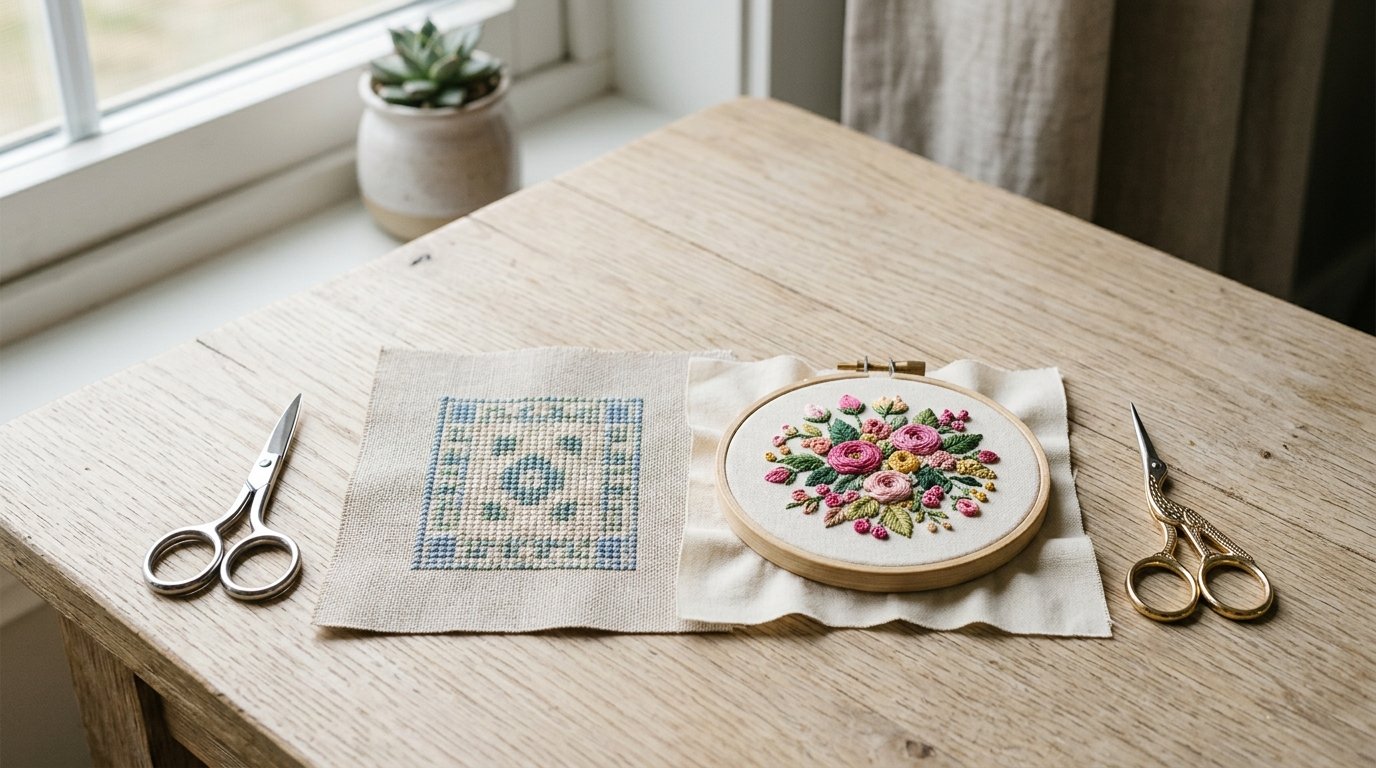
The best style depends on how you stitch. If you do counted cross stitch, small straight embroidery scissors are often the most versatile because they handle everyday thread trimming with good visibility. For surface embroidery with dense details, extra-fine pointed tips can make precision easier.
If you travel with projects, a compact pair with a protective cover is practical. If you have hand pain or reduced grip strength, look for a pair known for soft action rather than very tight blades.
There is no single perfect model for everyone. The right pair is the one that matches your project scale, trimming habits, and comfort needs.
How to Keep Embroidery Scissors Working Well
Use embroidery scissors for thread only whenever possible. Cutting paper, plastic packaging, fusible products, or fabric repeatedly will dull the edge faster and reduce precision.
Wipe the blades occasionally to remove lint or residue, especially if you work with metallics or specialty threads. Store them dry and protected so the tips do not get bent or knocked against other tools. If the pivot loosens, have it adjusted if the design allows.
Simple care keeps a good pair cutting cleanly for much longer.
When Upgrading Your Scissors Makes the Biggest Difference
An upgrade is worth it when your current scissors drag, fray thread, miss at the tip, or feel awkward every time you trim. Those are not minor annoyances in embroidery—they directly affect speed, comfort, and finish quality.
You will notice the biggest improvement if you stitch detailed designs, change colors often, or regularly unpick small mistakes. If trimming feels harder than it should, better scissors are usually money well spent.
FAQ
Do I Really Need Embroidery Scissors If I Already Own Sewing Scissors?
If you do embroidery regularly, yes. Sewing scissors are excellent for cutting fabric, but they are usually too large for close thread trimming. Embroidery scissors give better visibility, cleaner snips, and more control around finished stitches, which helps both accuracy and final appearance.
What Size Embroidery Scissors Is Best for Beginners?
A pair around 3.5 to 4 inches is a strong starting point. That size is small enough for precision but still comfortable for most hands. Beginners usually do best with straight blades, fine points, and a smooth cutting action rather than ultra-specialized shapes.
Can Embroidery Scissors Be Sharpened?
Yes, many can be sharpened, especially higher-quality pairs. Because the blades are small and precise, it is best done by a professional who handles fine scissors. Sharpening helps, but poor blade alignment or damaged tips may still affect performance after the edge is restored.
Should Embroidery Scissors Be Used Only for Thread?
Ideally, yes. Using them only for thread helps preserve sharpness and tip accuracy. Occasional light fabric trimming may not ruin them, but paper, packaging, and adhesive materials dull blades quickly. Keeping them dedicated to needlework is the easiest way to maintain precise cutting.