

Have you ever wondered how many yards are in a skein of yarn? It’s a common question when starting a new project. The answer varies based on the type and weight of yarn you’re using.
The yardage per skein is always shown on the yarn label and typically ranges from 50 to 500 yards depending on the weight category. For example, a bulky yarn might have fewer yards per skein (around 100-150 yards) while a lightweight yarn could have 400 yards or more in the same size skein.
If you’re working with a partial skein and need to figure out the remaining yardage, you can do a simple calculation. Just divide the total yards by the weight (in ounces or grams) to find the yards-per-weight ratio. Then weigh your remaining yarn and multiply by that ratio. This handy trick helps you know if you have enough yarn to finish your project!
Understanding Yarn Measurements
Yarn measurements can be confusing at first, but they’re actually quite simple once you know the basics. When you buy a skein of yarn, the label usually shows both the weight in ounces or grams and the length in yards or meters.
The amount of yards in a skein varies widely depending on the yarn weight. Lace weight yarn might have around 400-800 yards per 100 grams, while bulky yarn might only have 100 yards in the same weight.
Here’s a quick guide to approximate yardage by yarn weight category:
| Yarn Weight | Yards per 100g |
|---|---|
| Lace | 550-800 yards |
| Fingering | 380-460 yards |
| Sport | 300-360 yards |
| Worsted | 220 yards |
| Bulky | 100-120 yards |
To figure out how much yarn you need for a project, check your pattern’s requirements. They usually list the yards needed rather than the number of skeins.
If you’ve lost your yarn label, you can estimate yardage by weighing your yarn. Divide the standard yardage by the standard weight to find yards per ounce or gram.
For example, if a full skein is 252 yards and weighs 5 ounces, each ounce contains about 50.4 yards. You can use this to measure partial skeins when planning your projects.
Remember that yarn length can also be measured in inches or meters, but yards is the standard measurement used in most American patterns.
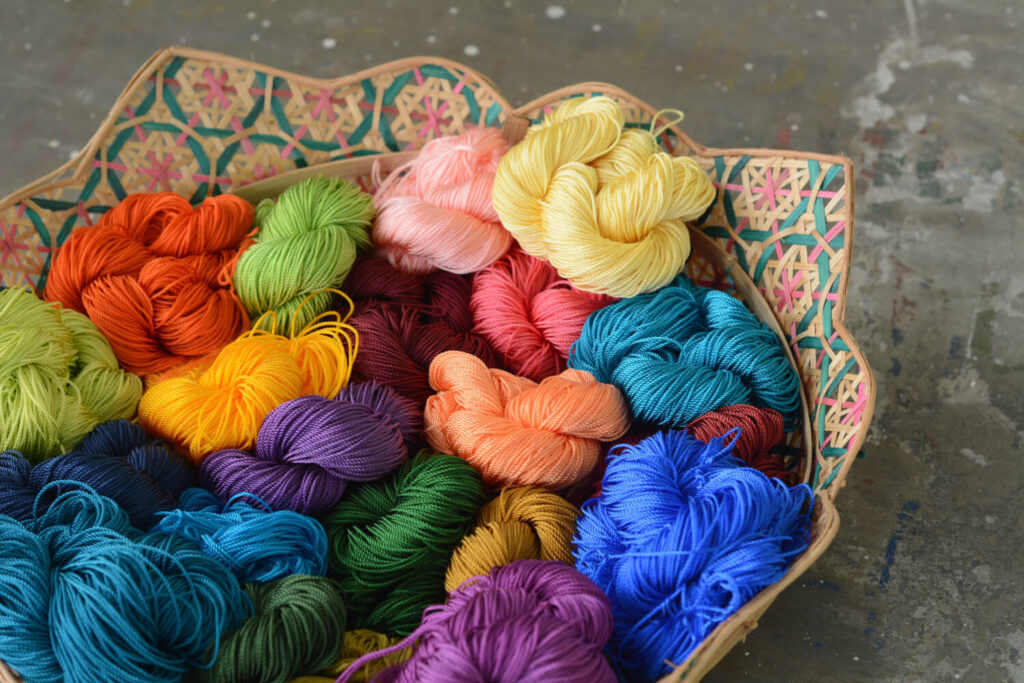
Standard Lengths of Yarn Skeins
When you’re shopping for yarn, knowing the typical lengths in a skein can help you plan your project better. Yarn skeins come in different lengths based on their weight category.
Lace weight yarn skeins often contain the most yardage. You’ll typically find around 400 yards or more in a single skein of lace weight yarn.
Fingering weight and sport weight yarns usually offer between 200-400 yards per skein, making them great for smaller projects like socks or lightweight scarves.
Worsted weight yarn, which is very common for beginners, generally provides 150-250 yards per skein.
Bulky weight yarn contains less yardage, with most skeins offering around 100-150 yards. For super bulky yarn, you might only get 50-100 yards per skein.
Here’s a quick reference table:
| Yarn Weight | Typical Yards per Skein |
|---|---|
| Lace | 400+ yards |
| Fingering | 200-400 yards |
| Sport | 200-350 yards |
| Worsted | 150-250 yards |
| Bulky | 100-150 yards |
| Super Bulky | 50-100 yards |
Remember that these are general guidelines. The actual yardage in your skein will be listed on the label. You can also calculate yards per ounce to help compare different yarns (about 50 yards per ounce is common for worsted weight).
Planning ahead with yardage information will help you avoid running out of yarn halfway through your project!
Different Yarn Weights and Yardage
Yarn comes in various weights that directly impact how many yards you’ll find in a skein. Understanding these differences helps you select the right yarn for your projects and calculate how much you’ll need.
Comparing Yarn Weights
Yarn weight refers to the thickness of the strand, typically categorized from lace (the thinnest) to jumbo (the thickest). Standard categories include lace, fingering, sport, DK (double knitting), worsted, bulky, and super bulky. Each weight works best with different needle sizes and creates different stitch appearances.
Thinner yarns like lace and fingering have more yards per ounce than thicker yarns. For example, lace weight might give you 800-1000 yards in a 100g skein, while bulky might only provide 100-125 yards for the same weight.
When a pattern calls for a specific weight, you can substitute another weight if you adjust your needle size and understand how it will affect your project’s drape and texture.
Yarn Weight and Yardage Relationship
The relationship between weight and yardage is inversely proportional – as yarn gets thicker, the yardage per ounce decreases. You can calculate yards per ounce by dividing the total yards by the weight. For instance, if a 5-ounce skein contains 252 yards, each ounce equals about 50.4 yards.
When substituting yarns, focus on total yardage needed rather than number of skeins. If your pattern requires 400 yards of worsted weight, you’ll need the same 400 yards of any substitute yarn, though the number of skeins might differ.
Different fibers also affect yardage – cotton tends to be heavier than wool for the same length, resulting in fewer yards per ounce. Remember to check both the weight category and the actual yardage on the label when selecting yarn for your projects.
Calculating Yarn Length in a Skein
Finding out how many yards are in your unlabeled skein of yarn is easier than you might think. You can use simple tools and methods to get an accurate measurement without needing the original label.
Using a Niddy Noddy
A niddy noddy is a great tool for measuring yarn length. It’s a simple wooden or plastic tool shaped like an H that helps you wind yarn into measured skeins.
Most niddy noddies are designed so that each wrap equals a specific length – often 1.5 or 2 yards per wrap. To measure your yarn, simply wind it around the niddy noddy and count the wraps.
When you’re done winding, multiply the number of wraps by the length per wrap of your particular niddy noddy. For example, if you made 50 wraps on a 2-yard niddy noddy, your skein contains approximately 100 yards of yarn.
This method is great because you don’t need to cut your yarn, and it leaves it neatly wound in a skein when you’re done!
Measuring with a Digital Scale
If you don’t have a niddy noddy, a digital scale works wonderfully too. This method uses weight to calculate length.
First, measure out exactly 10 yards of your yarn without cutting it from the skein. Roll this measured portion into a small ball and weigh it on a digital scale. Write down this weight.
Next, weigh your entire skein. Now you can use a simple formula:
- Total yards = (Total weight ÷ Sample weight) × 10
For example, if your 10-yard sample weighs 0.4 ounces and your entire skein weighs 3.5 ounces:
- Total yards = (3.5 ÷ 0.4) × 10 = 87.5 yards
This method works well for any yarn type and is especially useful for handspun yarn or yarn without labels.
Project Planning with Skein Yardage
Knowing how to plan your projects based on skein yardage helps prevent the frustration of running out of yarn halfway through. You’ll save money and time by calculating your needs accurately before starting.
Estimating Yarn for Projects
Start by checking your pattern for recommended yarn amounts. Most patterns list required yardage rather than skeins because skein sizes vary by brand. If you’re using a different yarn than suggested, you’ll need to do some math!
Divide the total yardage needed by the yardage in your chosen skein. For example, if your pattern requires 1200 yards and your skein contains 137 yards, you’ll need about 9 skeins (1200 ÷ 137 = 8.76, rounded up to 9).
Always buy an extra skein for larger projects. Having too much yarn is better than not enough! This is especially true for blankets and sweaters where dye lots can vary.
For projects without patterns, use similar completed items as a reference. Scarves typically need 1-2 skeins, while blankets may require 8-12 depending on size.
Sample Swatching for Accuracy
Making a sample swatch before starting your project is crucial for accurate yardage calculations. Work a 4×4 inch square using your chosen yarn and stitches.
Weigh your swatch on a kitchen scale. Then use this formula:
- (Project size ÷ Swatch size) × Swatch weight = Estimated project weight
- (Skein yardage ÷ Skein weight) × Estimated project weight = Total yardage needed
Your tension affects yarn usage! Tight stitches use less yarn than loose ones. Make your swatch using the same tension you’ll use for your project.
Count the number of stitches and rows in your swatch. This helps ensure your finished project will be the right size and use the expected amount of yarn.
Always make notes about your swatching results for future reference. You’ll thank yourself later when planning similar projects!
The Role of Gauge in Yarn Length
Gauge plays a critical role in determining how much yarn your project will use. When you understand gauge properly, you can better estimate the yards needed in your skein and avoid running out of yarn mid-project.
Understanding Stitch Gauge
Stitch gauge refers to how many stitches fit in one inch of knitted or crocheted fabric. Different stitch patterns use varying amounts of yarn, even with the same yarn weight.
A tighter gauge (more stitches per inch) typically uses more yarn for the same area than a looser gauge. For example, a swatch with 5 stitches per inch will use more yarn than one with 4 stitches per inch for the same size project.
According to search results, swatches made with typical worsted-weight yarn at 4.25-5 stitches per inch use approximately 27-32 yards of yarn. This information helps you calculate how much yarn you’ll need for larger projects.
Your personal tension also affects gauge. If you naturally stitch tighter than the pattern suggests, you’ll use more yarn than estimated.
Adjusting Patterns for Yarn Length
When you substitute yarns in a pattern, you may need to adjust for differences in yardage. Not all worsted weight or aran weight yarns have the same yardage per skein!
If your pattern calls for a specific yarn with 200 yards per skein, but your chosen yarn only has 150 yards per skein, you’ll need more skeins. The search results show that a mystery yarn with 100g might contain about 150 yards if it’s aran weight.
You can calculate needed yardage by:
- Making a gauge swatch
- Weighing the swatch
- Measuring how many stitches and rows it contains
- Using these numbers to estimate total project yardage
Try using a yarn calculator (mentioned in search results) to help with these calculations. This way, you won’t be caught without enough yarn to finish your beautiful project!
Converting Between Yards and Meters
When you work with yarn from different countries, you might need to convert between yards and meters. This is a simple process once you know the formula.
To convert yards to meters, multiply the number of yards by 0.9144. For example, if your skein has 200 yards, that equals about 183 meters (200 × 0.9144 = 182.88).
To convert meters to yards, divide the number of meters by 0.9144 (or multiply by 1.0936). For instance, if your skein has 300 meters, that equals about 328 yards (300 × 1.0936 = 328.08).
Here’s a quick conversion chart for common yarn lengths:
| Yards | Meters |
|---|---|
| 50 | 45.7 |
| 100 | 91.4 |
| 200 | 182.9 |
| 300 | 274.3 |
| 400 | 365.8 |
These conversions can be useful when you’re following a pattern that uses a different measurement system than your yarn label. You don’t need to guess how much yarn you’ll need!
Remember that yarn requirements in patterns are usually estimates. It’s always good to buy a little extra yarn to be safe.
Many yarn labels show both yards and meters, which makes your crafting life easier!
Common Skein Sizes and Types
Yarn skeins come in various sizes and configurations depending on the manufacturer and yarn weight. Understanding these differences helps you choose the right amount of yarn for your projects and avoid running short halfway through.
From Hank to Skein
A hank is yarn wound in a large loop and twisted into a bundle. Before you can use it, you’ll need to wind it into a ball or cake. Hanks typically contain more yardage than pre-wound skeins and are common for hand-dyed or specialty yarns.
When you purchase yarn in a hank, you’ll need a swift and ball winder (or patient hands and a chair back) to prepare it for use. Hanks often come in 100g sizes, which lets you easily calculate how much yarn you’re getting.
Fingering weight yarn in hanks usually offers 360-480 yards per 100g, while DK weight provides about 240-300 yards per 100g. The finer the yarn, the more yards you’ll get for the same weight.
Pre-packaged Skein Sizes
Pre-packaged skeins are ready to use right away. They vary significantly in size based on the yarn weight and brand. A typical skein can range from 50 to 450 grams and contain anywhere from 50 to 1000 yards of yarn.
Here’s a general breakdown of common skein sizes:
| Yarn Weight | Typical Skein Weight | Approximate Yardage |
|---|---|---|
| Lace | 50-100g | 400-1000 yards |
| Fingering | 50-100g | 200-480 yards |
| DK | 50-100g | 120-300 yards |
| Worsted | 100-200g | 100-250 yards |
| Bulky | 100-200g | 75-150 yards |
Many manufacturers sell yarn in 50g skeins. To determine yardage in a 100g skein, simply multiply the yardage by 2. This helps when comparing different brands or calculating project requirements.
Caring for Your Skeins of Yarn
Proper storage is key to keeping your yarn skeins in great shape! Store them in a cool, dry place away from direct sunlight to prevent fading and fiber damage.
Moths love wool, so consider storing natural fiber skeins in sealed plastic bags or containers with cedar blocks. A little lavender sachet works wonderfully too!
When you’re not using your yarn, keep it in its original wrapper if possible. This helps the skein maintain its shape and protects it from dust.
Quick Tip: Never store yarn in attics or basements where humidity levels can fluctuate dramatically.
If your skein gets tangled, be patient! Gently work out knots rather than pulling, which can stretch or break the fibers.
Washing your finished projects:
- Always check the yarn label for care instructions
- Use cool water and mild soap for wool
- Lay items flat to dry rather than hanging
Did your skein get dirty? Don’t panic! You can wash yarn before using it. Just tie it loosely in several places before washing to prevent tangling.
Ball winders are your friends! Consider winding your skeins into cakes or balls for easier use, but not too far in advance as this can stretch the fibers.
Remember to keep project labels from your skeins. They contain valuable information about fiber content, care, and dye lots you’ll need later.
Tips for Buying the Right Amount of Yarn
Getting the right amount of yarn for your project can be tricky. You don’t want to run out in the middle, but you also don’t want too much leftover.
Most yarn comes in 100g skeins, but the yardage varies based on the weight of the yarn. Thinner yarns have more yards per skein than bulky ones.
To figure out how much you need, check your pattern first. Good patterns tell you exactly how many yards or meters you’ll need.
If you don’t have a pattern, here’s a helpful tip: Divide the total yards in a skein by its weight in ounces. This gives you yards-per-ounce, which helps estimate how much you’ll use.
For common projects, here’s a quick guide:
| Project | Approximate Yardage |
|---|---|
| Adult Hat | 150-250 yards |
| Scarf | 300-500 yards |
| Adult Sweater | 1000-1800 yards |
| Baby Blanket | 1000-1500 yards |
Always buy an extra skein if you’re unsure. It’s better to have a little too much than not enough.
Check the dye lot numbers when buying multiple skeins! Yarns from different dye lots might have slight color differences.
You can also use larger needles to stretch your yarn further if you’re trying to make your yardage go further.
DIY Methods for Measuring Yarn
You can measure yarn at home without fancy equipment. These simple techniques help you figure out yarn length using common household items or repurposed tools.
Homemade Yarn Measures
A niddy noddy is a fantastic tool for measuring yarn. When you wind yarn around a niddy noddy, each wrap equals a specific length. You can even make one yourself using PVC pipes! Simply wind your yarn around it, counting as you go.
Don’t have a niddy noddy? No problem! You can use the back of a chair or spread your thumb and pinky finger to create a measurement tool. Each wrap around a chair back is roughly 1-2 yards depending on the chair size.
Another handy method is the counting thread technique. While winding your skein, add a loose knot in a separate counting thread every 10 or 20 wraps. This helps you keep track of larger amounts without losing count.
Repurposing Tools for Yarn Measurement
Your kitchen scale can become a yarn measurement tool! Weigh a small length of your yarn (like 10 yards), then weigh your entire skein. Divide the total weight by the small sample weight and multiply by your sample length.
For example, if 10 yards weighs 0.5 ounces and your skein weighs 5 ounces, your skein contains about 100 yards (5 ÷ 0.5 × 10 = 100).
A swift paired with a measuring tape works well too. Measure the circumference of your swift, then count how many times you wrap the yarn around. Multiply these numbers to find your total yardage.
You can also use a ruler to measure a small length, then count the number of stitches it makes in your project to estimate how far your yarn will go.