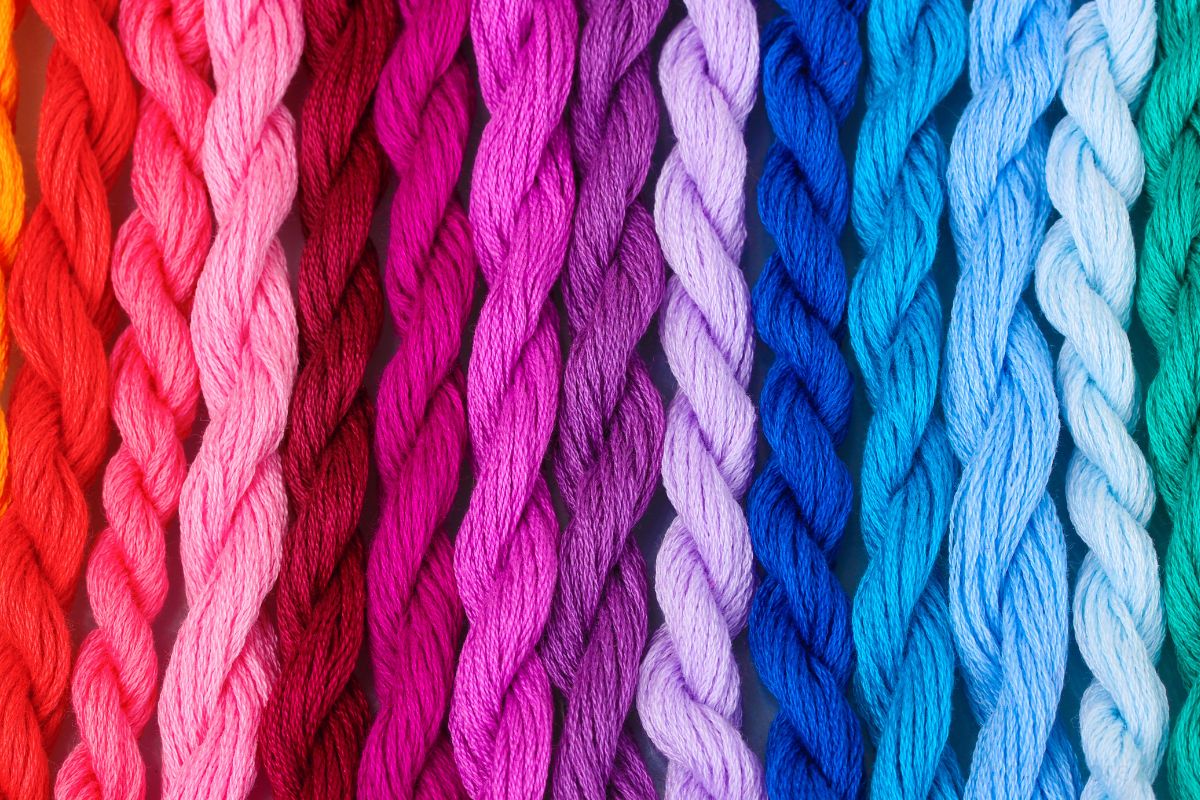
Embroidery thread and sewing thread are not the same. While both are used in textile projects, they have distinct purposes and characteristics. Embroidery thread is designed for decorative stitching, while sewing thread is meant for functional seams and construction.
For broader context, see our whether you can use sewing thread for embroidery.
Key Takeaways
- Purpose: Embroidery thread is for decoration, sewing thread for construction
- Thickness: Embroidery thread is thicker than sewing thread
- Appearance: Embroidery thread has more sheen and is more colorfast
- Strength: Sewing thread is stronger and has more stretch
- Cost: Embroidery thread is generally more expensive
Definition of embroidery thread and sewing thread
Have you ever wondered about the differences between embroidery thread and sewing thread? 🤔 Let’s break it down:
- Embroidery thread: A decorative thread used to create designs and patterns on fabric.
- Sewing thread: A functional thread used to join fabric pieces together and create seams.
Importance of understanding the differences
Knowing the differences between these threads is crucial for your crafting success. Using the wrong thread can lead to disappointing results or even damage your project. Let’s dive deeper into what sets these threads apart! 👇
Embroidery Thread vs Sewing Thread: Key Differences
To help you understand the main differences, let’s look at this handy comparison table:
| Characteristic | Embroidery Thread | Sewing Thread |
|---|---|---|
| Purpose | Decorative stitching | Functional seams |
| Strength | Less strong | Stronger |
| Thickness | Thicker | Thinner |
| Sheen | More lustrous | Less shiny |
| Fiber content | Often rayon or polyester | Usually polyester or cotton |
| Colorfast | Highly colorfast | Less colorfast |
| Cost | Generally more expensive | Generally less expensive |
| Stretch | Less stretch | More stretch |
| Needle size | Larger needle required | Smaller needle suitable |
| Machine compatibility | Specialized embroidery machines | Standard sewing machines |
Purpose and primary uses
- Embroidery thread: Used for creating beautiful designs and patterns on fabric. It’s all about making things look pretty! 🎨
- Sewing thread: Used for joining fabric pieces together, making seams, and general garment construction. It’s the workhorse of your sewing projects! 💪
Thickness and appearance
Embroidery thread is usually thicker than sewing thread. This extra thickness helps create bold, eye-catching designs. Sewing thread, on the other hand, is thinner to make neat, less visible seams.
Strength and durability
Sewing thread is stronger and more durable than embroidery thread. It needs to be tough to hold seams together, especially in areas that get a lot of wear and tear.
Sheen and luster
Embroidery thread often has a beautiful shine or luster. This makes your designs pop and catch the light. Sewing thread is usually less shiny, which helps it blend in with the fabric.
Fiber content
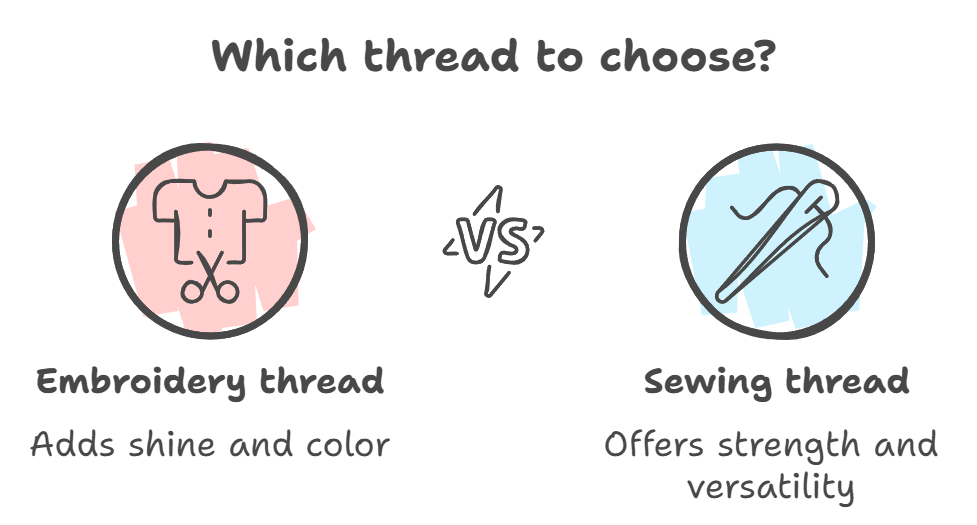
- Embroidery thread: Often made from rayon or polyester. These materials give the thread its shine and color.
- Sewing thread: Usually made from polyester or cotton. These fibers provide strength and versatility.
Colorfastness
Embroidery thread is highly colorfast, meaning it won’t fade or bleed easily. This is important for keeping your designs looking fresh and vibrant. Sewing thread doesn’t need to be as colorfast since it’s often hidden in seams.
Cost comparison
Embroidery thread is generally more expensive than sewing thread. This is because of its special properties and the materials used to make it.
Stretch properties
Sewing thread has more stretch than embroidery thread. This stretch helps seams move with the fabric, making garments more comfortable and durable.
Needle size requirements
Embroidery thread is thicker, so it needs a larger needle. Sewing thread can use smaller needles, which make finer stitches and smaller holes in the fabric.
Machine compatibility
Embroidery thread works best with specialized embroidery machines. These machines are designed to handle the thicker thread and create intricate designs. Sewing thread is used in standard sewing machines for everyday sewing tasks.
Thread Characteristics in Detail
Embroidery thread
Materials used (rayon, polyester)
Embroidery thread is often made from:
- Rayon: Gives a beautiful shine and rich colors
- Polyester: Offers durability and colorfastness
Thread size and weight
Embroidery thread is usually thicker than sewing thread. It often has a size of 40, which means it’s heavier and more visible.
Sheen and visual impact
The sheen of embroidery thread makes designs stand out. It catches the light and adds depth to your embroidery work.
Sewing thread
Common materials (polyester, cotton)
Sewing thread is typically made from:
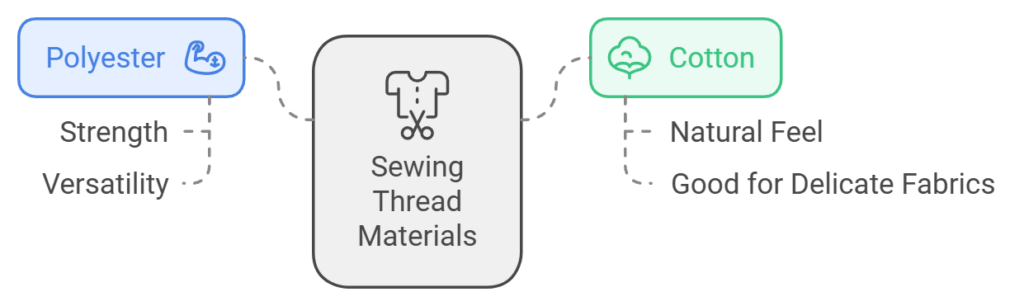
- Polyester: Strong and versatile
- Cotton: Natural feel and good for delicate fabrics
Thread size and weight
Sewing thread is usually thinner, with a common size of 50. This makes it less visible in seams.
Functional properties
Sewing thread is designed for strength and durability. It needs to hold up to washing, wearing, and everyday use.
Impact on Project Outcomes
Embroidery projects
Visual appeal and design clarity
Embroidery thread’s thickness and shine make designs clear and eye-catching. It’s perfect for creating beautiful, detailed patterns.
Durability of decorative stitching
While not as strong as sewing thread, good quality embroidery thread can still create long-lasting designs when used correctly.
Sewing projects
Strength of seams
Sewing thread creates strong, durable seams that can withstand daily wear and tear.
Functionality in garment construction
The stretch and strength of sewing thread make it ideal for constructing garments that need to move with the body.
Choosing the Right Thread for Your Project
Factors to consider
Project type and requirements
Think about what you’re making. Is it a decorative piece or a functional garment?
Fabric type and weight
Consider the fabric you’re using. Heavier fabrics might need stronger thread.
Desired finish and appearance
Do you want your stitches to stand out or blend in?
When to use embroidery thread
Use embroidery thread when:
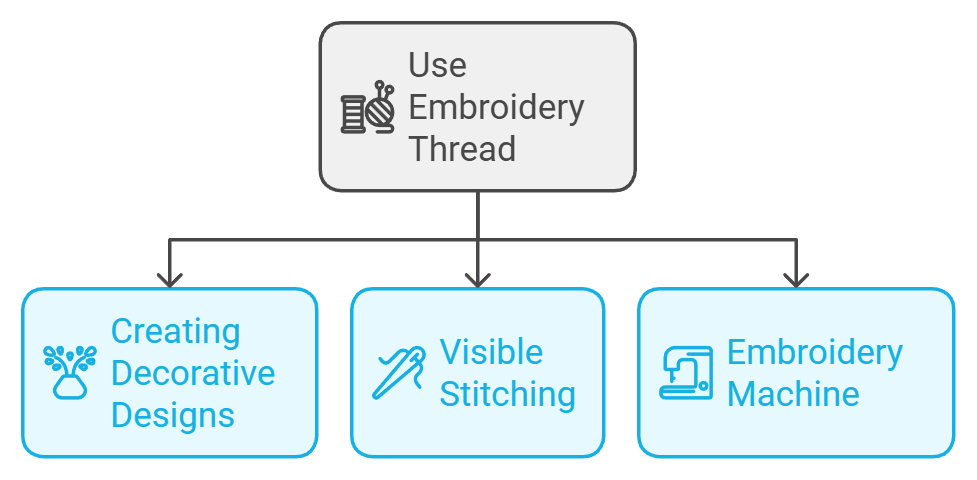
- Creating decorative designs
- Working on visible stitching that you want to stand out
- Using an embroidery machine
When to use sewing thread
Use sewing thread when:
- Constructing garments
- Making seams that need to be strong
- Working on everyday sewing projects
Application Tips and Best Practices
Using embroidery thread
Machine settings and adjustments
When using embroidery thread:
- Adjust your machine tension
- Use the right needle size
- Slow down your stitching speed for better results
Handling dense designs
For dense designs:
- Use a stabilizer to prevent puckering
- Consider using a lighter weight thread
Using sewing thread
Proper tension and stitch length
When sewing:
- Adjust your machine tension for balanced stitches
- Choose the right stitch length for your fabric
Considerations for different fabrics
Remember:
- Use cotton thread for natural fibers
- Choose polyester thread for stretch fabrics
Special Considerations
Quilting with different thread types
For quilting:
- Use cotton thread for a traditional look
- Try embroidery thread for decorative top stitching
Heirloom embroidery techniques
For heirloom projects:
- Consider using cotton embroidery thread for a vintage feel
- Practice with different thread weights for varied effects
Care and maintenance of embroidered/sewn items
To keep your projects looking great:
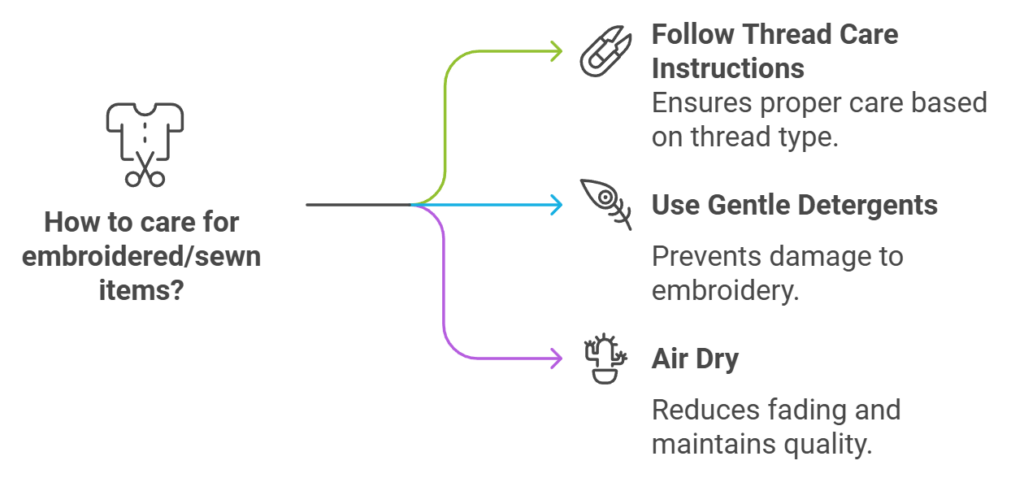
- Follow care instructions for the thread type
- Use gentle detergents for embroidered items
- Air dry when possible to prevent fading
Conclusion
Embroidery thread and sewing thread each have their own special jobs. Embroidery thread makes things pretty, while sewing thread keeps things together. Knowing when to use each type will help you create amazing projects that look great and last long!